The BMA said more than 80 vehicles have been recovered since the system was launched six months ago
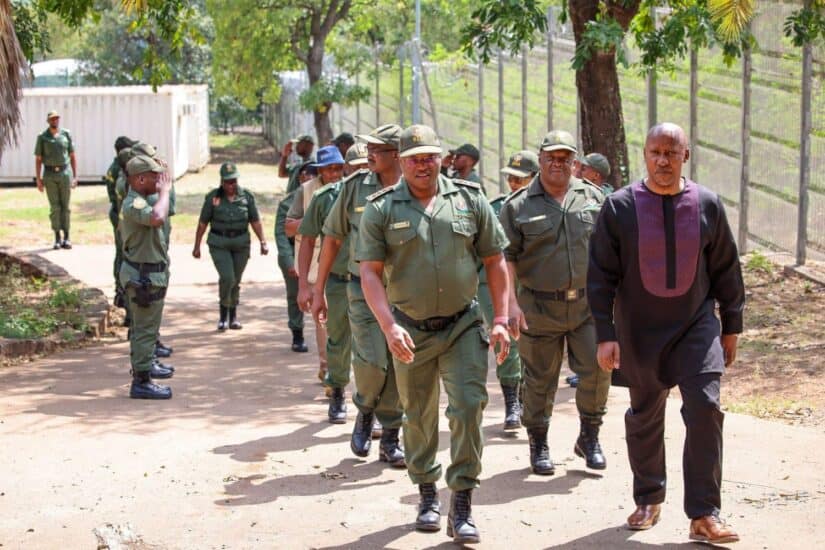
BMA commissioner Michael Masiapato at the Lebombo Border Post on Sunday as the authority launched its new vehicle targeting system. Picture: Supplied


The Border Management Authority (BMA) has turned to technology to help clamp down on vehicle smuggling across South Africa’s borders.
At a media briefing at the Lebombo port of entry, BMA commissioner Michael Masiapato announced the launch of its new vehicle targeting system (VTS).
Technology to prevent vehicle smuggling
Masiapato said it is difficult for border guards to inspect the thousands of vehicles that cross the border gate every day.
“Until this year, every vehicle was just observed by the border guard using their naked eye and experience and then [they] make a determination of which one to stop and conduct some sort of physical inspection and enquire on the requisite documentation,” he said.
The BMA commissioner said the vehicle targeting system alerts border guards about which vehicle to look out for before it reaches them
“Our difficulty was one of arithmetic. Hundreds of thousands of vehicles cross our land borders. Inspecting all of them is impossible. Inspecting a few of them at random delays honest travellers while the vehicle that matters drives past, because it looks exactly like the one in front of it.”
Masapiato said, often, when a car is reported stolen, it has already crossed the border.
“Once out of the country, the car gets replated, re-registered and gets sold to someone. Back in South Africa, the owner spends some months dealing with his car insurance enterprise to address the challenge,” he said.
How it works
Masapiato described the VTS technology as simple.
“The cameras above these lanes [at the port of entry] read the number plate of every vehicle crossing the line, in both directions, day and night. Nothing is chosen by hand,” he said.
“A central system checks each vehicle number plate, in seconds, against records of stolen and circulated vehicles, confirmed cloned plates, ownership records that bear signs of fraud, and financed vehicles travelling without the consent of the institution that owns them.
“Where something is wrong, an alert reaches the border guard at the boom within seconds, on a handheld device, and it reaches the port supervisors at the same moment.
“Then the border guard does the work. They scan the barcode on the licence disc. They photograph the number plate so that the device reads it independently. And they find the vehicle identification number stamped on the vehicle itself. Those three have to agree. A vehicle can be made to look convincing to the eye. It is far harder to make the disc, the plate and the chassis number all tell the same story.”
‘A camera does not look away’
Apart from easing the burden on border guards, Masapiato said the technology will also reduce mistakes or corruption.
“A camera does not get tired. It does not look away. It does not choose which vehicle to notice. It cannot be persuaded, and it has no relatives.”
He said decisions taken by border authorities after an alert is sent is also recorded.
“The alert does not go to one person. It reaches the border guard and the port supervisors at the same time, so it cannot quietly fail to arrive. Every alert has to be closed out on the device with a recorded outcome, against a named border guard, on a named shift, at a named port.
“An alert that nobody acts on does not disappear. It stays open, it is counted, and it appears in a report that goes to the port commander, regional commander and the leadership at the National Border Targeting Centre.”
Masapiato said the following successes have been recorded since the system went live six months ago:
- 83 vehicle recoveries with a combined value of R46.6 million;
- Seven stolen vehicles recovered;
- Eight vehicles found where the ownership record had been falsified;
- 27 stopped on a false bank letter;
- 33 financed vehicles recovered, settled or returned to the institution that owns them;
- 1 817 vehicles, valued at around R636 million, stopped because the person driving could not show the written consent of the bank.