
Here's why you should read Peter Hain's new thriller 'Smuggler Kingpin'. A real-world tobacco and gold smuggling shocker.
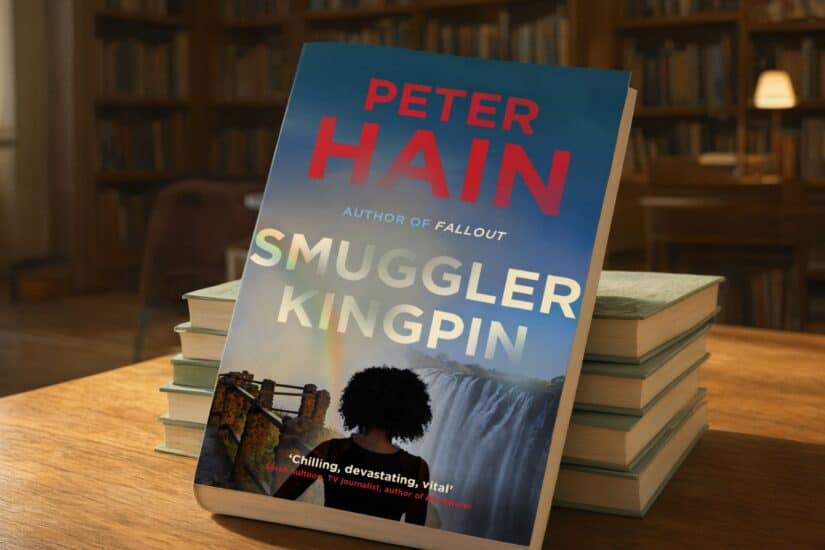
A must read novel this summer. Picture Supplied/Envato


It’s a dark, dark world that bubbles under the surface of legitimacy and Peter Hain’s new novel is a slap in the face wake up call for those who ostrich reality and live in a bubble of goody.
Though, these days it is somewhat challenging to contemplate a world where people still could possibly believe in Santa Claus.
But enough about the cynicism, because The Smuggler Kingpin is a fast-paced and riveting piece of fiction. Or is it fiction?
Well, if you’ve never seen Al Jazeera’s Gold Mafia docuseries, you’d better watch it before reading this book, and you’ll understand why once you’ve done both.
But this book is an essential read for every South African this summer. Peter Hain shared some of his thoughts on the novel.
How much of ‘Smuggler Kingpin’ is fact and how much did you fictionalise, especially given your research?
Quite a chunk is fact-based: there is a real-life “Smuggler Kingpin”- many, in fact- and tobacco smuggling is rife.
Why did you choose to fictionalise?
When I have time off (ha ha, says my better half Elizabeth) I like to read thrillers and this is my fifth authored one, with another well on the way: fiction can reach people who simply want a page-turner but one that contains important lessons too.
The character Sidney Reilly feels suspiciously like someone who could actually exist.
All characters in the thriller are fictional, though some, such as The Veteran and Security Minister Yasmin Essop, are based on South Africans I personally know.
You did extensive research into tobacco and gold smuggling. What did you uncover that surprised or shocked you the most?
The huge extent of it and the fact that it is so all-pervasive, not only in South Africa but elsewhere.
The book connects cigarettes, gold, money laundering, banks, politicians and organised crime. How closely does that reflect what is really happening in Southern Africa, and what would you say are the underlying fundamentals of the trade?
Much of what is in the thriller is real-life, alas, in South Africa too, with Dubai frequently a central port for the trade. Tobacco smuggling generates big money and is conducted by big criminals.
You also include elements of the liberation struggle and the Rhodesian war. Was it difficult, given your own history, to write uncomfortable truths about both sides?
I was shocked at how gruesome the war was and felt it important to reflect that horror, having researched first-hand accounts.
Governments change in the book, but corruption and criminal networks seem remarkably good at surviving. Is that one of the points you’re making?
Yes. But this is not just a South African problem – though mafia gangsters have a serious and alarming grip here.
It is a global one, like wildlife trafficking, money laundering and corruption exposed in three of my other contemporary thrillers.
Reilly’s world depends as much on legitimate institutions and professional enablers as it does on criminals.
The infamous “state capture” decade involved lawyers, accountants, auditors, estate agents and financial advisers who ignored or deliberately flouted the ethics of their professions to help corrupt politicians and corrupt businesses. Modern organised crime depends upon these dodgy professional enablers.
When Reilly goes, the smuggling machine simply finds another kingpin. Does that mean the snake cannot be decapitated?
I am afraid so. That is, until governments the world over, beginning with South Africa, clean up their act.