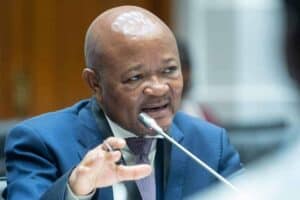
In his book, Mbuyiseni Ndlozi said that black juniority persists decades after apartheid, fuelled by failed leadership, economic exclusion, and poor education.

A lot has changed in South Africa, or has it? Picture iStock


Apartheid ended more than three decades ago, but its legacy continues to determine who holds economic power and opportunity.
So wrote former EFF MP, podcaster and political analyst Dr Mbuyiseni Ndlozi believes South Africa has failed to dismantle the structures of racial subordination. He also said that the country’s black political elite has become part of the problem.
In his book, Love and Violence: The Revolt Against Permanent Juniority, Ndlozi examines the lasting consequences of colonialism and apartheid.
He explores how black youth were denied autonomy and how colonial violence became internalised through self-hatred and violence within communities.
“The idea is that apartheid used social technologies like Bantu Education to create a black population incapable of self-rule,” Ndlozi said. “This was deliberate and has since had a lasting impact, even after the formal legal apparatus was removed.”
He calls the concept permanent juniority, where political freedom has not delivered economic or social independence.
“The population has been culturally reproduced as incapable of self-rule and in permanent need of white supervision.”
Ndlozi said racial equality remained impossible while apartheid’s economic and social arrangements survived the transition to democracy. He singled out spatial planning and public education as obstacles.
“You have to fundamentally undermine the spatial planning that characterised apartheid to truly break its continuity in our present,” he said.
He also criticised education standards that accepted poor academic performance and failed to prioritise mathematics and science. Such shortcomings perpetuated disadvantage in an economy demanding scientific and mathematical skills.
Black juniority despite freedom
Ndlozi had harsh criticism of South Africa’s political leadership.
“Democracy is not enough. It was never supposed to be the only thing the post-apartheid system does to change racial inequality.”
He praised the Constitution’s mechanisms for creating a more equal society but said elected leaders had failed to deliver.
“Over the past 20 years, the political elite has simply demonstrated corruption, lack of planning and coordination,” he said. “Our crisis is fundamentally a crisis of leadership.”

He compared South Africa with Ethiopia, which he said had achieved more sustainable economic growth despite greater instability.
Ndlozi suggested Bantu Education’s consequences had become apparent in the conduct of the black political elite.
“I suspect that perhaps the true effects of the cultural dumbing down by Bantu Education truly kicked in over these years,” he said.
He described an elite predisposed to act against its own people’s interests and as “morally, intellectually and spiritually immature”.
Political fragmentation also concerned him. He warned that the legion of political parties in South Africa would further complicate coordinated planning and implementation.
In addition, he questioned reconciliation and the system’s failure to prosecute apartheid crimes. Ndlozi said the Truth and Reconciliation Commission showed that justice and reconciliation could be pursued together.
“What undermined the TRC was the white-dominated post-apartheid NPA that refused to prosecute those cases that the TRC rejected,” he said. This, specific to cases where amnesty had been refused.
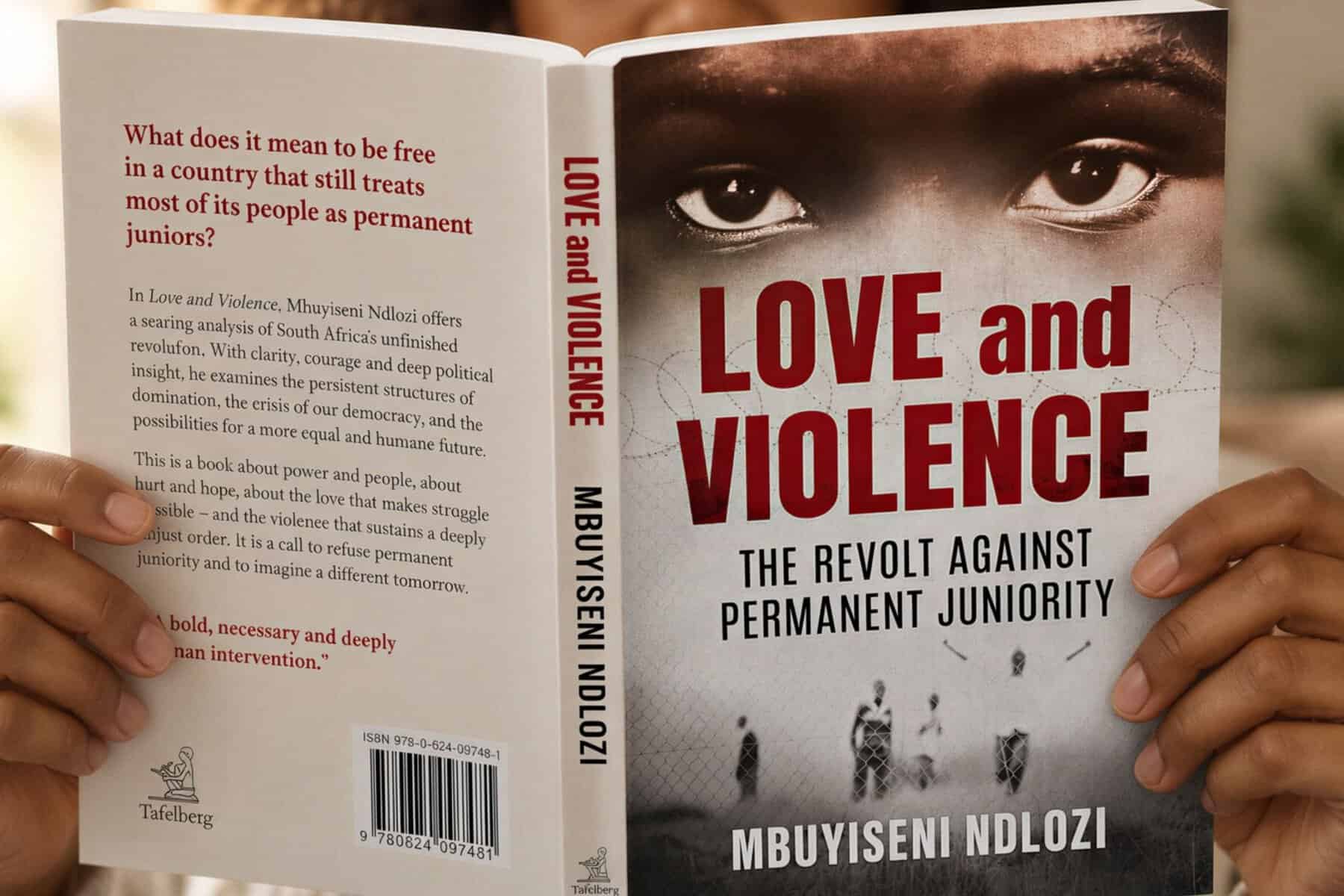
The author fingered government and business for failing to transform the economy. Economic reforms had been undermined by “sheer incompetence, corruption, laziness and at times deliberate refusal”, he said.
Landlessness, unemployment, uneven development, and poverty remained unresolved. These failures threatened the democratic state’s legitimacy, he said.
Failures threaten legitimacy of democracy
Ndlozi believes permanent juniority also illustrates relations between Western powers and developing nations.
“The West can’t risk Africa being truly self-sufficient and autonomous as this will simply destroy its own riches and wealth,” he said.
African dependence on Western supervision served developed countries’ interests, he said and added that racial antagonism continued through what many people still view as neocolonialism.
Ndlozi said genuine equality required economic transformation in South Africa rather than political promises.
“The conditions that make inequality continue on racial lines lie in land, capital and cultural development,” he said.
He called for changes to apartheid spatial planning, greater agricultural inclusion, investment in black entrepreneurs and improved education. Without these reforms, he warned, racial inequality would continue.