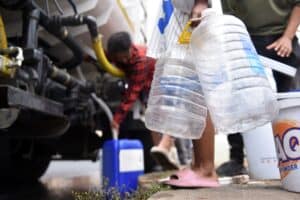
Moya asked residents to rely on Tshwane's authorised tanker programme or other sources confirmed to be safe for drinking.
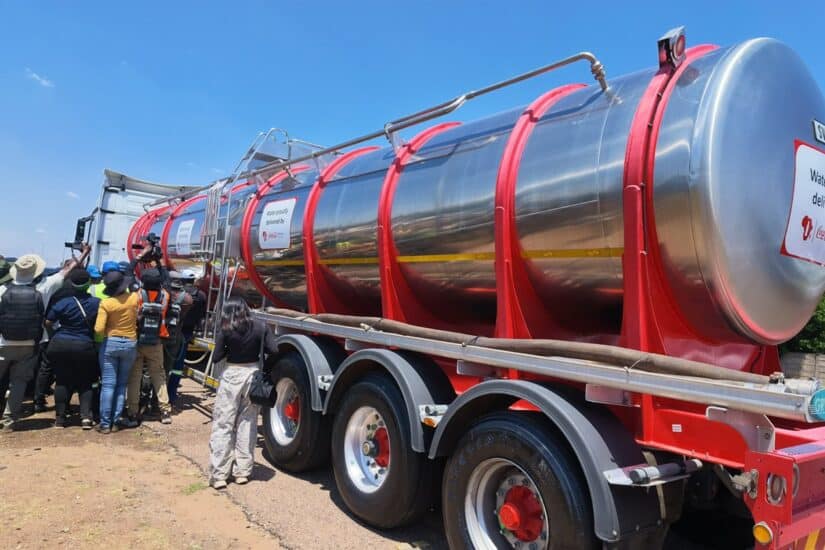
36 000 litre water tanker that’s been donated by Coca-Cola to assist with the delivery of water to residents in Bronkhorstspruit and surrounding areas. Picture: X/@nasiphim


The City of Tshwane has called on independent water tanker operators to present themselves for verification before distributing water in Bronkhorstspruit on Monday.
Executive Mayor Dr Nasiphi Moya said private operators wanting to help communities hit by the water crisis must first obtain municipal authorisation.
Where operators must go for verification
Operators were told to bring their vehicles to the Commando Building, on the corner of Lanham Street and Commando Street.
There, the City’s Environmental Health Practitioners will verify, authorise and test water quality.
“The City welcomes and appreciates the support of private-sector partners assisting affected communities,” Moya said.
“However, all independent operators must meet the same water-quality and safety standards as municipal tankers and contracted service providers.”
Police will check that operators comply
The Tshwane Metro Police Department (TMPD) will conduct compliance checks to confirm that operators hold the necessary authorisation.
Moya also explained the reasoning behind the new requirements.
“These are precautionary measures and do not indicate that contamination has been identified in privately supplied water,” she said.
According to Moya, operators who ignore the rules will be stopped.
“Operators distributing water without authorisation will be required to cease operations until they have completed the verification process, in accordance with applicable enforcement procedures,” she warned.
Residents urged to use safe drinking water sources
Moya asked residents to rely on the City’s authorised tanker programme or other sources confirmed to be safe for drinking.
“The City also urges residents to obtain drinking water only from verified and authorised sources,” Moya said.
She cautioned that water from rivers and dams carried health risks.
“Residents must not collect or consume untreated water from rivers, dams or other unverified sources, as this may expose them to harmful contaminants,” she added.
Moya ended the statement with a note of thanks to private-sector partners.
“The City thanks all private-sector partners for their assistance and encourages independent operators to cooperate with these requirements to ensure that residents continue receiving safe drinking water,” Moya said.