Matlala confirmed that the two had worked together on various business opportunities.
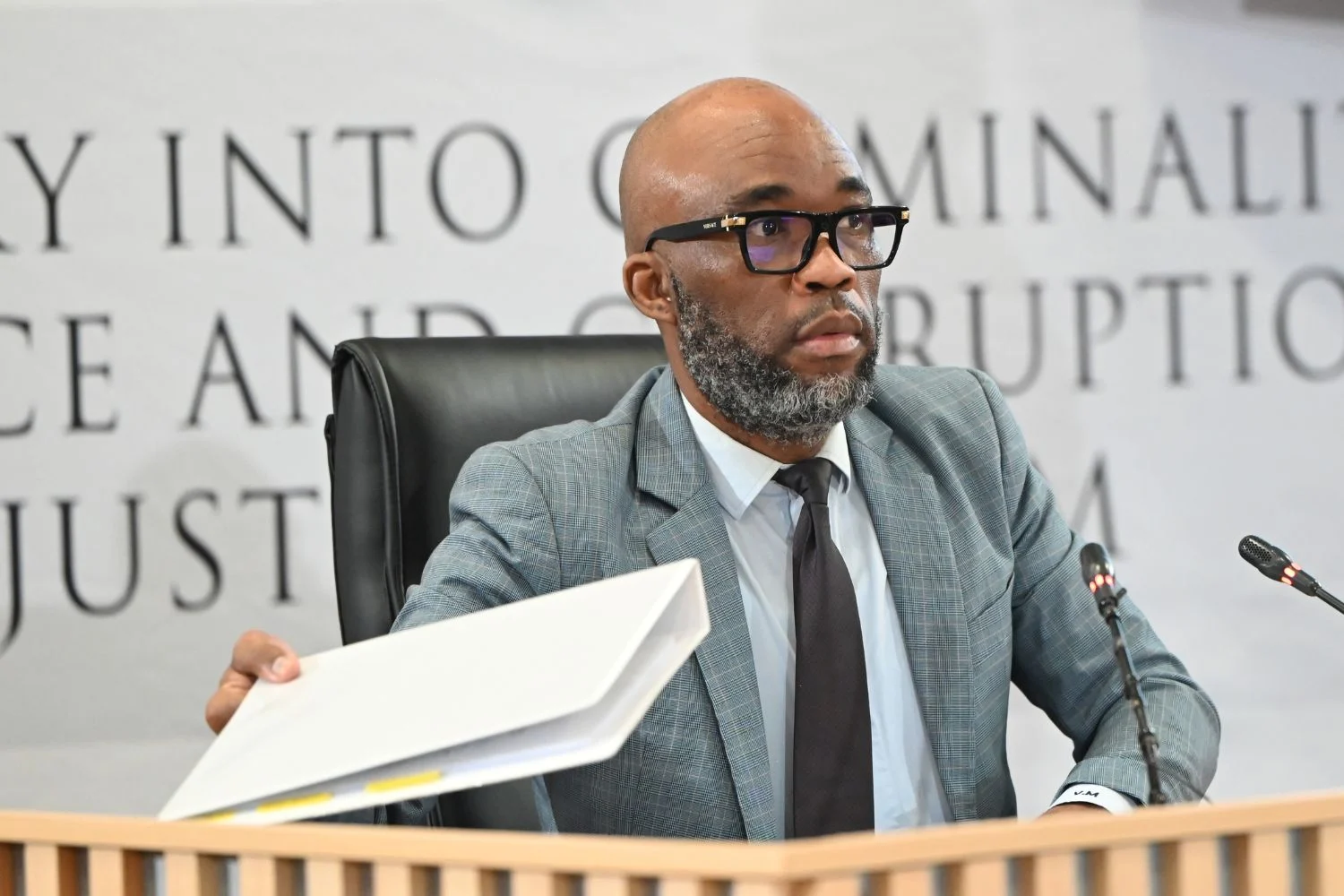
Vusimuzi ‘Cat’ Matlala appears before Madlanga commission at Brigette Mabandla Judicial College in Pretoria on 25 August 2026. Picture: Gallo Images/Frennie Shivambu


Tenderpreneur Vusimuzi “Cat” Matlala faced tough questions at the Madlanga Commission on Tuesday over the nature of his business relationship with controversial figure Hangwani Morgan Maumela.
Matlala appeared before the commission at the Bridgette Mabandla Justice College in Pretoria on 25 August 2026, where evidence leader Mahlape Sello repeatedly pressed him to explain how money moved between the pair, their companies, suppliers and government.
Maumela has been implicated in a Special Investigating Unit (SIU) investigation into three alleged syndicates linked to the looting of about R2 billion from Tembisa Hospital.
His alleged syndicate is reported to have benefited by more than R800 million.
Several of Maumela’s assets, valued at about R520 million, including a Sandton mansion, jewellery and luxury vehicles, have since been seized after the Special Tribunal granted a preservation order.
Maumela has not been arrested.
Cat Matlala and Hangwani Maumela’s relationship
Matlala told the commission on Tuesday that his relationship with Maumela dates back to around 2015 or 2016.
Their friendship initially developed through their shared interest in expensive sports cars.
“That’s where we started our relationship because of the love of cars,” he told the commission.
The relationship later extended into business, as Maumela had been a director of his security company, CAT VIP Protection.
He confirmed that the two had worked together on various business opportunities.
According to Matlala, he and Maumela responded to government requests for quotations (RFQs), including those issued for medical consumables by the Gauteng Department of Health.
“He would do his own thing [and] I would also do mine from the side,” he said.
He told the commission that the arrangement involved the two men putting money together so that their respective companies could fulfil government contracts.
In one example, Matlala explained that each contributed about R1 million, with the funds placed into an account established specifically for their business venture.
The money used from the account would subsequently be paid back with 10% interest.
Matlala testified the pair received their first RFQ from the provincial health department in either 2018 or 2019, with the business generating around R5 million over the following three years.
Money was placed with suppliers
According to Matlala, the pair’s business model involved approaching suppliers of medical consumables and paying money upfront to secure stock.
The supplier would then provide the equipment needed to fulfil the government order, with the goods eventually delivered to the hospital.
The two friends would each receive 10% of the profits generated through the supplier transactions.
But it was this explanation of the financial arrangements that prompted increasingly pointed questions from Sello.
“It cannot be. You are doing this deliberately so that we go round and round in circles,” she said.
Matlala denied the accusation.
“Can you please explain to me what part is it that you don’t understand?” he asked.
Business model and profits questioned
Sello questioned the practice in which Matlala and Maumela would place significantly more money with a supplier than the value of the RFQ they had won.
Matlala explained that the excess money was intended to remain as credit with the supplier, allowing them to obtain stock for future transactions even when they did not immediately have cash available.
“We are going to get stock from you now and then, so just in case it happens at some point, I don’t have money, but I know I have got credit in your company,” he told the commission.
Sello clarified that, under this arrangement, the unused funds would effectively stay with the supplier until another RFQ was secured.
Matlala confirmed this and acknowledged that keeping excess funds with suppliers as credit was part of their business model.
The exchange became increasingly focused on the point at which the pair actually made their money.
Matlala’s explanation appeared to leave Sello seeking clarity on how the profits were generated and distributed when the government department had not yet paid for the goods.
The evidence leader questioned particularly how Matlala and Maumela could share profits while money was still moving between suppliers and the companies involved.
“I’m just a mere lawyer; maybe these business issues are above my pay grade,” the evidence leader said.