
The coalition works with communities to denounce violence and defend foreign nationals, as anti-immigrant protests force businesses to close and flee.
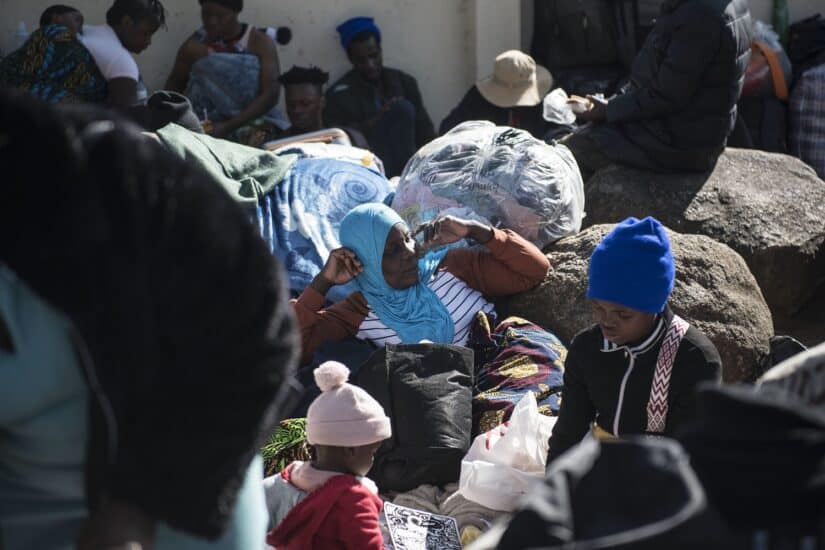
Malawian migrants camp outside the Malawi consulate in Woodmead, Johannesburg, yesterday. Picture: Michel Bega


A coalition of more than 160 organisations, including trade unions, community civic organisations and broader civil society formations under the umbrella of Siyafana Sonke Action Campaign, have raised more than R130 000 in a week to assist those displaced due to anti-illegal migrant sentiments.
The national drive was launched this month to confront, counter and speak against the rising tide of xenophobia, Afrophobia and organised hate in SA, says the coalition’s Mametlwe Sebei.
R200 000 drive for humanitarian relief
The coalition aimed to raise R200 000 to provide immediate humanitarian relief to those displaced and to support the fight to ensure the state meets its constitutional obligations to protect all people within its borders.
Sebei said they were also actively working with communities to reject the scapegoating of foreign nationals, denounce violence and defend their communities and foreign nationals against hooliganism.
He said the name of the coalition, Siyafana Sonke, translates to “We are all the same”.
“We believe the legitimate anger felt by South Africans over unemployment, poverty and collapsing services should not be directed at vulnerable migrants, but at the political and economic elites responsible for these crises,” Sebei said.
Anti-immigrant protests have gripped the country recently, with foreign nationals ordered to close their business and leave.
Others have been openly chased, insulted and whipped with sjamboks and sticks.
Welcoming attitudes toward immigrants fell from 34% in 2003 to 15% in 2025
According to the latest research by the Human Sciences Research Council, the proportion of South Africans who don’t welcome immigrants surged to 42% in 2025, while those who would welcome all immigrants have dropped from 34% in 2003 to just 15%.
University of the Free State professor Narnia Bohler-Muller said the figures reveal more than changing attitudes towards foreigners.
“These findings should concern us deeply, not simply because of what they reveal about attitudes towards foreigners, but because of what they reveal about us,” she said.
According to Bohler-Muller, xenophobia was no longer merely a challenge for migrants, but has become a direct threat to SA’s constitutional project.
“The rise should alarm us. The danger lies not only in acts of violence or discrimination, but also in the growing normalisation of exclusion itself,” she said.