Eskom confirmed municipal electricity debt sat at R122 billion as of August, double that of 2023's level.
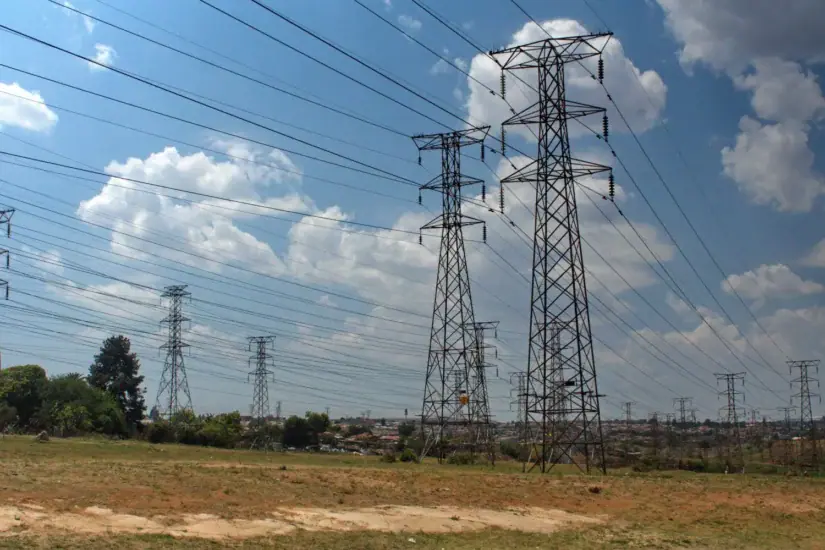
Picture: iStock


Eskom will be requesting another above-inflation tariff increase for households and municipalities next year.
The entity wants an additional 8.83% from non-municipal customers, as well as 8.84% from municipalities.
Eskom already increased tariffs this year by 8.76% and 9.01% for direct and municipal bulk purchases, respectively.
Eskom officials were before the Standing Committee on Appropriations on Tuesday, where they outlined the proposed tariff increases for the 2027-28 financial year, as well as plans to develop a policy to increase the free basic electricity (FBE) threshold.
Committee members expressed their dissatisfaction with the tariff increase, with Eskom stressing it would ultimately be the decision of the National Energy Regulator of South Africa (Nersa).
Municipal debt doubled in three years
While Eskom sought another tariff increase, the entity said it needed to reform its tariff structure to streamline how consumers were billed.
“The reform objective would be to separate the cost stack and recover each cost through a charge that reflects its driver,” Eskom’s presentation stated.
The market reforms were there to “create safeguards” that would pave the way for the introduction of private players.
“Our reforms in South Africa should have safeguards so that our market does not fail. We believe those safeguards should be based on cost reflectivity, the structure of the tariff must be transparent, and costs must not be bypassable,” Eskom stated.
Electricity Minister Kgosientsho Ramakgopa previously touted an increase in free basic electricity, with Eskom confirming its intention to make that a reality.
Eskom’s presentation confirmed the end goal would be 300 kWh of free electricity, but it admitted that “a higher allocation needs an effective funding and delivery mechanism”.
This would be achieved via ringfenced conditional grant and payment arrangements that would go directly to the electricity supplier, a national register of qualifying households, and payments linked to the meters of qualifying households.
The reform and FBE policies were still in their early phases, with the immediate threat being that as of August, municipal electricity debt had reached R122 billion – now double 2023’s level of R59 billion.
Although municipalities had fractionally increased their overall payment rate over the last two financial years, R22 billion of the outstanding amount was interest on the principal debt.
‘Impacting on our cost of living’
Committee members complained that the presentation did not explain how Eskom arrived at its 8% figure or where it trimmed its own costs.
Andrew Bateman highlighted the increase was well above inflation, and blamed Eskom for holding back South Africa’s economic growth.
“Eskom continues to be one of the real reasons our country struggles with unaffordable electricity. It’s affecting business viability, and it’s affecting inflation rates, and as a result, our interest rates have to be higher than they would otherwise have to be.
“The rise of administered prices [is] one of the key factors that have made inflation targeting difficult,” said Bateman.
Wesley Douglas stated that South Africans were being forced to choose between electricity and household essentials.
“The tariff policy determines whether a child can study, whether a pensioner can cook, or whether a township business survives, and where a factory can employ more workers.
“It is impacting our cost of living, and it means it is going to be harder on our people to scrape by,” said Douglas.
‘Expectations’ for the private sector
Eskom officials explained that Nersa was responsible for determining the feasibility of the tariff increase after it finalised its proposal.
Eskom CEO Dan Marokane said the tariff increases were necessary to cover its own overheads and make private investment attractive.
“Eskom’s cost of capital is still not reflected in the return that the regulator allowed for us. They have allowed a path for us to move just under half of it by the end of the multi-year price determination period.
“That position creates serious tension in terms of expected returns and is inconsistent with expectations that will be there for the private sector.
“No private sector generation project is going to be undertaken with returns that are below the cost of capital.
Marokane elaborated on the market reforms, suggesting clear tariff structures would be easier for consumers to understand, and more efficient in determining expected revenue.
“In a new model, we need to shine the spotlight on each and every component of the cost brackets and make sure the appropriate people pay for the services that they pull.
“Generators and distributors who will take advantage of the reforms need to know precisely what cost they themselves need to carry so that there is no one bypassing these costs, because ultimately, bypassed costs have to be carried by someone and in this case you cannot have a disproportionate carry over cost,” said Marokane.