
This has threatened the closure of crèches, leaving children without care, teachers without salaries and toddlers without food.
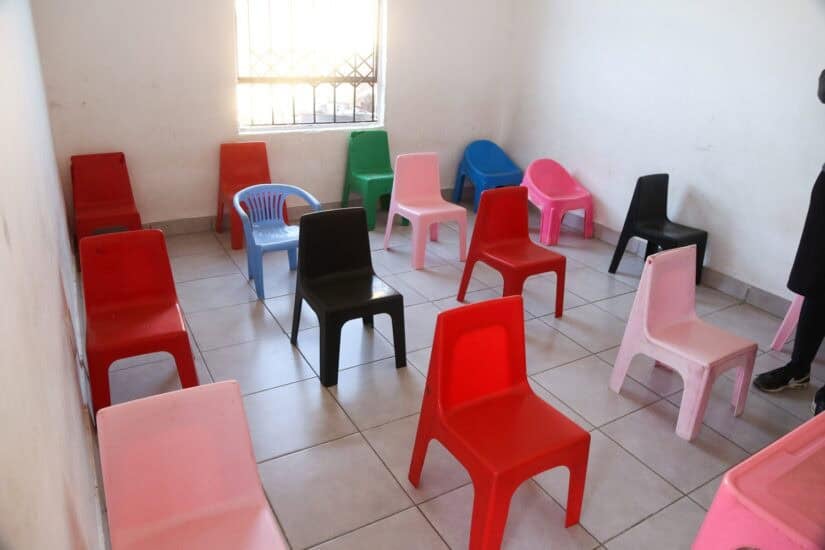
Picture: Gallo Images/ Lubabalo Lesolle


More than 1 000 preschool teachers and caregivers have gathered outside the Pietermaritzburg High Court on Tuesday, 23 June.
Inside, human rights lawyers have continued their legal battle against the KwaZulu-Natal Department of Education (KZNDoE).
The issue? The government has stopped reliably paying a vital subsidy of just R18.95 per child, per day to early childhood development (ECD) centres.
No pay, no food, no school
The Legal Resources Centre (LRC), representing the Friends of South Africa ECD Forum and the KZN ECD Alliance, wants the court to force the government to pay up what they are owed.
More importantly, they are asking judges to rule for the first time in South African history that preschool-aged children have a fundamental constitutional right to early education and care.
In its official case briefing, the LRC declared:
“This litigation is about more than unpaid money. It concerns the grim reality for children whose access to early learning, nutrition, care and developmental support depends on community-based ECD programmes that cannot survive without reliable public funding.”
Why R18.95 a day is a matter of survival
For families living in deep poverty, community-run ECD centres are a literal lifeline. They offer a safe environment, hot meals, and proper care.
When the government delays or skips these tiny daily payments, the impact hits immediately, said LRC attorney Kiara Govender.
“The subsidy, although recently increased from R17 to R18.95 per child per day, remains modest and insufficient to cover the full cost of running an ECD programme,” said Govender.
Starving budgets mean that centres have to cut down on food, leaving toddlers hungry. Mass resignations place teachers in a position to go months without salaries, and are forced to quit, and closures leave children stranded.
“However, for centres serving poor and marginalised communities, even this modest amount is the lifeline for sustaining operations, and without it, centres are forced to reduce services or close altogether,” said Govender.
This crisis hits KwaZulu-Natal hardest. In this province, 81% of young children lived below the poverty line in 2022. Food scarcity is rampant, and child stunting is also a severe issue.
A trail of silence
How did it get this bad? Govender explained that the chaos began in April 2022, when the government transferred responsibility for preschools from the Department of Social Development to the Department of Basic Education.
Suddenly, it looked as if the money dried up because they weren’t paying. The LRC sent warning letters in February 2024, October 2024, and April 2025. The department ignored them all.
“With no adequate response from the KZNDoE, the Friends of South Africa ECD Forum, the KZN ECD Alliance and three affected centres, Sakhokwethu, Phumelela and Zenzeleni, launched legal proceedings with the support of the LRC,” said Govender.
Frustrated, they took the government to court in May 2025, where Judge Siphokazi Jikela ordered that the department pay three struggling centres – Sakhokwethu, Phumelela, and Zenzeleni – their back pay within 10 days, ranging from R37 873 to R63 784.
The department ignored that order, too, sending only partial payments.
When pushed for answers regarding the missing funds, the KwaZulu-Natal Department of Education offered only a vague response, blaming “internal accounting problems”.
Because of this, preschool principals have been trapped in an impossible situation, said Govender. They cannot budget, plan or know if they can afford to feed their kids next week.
What they want
They are asking the High Court the following:
- A declaration that access to early childhood development is constitutionally protected.
- A declaration that irregular, inconsistent and delayed subsidy payments are unlawful and unconstitutional.
- An order directing the Department to account for all outstanding subsidies owed to qualifying ECD programmes.
- An order requiring the Department to provide a practical, transparent and time-bound plan for payment.
- Court supervision to ensure that the plan is implemented and that centres receive clear information about payments.
The big picture
This trial is no longer just about three small preschools in KZN. The court has allowed a child advocacy group, the Equality Collective (represented by the Centre for Child Law), to join the case as a “friend of the court” to help define what the government legally owes to its youngest citizens.
Ultimately, this is about accountability. In their final legal filings, the LRC team emphasised:
“Young children should not bear the cost of administrative failure.”