The department has urged residents to keep saving water.
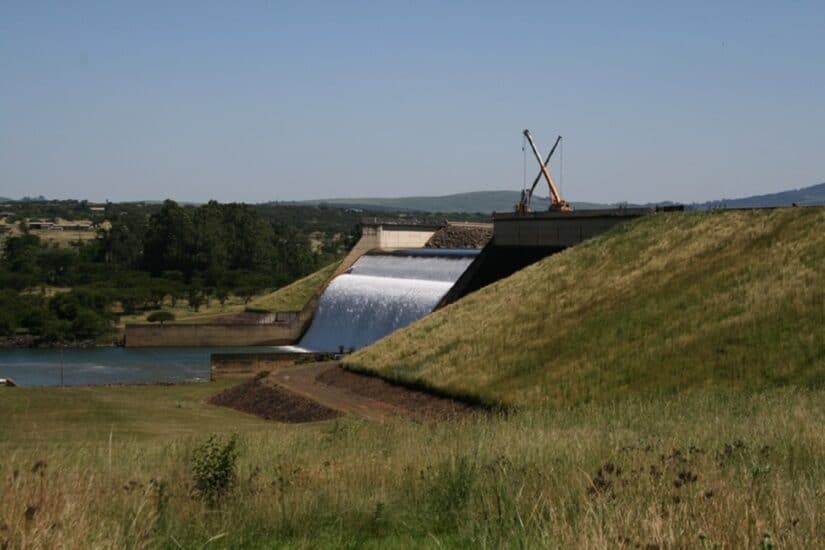
Albert Falls dam in KwaZulu-Natal. Picture: DWS


The Department of Water and Sanitation (DWS) imposed a 10% water restriction on the South Coast’s water supply until 30 April 2027, while the uMngeni and North Coast systems escaped cuts.
South Coast restriction explained
The department said the cut would bring total water supply on the South Coast down to 13 megalitres per day.
It explained that although the system started the year at 97% storage, demand had exceeded its long-term capacity.
“Water demand is currently exceeding the long-term sustainable yield of the system,” said the department.
The department also pointed to weak rainfall as a factor behind the shortage. It said supply could be restored under certain conditions.
“The restrictions may be lifted if the water supply from the Mpambanyoni Scheme is successfully reinstated, if South Coast dams reach full capacity and begin spilling, or reduced if water supply from the South Coast pipeline is consistently maintained at 4.6 megalitres per day,” said DWS.
uMngeni and North Coast spared restrictions
The uMngeni system, covering the stretch from Pietermaritzburg to Durban and from KwaDukuza to Amanzimtoti, began the year at 99.5% storage.
DWS confirmed no cuts would apply there. Even so, the department urged residents to keep saving water.
“Reducing water use remains essential… to bring usage back within authorised limits and the system’s sustainable yield, and to reduce the risk of future restrictions,” said the department.
The North Coast system, fed by Hazelmere Dam, was also above full capacity at the start of the year.
The department said it would keep strengthening the system’s long-term security through the Lower Thukela bulk water supply system.
Pressure remains despite healthy dam levels
Despite healthy storage in two of the three systems, the department warned that risks remained.
“All three water supply systems continue to face increasing pressure from rising water demand, climate variability, water losses and ageing infrastructure,” said DWS.
It reminded the public that unauthorised abstraction was not permitted and that measuring devices were compulsory under Government Notice No. 41381 of 12 January 2018.