
Lawyers partner with Western Cape police to ensure stronger cases against violent criminals and gangsters.
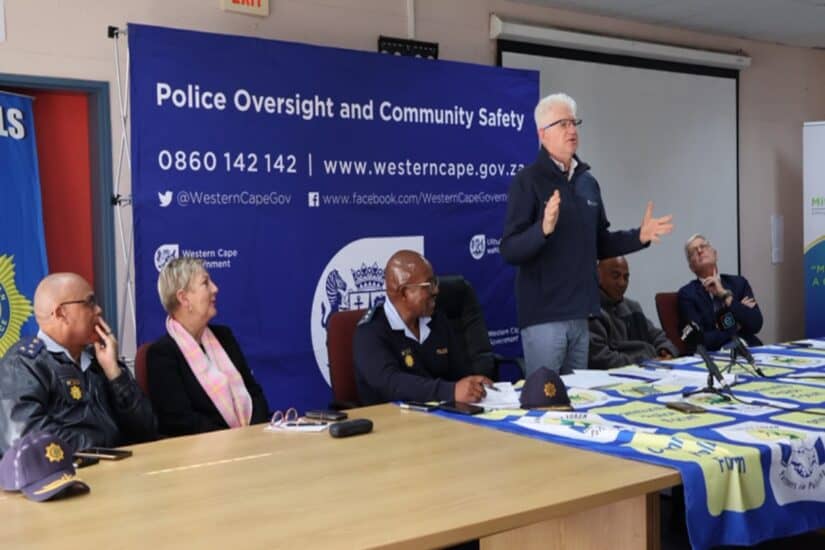
Premier Winde and SAPS officially launch “Lawyers in Police Stations Project” to improve efficiency of criminal justice system. Picture: Western Cape Government


Lawyers are heading straight into Western Cape police stations to help cops build rock-solid cases that actually stick in court.
Premier Alan Winde and police oversight MEC Anroux Marais just launched the “Lawyers in Police Stations Project” in Mitchells Plain. They’re teaming up with the South African Police Service (Saps) and an international anti-crime group, GI-TOC, to station full-time legal experts alongside officers.
The main goal? Stop cases from getting thrown out. These lawyers will guide police on taking proper witness statements, handling evidence correctly, and tightening up dockets so more violent criminals and gangsters end up behind bars.
Why the project exists
Winde said the initiative recognises a hard truth: effective policing starts at station level, yet many stations face serious resourcing gaps that hurt service delivery and court outcomes. He noted that conviction rates for gang-related shootings and murders remain below 20%, and the project seeks to close that gap by building watertight cases that survive in court.
“The aim is not to take over police work, but to strengthen technical capacity and skills at station level,” Winde said.
How it works on the ground
The project places a qualified legal practitioner at a police station on a full-time basis for three years to mentor officers and support daily casework.
Marais said the goal is to improve the quality of case dockets presented to court and rebuild trust between police and communities, which often frays after failed prosecutions.
Rollout
The model was piloted at Grassy Park Saps in March 2025 after the precinct was flagged as a hotspot for serious and organised crime. An independent evaluation found the programme improved investigative processes, prompting the expansion to Mitchells Plain.
Further rollouts are planned for the Stellenbosch Policing Precinct (Stellenbosch Central, Kayamandi and Cloetesville) and other national locations, with the private sector backing the Stellenbosch expansion.
Impact
Abie Isaacs, chairperson of the Mitchells Plain Safety and Development Forum, said technical flaws in statement-taking often dismantle dockets before they reach a courtroom, denying victims justice and eroding public trust.
“Having legal mentors working side-by-side with our local officers gives them the real-world guidance needed to build watertight cases,” he said.
GI-TOC Executive Director Mark Shaw said the initiative tests a practical model that can grow if it delivers results.
“One lawyer cannot solve these challenges alone, but Mitchells Plain is an important opportunity to test and refine a practical model that, if successful, can grow and be replicated elsewhere,” he said.
Who the lawyers are and where they come from
Winde explained that the legal practitioners are local lawyers with court experience who understand where dockets fail and what communities need when they report crimes.
The first lawyer at Grassy Park came from the legal system and built trust slowly with station personnel, he said.
Funding now comes from the Western Cape government, GI-TOC and private-sector partners, with the hope that more stations across the province will eventually host a legal resource.