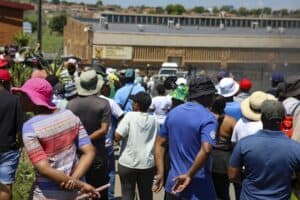
Ramaphosa said unchecked illegal migration risks security and burdens health care, while Mbeki says the threat to unity serves foreign power interests.
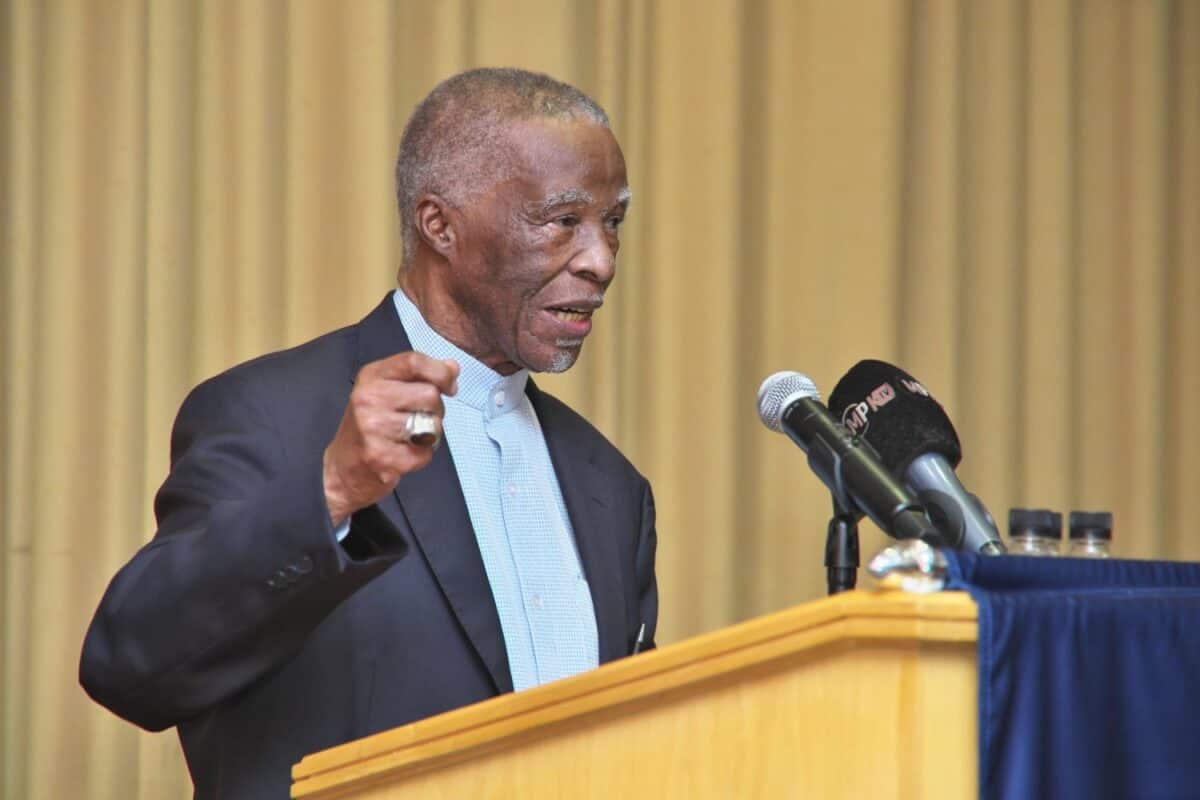
Former president Thabo Mbeki. Picture: Thabo Mbeki Foundation.


President Cyril Ramaphosa agrees with arguments advanced by March and March and political parties, ActionSA and African Transformation Movement, that illegal immigration in SA has resulted in negative consequences for the country.
This is the view of former president Thabo Mbeki, who declared Ramaphosa had associated himself with claims that “illegal migrants” are the “cause of such phenomena in our country, such as high levels of unemployment, crime and lack of economic growth”.
Mbeki accused Ramaphosa of undermining informed responses
“Their arguments remain speculative, conjecture, undermining informed responses to this societal concern. This represents a notable shortcoming for the head of state and government,” Mbeki said.
This is contained in his discussion document published on the Thabo Mbeki Foundation website, titled, South Africa’s Political and Economic Crisis: In Search of a Visible Enemy, Ghosts and African Immigrants.
But analyst Zamikhaya Maseti said though Mbeki failed to acknowledge the problems began in 1994, under successive ANC administrations, including his, he had contributed to the intellectual debate on the plight of undocumented migrants.
In his recent national address on the issue, Ramaphosa, while condemning the targeting of undocumented migrants, acknowledged the crisis and concerns raised by South Africans from all walks of life.
He said: “Illegal migration, if left unchecked, poses a risk to SA’s security, stability as well as our economic progress.”
Ramaphosa added illegal migration affects service delivery and places additional burden on essential services such as health care and education, while undermining efforts to create decent work for South Africans.
Mbeki says the threat to unity serves foreign power interests
Mbeki said when a serious threat to a country is asserted, the president is obliged to lead the country to confront the problem.
Mbeki took issue with Ramaphosa’s assertion that “almost all South Africans recognise illegal immigration is a significant challenge” – as he did in his 7 June address to the nation.
“Neither President Ramaphosa nor ‘almost all the South Africans’ he cites can provide the figure we are requesting,” Mbeki said, adding the claim undocumented migrants caused unemployment and poor service delivery must be rigorously examined.
Mbeki also blamed a “counter-revolutionary” Afrophobia agenda which aims to eliminate the government’s foreign policy focus on African unity and renaissance.
He said the SA-African relationship is a concern to others around the world, as a liberated South Africa’s interaction with the rest of Africa, based on the ANC’s long-held foreign policy approach, could spread the idea of fundamental socioeconomic transformation, including the defeat of neocolonialism to the rest of the continent.
“This would be against the direct interests of several major powers,” Mbeki said.
Maseti praised Mbeki’s rescue of debate from populism
Maseti praised the Mbeki paper as a timely contribution to the national discourse “seeking to rescue the immigration debate from populism, defend Pan Africanism and redirect public attention towards the structural causes of SA’s political and economic crisis”.
However, Maseti added Mbeki’s paper risks committing an analytical error of locating almost every SA’s contemporary crisis within the counter-revolution framework.
He said Mbeki was reluctant to acknowledge immigration management is a legitimate public policy concern outside of xenophobia.
“A more persuasive intervention would acknowledge responsibility for SA’s present condition is distributed across successive leadership generations, rather than concentrated primarily within one presidency or one political moment,” Maseti said.