


However, academic warns that social cohesion cannot be manufactured
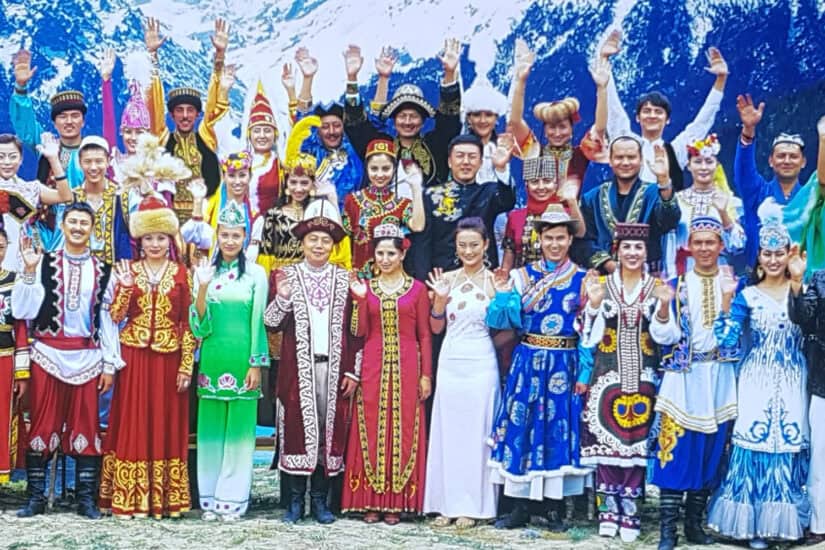
A promotional photo showcasing the diverse cultures of Xinjiang’s Uyghur Autonomous Region. Picture: Xinjiang Museun of the Fight Against Terrorism and Extremism.


In the far north-west of China is a region being held aloft as a flagship success story of ethnic cohesion solidified by economic development.
Located roughly 3 000km from the more illustrious east coast of China, Xinjiang draws its allure from its historical significance along the ancient Silk Road.
At least 13 distinct ethnic groups call the province home, drawing from the eight countries that border the Xinjiang Uyghur Autonomous Region to the north and west.
Thanks to trillions in investment in the last decade, the capital city of Urumqi and Xinjiang as a whole are positioned to become a key node in the trade and commerce of Central Asia.
However, the province is still facing accusations of human rights violations over the government’s treatment of Uyghur minorities.
Uyghur religious extremism
The Xinjiang Foreign Affairs Office last week hosted a tour of the region, in an effort to show the strides made in ethnic cohesion and the elimination of religious extremism.
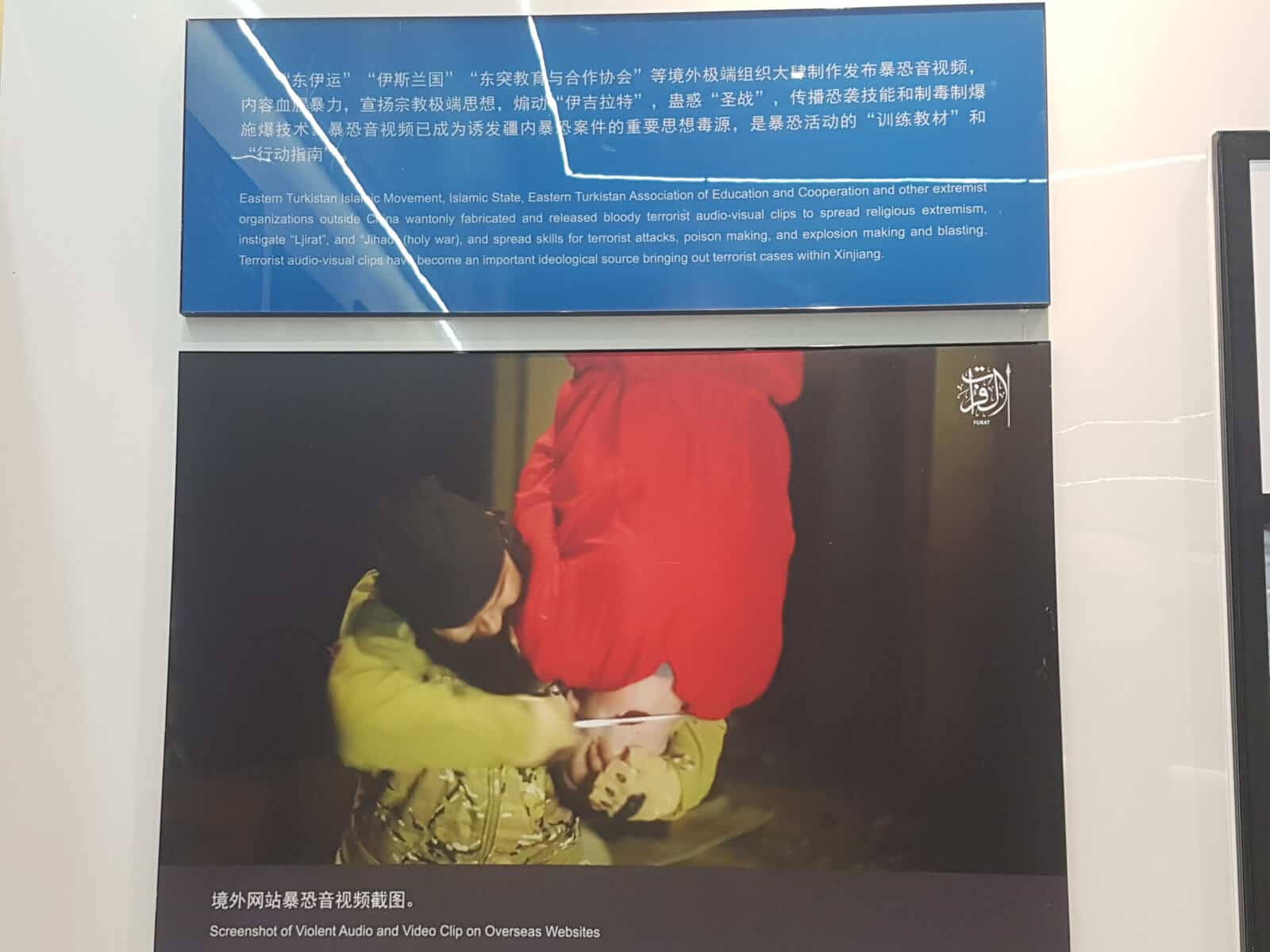
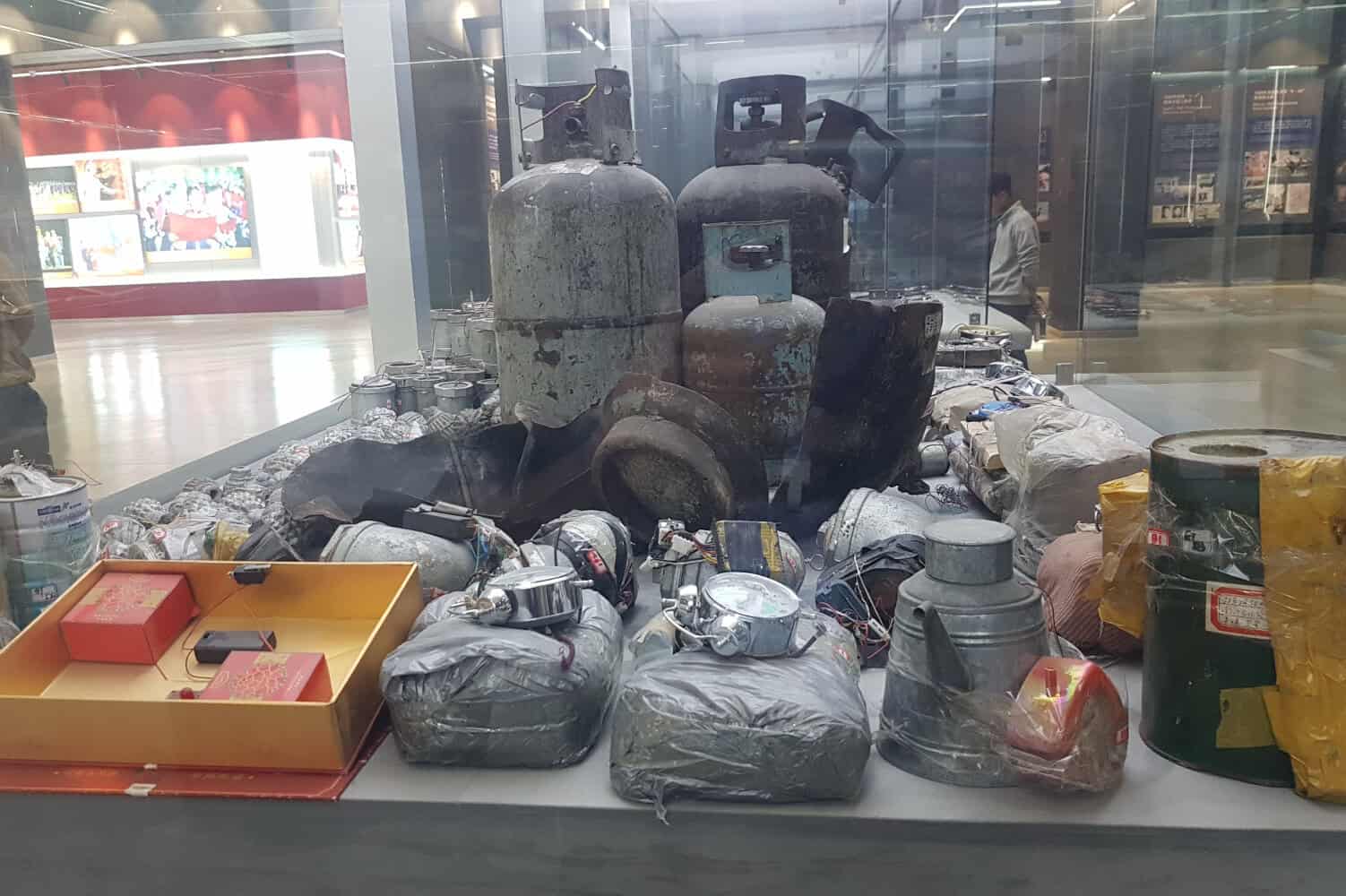
Part of the tour included a visit to the government-run exhibition on “the fight against terrorism in Xinjiang” – a no-holds-barred look at the violence.
The museum detailed at least 53 of the most deadly mass attacks against civilians, religious leaders and government institutions between 1990 and 2016 perpetrated by the East Turkistan Islamic Movement.
“The violent crimes committed by terrorists are bloody and heinous. These inhuman, anti-social and barbaric acts have brought enormous suffering to all ethnic groups in Xinjiang,” a plaque in the museum reads.
The government began a “law-based deradicalisation” programme in 2014, which resulted in the arrest of almost 13 000 suspected terrorists and the punishing of over 30 000 people for “illegal religious activities”.
Reports from the United States and Europe claimed up to 1.5 million were placed in camps, which the Chinese government states were Vocational Education and Training Centres (VETCs).
Authorities say they identified poverty as a breeding ground for extremism, leading the government to invest heavily in employment programmes, skills training and basic education.
The Xinjiang government stressed that 70% of its expenditure went towards programmes and infrastructure that directly benefited citizens.
WARNING: The below image may be disturbing to sensitive viewers.
US accused of ‘politainment’
China’s response drew criticism from the West, which accused China of using the VETC as internment camps for forced labour.
During a conference on Xinjiang’s progress last week, Professor Emeritus at the Hong Kong University of Science and Technology, Barry Sautman, offered a defence of China’s strategy.
Sautman said the VETCs were training academies aimed at getting people out of what he called the “doom loop” of low pay, which led to a lack of prospects and perpetual unskilled employment.
“The VETCs aimed to curb terrorism, and they taught skills. Most people in there were not in detention; they had no criminal record established, and many of them went home on the weekends.
“Poverty alleviation is mainly through finding employment that provides a higher income than can be earned by smallholder farming.
“Poverty alleviation programmes counter-indicate forced labour. An International Labour Organisation study found that such programmes can contribute to eliminating the need for forced labour,” explained Sautman.
The professor accused Western detractors of “sweeping assertions”, noting that 51% of all government officials and 83% of county leaders were Uyghur minorities.
He used the term “politainment” to describe US news media and political commentators, which, in tandem with the sanctions industry, he said worked to demonise China in the eyes of the US public and the wider Western world.
“The West also has a white saviour industry which consists largely of privileged whites, seeking to increase their prestige by presenting themselves as acting to liberate or rescue underprivileged people of colour, including China’s minorities.
“The Xinjiang forced labour claim can be diminished if it is insisted that, as to grave interventional crimes, there is a presumption of innocence, a burden of proof rests with the accusers and the evidence against the claim is allowed to be considered,” said Sautman.
‘Xinjiang can become a testing ground’
Attendees of the conference urged the international community to travel to Xinjiang to experience the region for themselves.
Chairman of the Italy Brics Institute Vito Petrocelli urged those criticising the region to “know before you judge”, championing Xinjiang to rediscover its Silk Road mystique.
“Xinjiang is one of the places through which the transformation of the global order is unfolding.
“Xinjiang can become a testing ground for a new international policy, greater than a new front in geopolitical confrontation.
“In a world that is finally becoming multipolar, we cannot continue to assume that there is only one authorised voice capable of defining what progress, democracy, and human rights are,” Petrocelli said.
Unity ‘an ongoing process’
However, acting Executive Dean of the Thabo Mbeki African School of Public and International Affairs Dr Edith Phaswana warned that social cohesion could not be manufactured.
“Xinjiang is asking a question that every country with diversity is grappling with: How do we build a strong sense of common belonging while respecting the histories, cultures and identities that make each community distinct?
“Unity cannot be commanded into existence, because unity is built on justice, recognition and participation, and also acknowledgement of wrongs,” said the professor.
Phaswana asserted that no nation has achieved true unity in diversity, as it was forever a fluid concept.
“Unity is an ongoing process. Historical divisions will not disappear overnight, and stability is not a panacea for ethnic unity,” Phaswana said.
*The Citizen’s trip to China was sponsored by the Xinjiang Foreign Affairs Office.



