The SACP will not win an election, but it can disrupt the ANC's dominance.
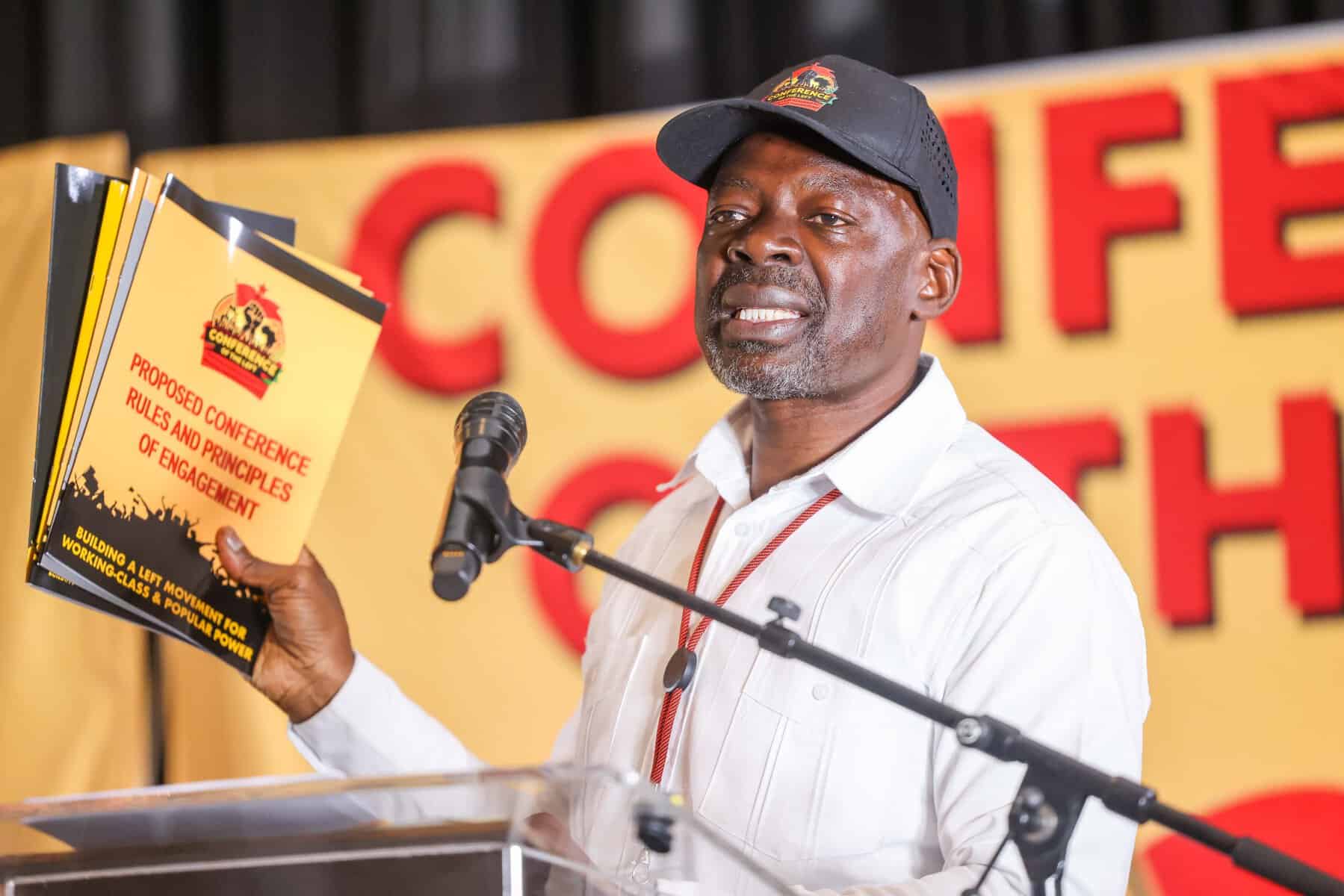
General secretary Solly Mapaila addresses the South African Communist Party’s (SACP) “Conference of the Left” at Birchwood Hotel’s OR Tambo Conference Centre on May 29, 2026 in Boksburg, South Africa. Picture: Gallo Images/OJ Koloti


In conversations with analysts, one hears a recurring refrain that the SA Communist Party (SACP) is fading, its prospects dim and its relevance in the November local elections negligible.
Yet journalism is not about echoing consensus; it is about weighing perspectives and presenting arguments grounded in observation.
That is why I argue the SACP’s chances are stronger than many predict. The SACP’s proximity to the ANC is precisely what makes it a formidable contender.
Unlike traditional opposition parties, it knows the ANC from the inside – its strengths, its weaknesses and its contradictions. For decades, it has been part of the ANC’s intellectual and political machinery, shaping policy and contesting elections under its banner.
This closeness is what unsettles secretary-general Fikile Mbalula and the ANC leadership because they know the SACP is not an outsider throwing stones, but a former ally.
The SACP has, since 1994, been complicit in the ANC’s neoliberal turn. The party became part of the governing establishment, its ministers serving in Cabinet while the working class it claimed to represent languished on the sidelines of the economy.
This is the contradiction that haunts the party today. Chris Hani, its general secretary who was assassinated before he could test the waters of freedom he fought for, had warned of this danger.
He loathed comrades who prioritised accumulation over the interests of the poor. His vision of a principled left was betrayed.
Now, under Solly Mapaila‘s leadership as general secretary, the party is attempting to reclaim its identity as a genuine left alternative. Mapaila is busy positioning the SACP closer to the masses, articulating a sharper critique of inequality and corruption.
The challenge, however, lies in convincing voters that the party is not simply ANC elite. Years of association with the ruling party have blurred its image and it must now persuade the electorate that it offers something distinct.
The SACP will not win outright; its size and resources are too limited. But the party’s potential lies in attracting disillusioned ANC supporters who cannot stomach the ANC’s failures.
These voters, unwilling to cross over to the DA or EFF, often abstain, hence the high level of apathy. Their absence at the polls has been a silent protest against poor service delivery and the ANC’s mishandling of issues such as immigration and jobs.
The SACP offers them a home within the familiar congress family, without the baggage of the ANC’s corruption scandals. The SACP’s role is less about capturing municipalities outright in November, and more about reshaping the balance of power within the broader liberation movement.
The ANC knows this, which is why its leadership is uneasy. A weakened ANC facing erosion from within is more vulnerable than one challenged by external opposition.
Even modest gains at the polls would represent a symbolic rupture in the alliance, signalling the working class is no longer captive to the ANC.
Of course, the SACP must overcome scepticism because its long association with the ANC government has left scars and many voters will question whether it can truly deliver a break from the past. But with Mapaila steering the party back to its roots, the possibility of renewal exists.
The challenge is to translate rhetoric into credibility and credibility into votes. In the end, the SACP’s prospects cannot be dismissed outright.
It will not win an election, but it can carve out space, disrupt the ANC’s dominance, and remind South Africans that the left still has a voice.
That, in itself, would be a significant achievement in the evolving landscape of local politics.