Where was this urgency when neighbourhoods such as Hillbrow and Yeoville became symbols of state neglect because of the infiltration?
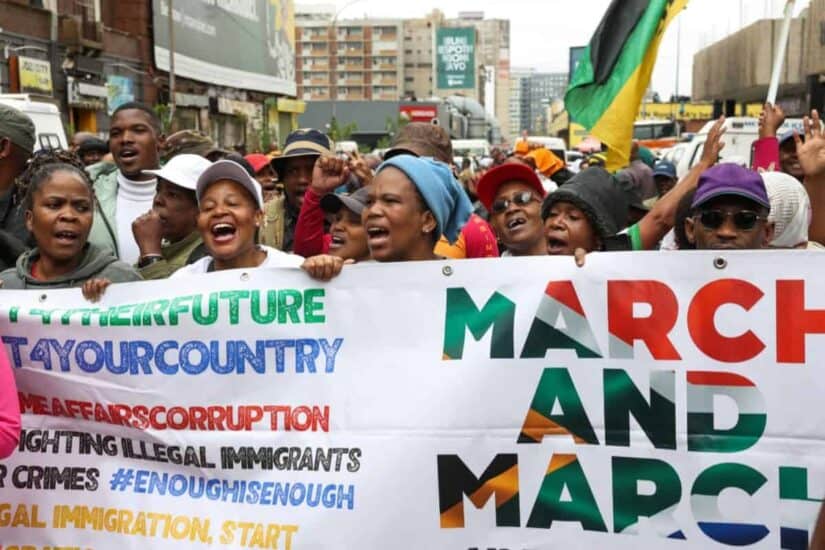
Protestors at De Villers Street in Johannesburg on 3 November 2025. Picture: Gallo Images/Luba Lesolle


Without sounding like a broken record, one of the many voices in the sea of many members of post-apartheid South Africa, there really is nothing more demoralising and disheartening than the ruling party’s way of being a government of reaction as a opposed to one of change and reaction.
Or perhaps this change that we are promised periodically in time for elections is nothing more than an electioneering slogan – translating into nothing.
Even scarier, to preserve law and order and for business to continue and citizens of this country who are not protesting to do their business of the day – government must stop being reactive and be prepared and plan.
The townships burn and all the government has been doing for the past 20-plus years is react.
From president to president, government leaders feel no shame in walking to squatter camps, littered with the tin roofs of shack dwellings where an air of poverty permeates the air.
These settlements are named after the heroes of the struggle: Winnie Mandela in Thembisa, Steve Biko informal settlement in Wesselton and even Ramaphosa Settlement in Reigerpark.
These are names that were meant to inspire, yet now they represent the inescapable abyss of poverty.
What has further fuelled public frustration is the confidence with which acting police minister Firoz Cachalia and other government representatives have found their voices when addressing citizens.
South Africans are entitled to ask: where was this urgency when neighbourhoods such as Hillbrow and Yeoville became symbols of state neglect because of the infiltration?
Where was this resolve when stolen vehicles crossed borders, government medication disappeared from public facilities and human trafficking networks allegedly exploited weaknesses in enforcement?
Where was this mobilisation when illegal mining operations turned communities into battlegrounds and property values collapsed under the weight of lawlessness?
Most importantly, where was this seemingly limitless budget when these problems were taking root?
The public is not questioning government’s ability to act; it is questioning why it is most visible when responding to angry citizens, rather than preventing the conditions that made them angry in the first place.