At the heart of the Kashmir dispute are not borders, but people who have endured oppression, violence and the denial of a promised political future.
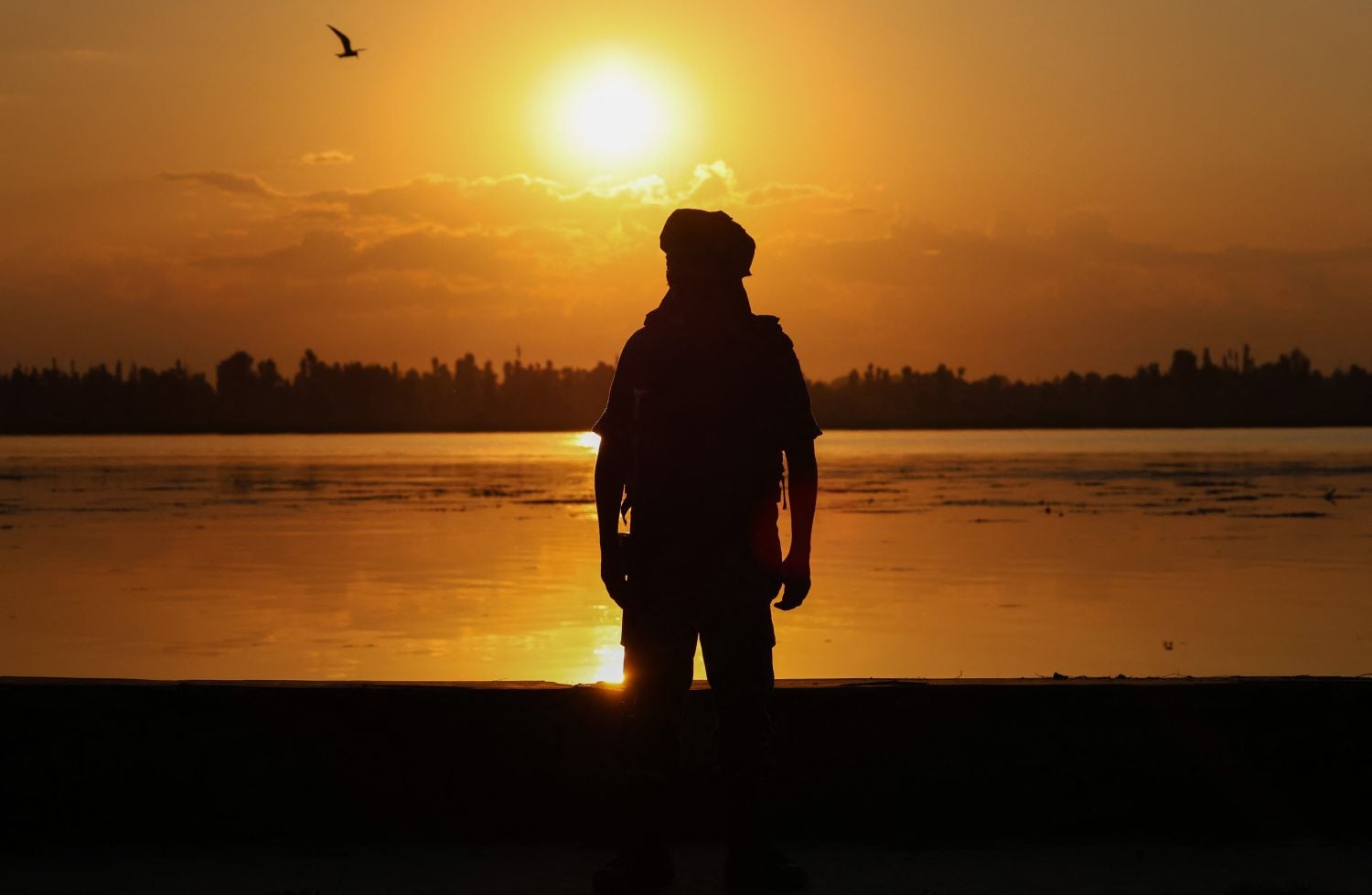
An Indian paramilitary trooper stands guard on the shores of Dal Lake in Srinagar, Jammu and Kashmir, India, on 27 July 2026. Security has been increased across the Kashmir Valley following the killing of a police officer in a suspected militant attack in Anantnag district on 22 July. Picture: Firdous Nazir/NurPhoto) (Photo by Firdous Nazir / NurPhoto via AFP


There are conflicts in the world that linger, not because they are insoluble, but because powerful interests benefit from their continuation, or because international powers choose to overlook them for geopolitical expediency.
For decades, apartheid South Africa was tolerated until it became impossible to ignore.
Today, Palestine under Israeli occupation, and Jammu and Kashmir under Indian control, stand as stark reminders of unresolved struggles the world has allowed to fester.
The Kashmir dispute is among the oldest items on the United Nations Security Council’s agenda. At the partition of British India in 1947, this Muslim-majority state was to decide whether to join Pakistan or India.
Instead, the territory became the stage for repeated wars and diplomatic stalemates. The most recent confrontation, following the Pahalgam attack last year, showed how combustible the issue remains between nuclear-armed neighbours.
Initially, Kashmir’s ruler, the Maharaja, sought neutrality. In 1947, he proposed a Standstill Agreement to both Pakistan and India, preserving administrative arrangements inherited from British rule.
Pakistan accepted, India did not. Within months, Indian forces invaded, occupying large parts of the territory.
Kashmiris managed to free Azad Kashmir, but the larger dispute was internationalised. The UN passed resolutions calling for a free and impartial vote – a promise that remains unfulfilled.
India has consistently redefined the conflict as an internal matter. The turning point came on 5 August 2019, when New Delhi revoked Articles 370 and 35A of its constitution.
These provisions had granted limited autonomy and protected permanent residents’ rights over land and employment.
Pakistan believes their removal was illegal, imposed without Kashmiri consent, and followed by a sweeping security lockdown. The territory was later downgraded to two “Union Territories”, tightening central control.
Pakistan and the Kashmiri people condemned the move as incompatible with UN resolutions. Each year, people of Jammu and Kashmir observe Youm e Istehsal – the Day of Exploitation – to mark what they see as an assault on Kashmiri identity.
Critics argue the measures were designed to alter the demographic composition of a Muslim-majority region. Land laws were changed to allow outsiders to purchase property, while electoral boundaries were redrawn to favour Hindu-majority areas in Jammu.
The crackdown extended beyond constitutional changes. Homes and properties of activists were seized or demolished.
Journalists, lawyers and human rights defenders faced raids and prosecution under sweeping security laws. Internet shutdowns, surveillance and restrictions on movement have become tools of control.
Amnesty International and other watchdogs have documented extrajudicial killings and enforced disappearances.
The presence of nearly a million Indian troops has permeated every aspect of daily life – education, employment and access to justice.
At the heart of the Jammu and Kashmir dispute are not borders, but people. Their lives, rights and futures must not be eclipsed by the strategic calculations of states.
For generations they have endured oppression, violence and the denial of a political future they were promised.
Human rights are either universal, or they are not. International law is either applied consistently, or reduced to an instrument of power.
Until these principles are upheld, such conflicts will remain open wounds.