


The Bosa founder faces a huge battle in the local government elections and to stay relevant, he must show his party isn't just a political spaza shop.
 Elections 2026
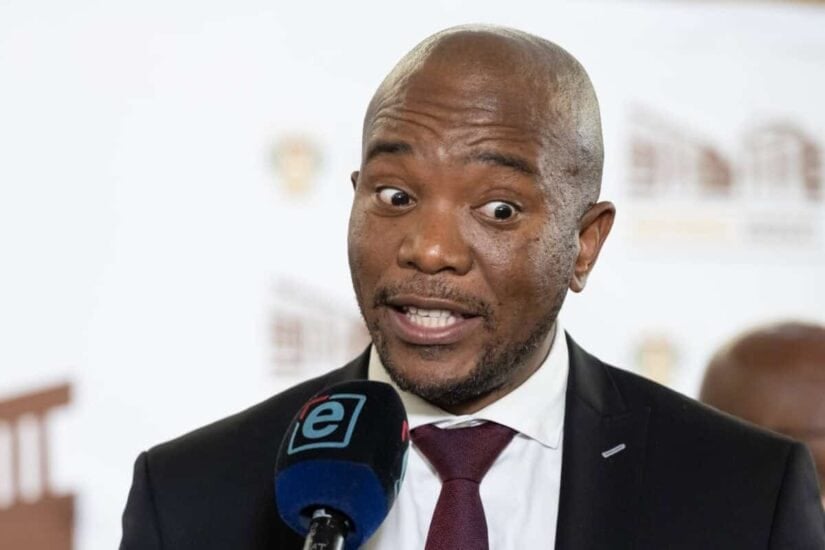
Mmusi Maimane, leader of Build One South Africa. Picture: Gallo Images/Jeffrey Abrahams


Build One South Africa (Bosa) leader Mmusi Maimane was once one of the most recognisable faces of South African opposition politics.
Today, the question is no longer whether he can command a national political stage, but whether he can prevent his party from becoming another tombstone in the crowded graveyard of small political parties.
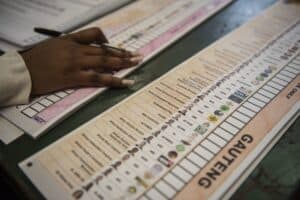
The clock is ticking. South Africans go to the polls on 4 November and Bosa says it will contest 24 municipalities across five provinces with 794 candidates.

LIVE interactive map, latest news, multimedia and more!
View MapThat sounds impressive on paper, but political parties aren’t built on the number of candidates, they are built by voters who believe their votes will make a change.
That is where Maimane faces his biggest challenge. He is not an inexperienced politician. He once led the DA and served as its parliamentary leader. He knows how to campaign, debate and occupy political space.
Yet, Bosa has struggled to convert Maimane’s personal political profile into a powerful grassroots movement.
There is also a perception that Bosa is a one-man spaza shop. Following the July expulsion of the party’s sole Gauteng MPL, Ayanda Allie, over a salary dispute, Maimane is the face, the voice, the chief campaigner and seemingly the product.
That may be an unfair characterisation, particularly because Bosa does have other leaders, including deputy leader Nobuntu Hlazo-Webster, who is the mayoral candidate for Joburg.
The party’s problem is therefore not simply Maimane. It is the failure to make Bosa bigger than Maimane.
South Africa has seen this movie before. Charismatic leaders launch parties promising a new political beginning, only for the organisation to struggle to develop deep structures, powerful local personalities and an identity that survives beyond the founder.
Perhaps Bosa tried to do too much nationally before proving itself locally. In a country obsessed with coalition politics, a voter wants to know a simple thing: what will you actually do for my municipality?
Bosa needs to answer that question aggressively. It needs to stop speaking like a think-tank and start campaigning like a political machine.
It must give voters concrete promises, such as how to fix refuse collection, fight corruption, improve roads, create opportunities for small businesses and make municipalities work. It must find credible local candidates and make those candidates household names.
Maimane should also consider a painful political reality. Perhaps his strongest route back to relevance is not the Union Buildings, parliament or national television – it is Joburg.
Herman Mashaba has understood this. ActionSA has once again put him at the centre of the Joburg mayoral contest, making the city his political battlefield.
Other parties are doing the same, with the Joburg race attracting heavyweight candidates from across the political spectrum.
Would Maimane have been better served as Bosa’s Joburg mayoral candidate? Perhaps. Joburg offers politicians something national politics often cannot: a laboratory where promises are tested against visible results.
If Maimane can turn Bosa into a serious force in Joburg, Tshwane or another major metro, the national conversation would change. But if Bosa remains primarily “Mmusi Maimane’s party”, rather than one led by Maimane, its future becomes uncertain.
The local government elections will be more than another electoral contest for Bosa. It will be a referendum on whether Maimane can turn political recognition into political power.
South Africa does not need another party with a clever name, polished speeches and ambitious manifestos. It needs a party that can knock on doors, win trust and deliver results.
Maimane still has time. But not much. The political spaza shop needs to become a supermarket – or risk closing down.