
From stokvels to informal trading, communities created alternative institutions that sustained entrepreneurship and economic mobility.
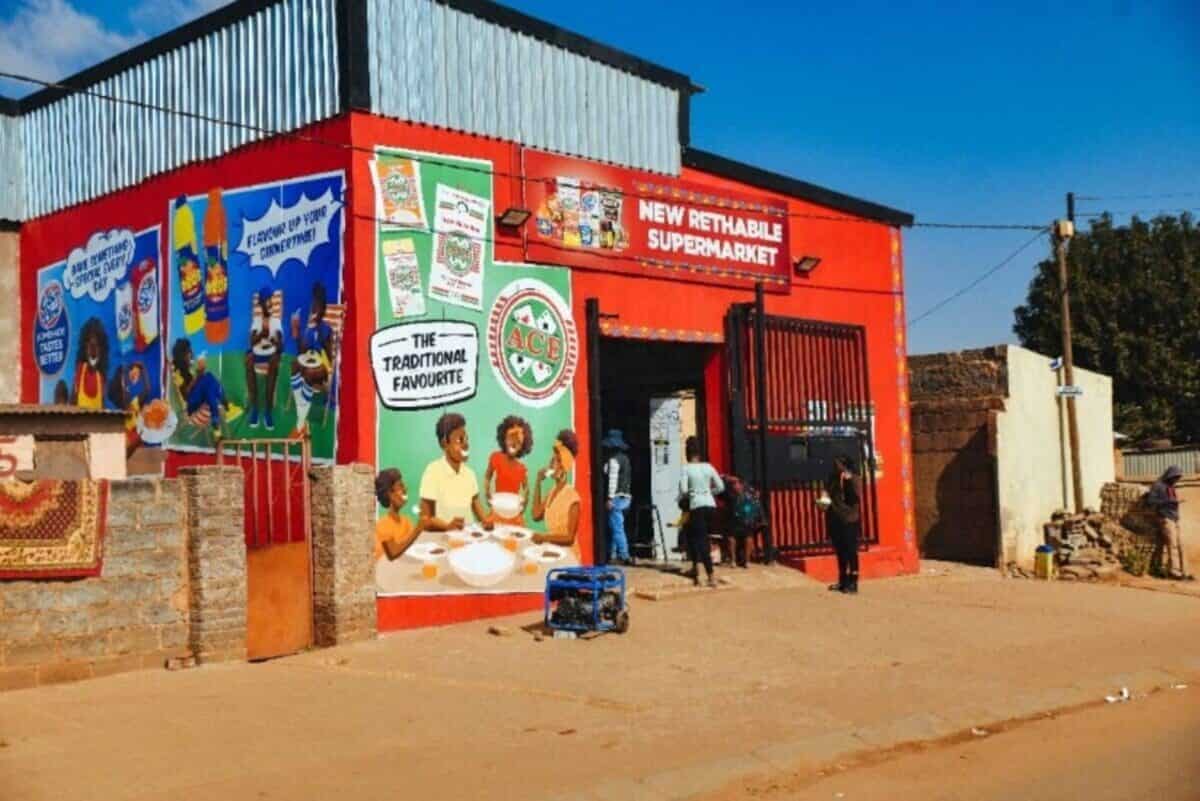
Black South Africans entered the democratic era with a rich tradition of commerce, institutional organisation and capital formation. Picture: Supplied


South Africa’s contemporary debate about township retail and informal trade suggests that before 1994, blacks were commercially passive and that modern retail systems emerged only through post-apartheid globalisation or migrant entrepreneurship.
This interpretation is historically inaccurate. Long before democracy, blacks had developed sophisticated commercial networks, informal financial systems, wholesale supply chains and business organisations that enabled them to survive – and often prosper – despite the restrictions imposed by apartheid.
Far from being passive participants in the economy, they built resilient structures designed to circumvent exclusionary legislation and create opportunities where none existed.
Let’s begin with Johannesburg’s Park Station. More than a transport hub, it functioned as one of Southern Africa’s most important economic arteries.
Workers from South Africa, Lesotho, Botswana, Swaziland, Mozambique and Malawi passed through its concourses carrying wages earned in the mines, factories and industries that powered the regional economy.
Every payday, this movement of workers translated directly into purchasing activity. Families depended on remittances sent home, while urban consumers purchased food, clothing, furniture and household necessities from a growing network of black-owned enterprises.
Long before economists coined the phrase “township economy”, a sophisticated cycle of earning, spending and reinvestment was already operating across Southern Africa, with Johannesburg serving as its commercial heart.
At the same time, Soweto emerged as far more than a labour reservoir. It became home to teachers, nurses, doctors, entrepreneurs and intellectuals who challenged apartheid’s attempt to confine black people to the margins of economic life.
Institutions such as Mandela and Tambo Attorneys defended trading rights and challenged discriminatory restrictions, while publications such as Drum Magazine documented an urban culture defined by ambition, enterprise and self-determination.
The story of township commerce is often reduced to a handful of celebrated names, most notably Richard Maponya. Yet Maponya was part of a broader generation of entrepreneurs who built businesses despite severe legal and financial obstacles.
Their efforts were supported by organisations such as the National African Federated Chamber of Commerce (Nafcoc), under the leadership of Sam Motsuenyane, who understood that political liberation without economic infrastructure would remain incomplete.
Nafcoc became more than a business organisation. It served as a platform through which black entrepreneurs exchanged ideas, developed commercial networks and advocated for greater economic participation at a time when many doors remained closed.
The organisation helped nurture a generation of business leaders who would later contribute to South Africa’s post-apartheid economy.
Equally important were stokvels, burial societies and community savings schemes. These institutions performed many of the functions traditionally associated with formal banking.
They mobilised capital, financed businesses and provided liquidity at a time when mainstream financial institutions routinely denied black entrepreneurs access to credit.
Far from being informal social gatherings, these collective savings mechanisms represented an alternative financial architecture built from necessity.
Through disciplined savings and community accountability, they financed education, housing improvements, business startups and countless family enterprises.
They demonstrated a principle that has long characterised black economic life: when formal institutions excluded communities, those communities built institutions of their own.
By the late 1980s, the informal economy had grown sufficiently to demand organised representation.
The African Catholic Hawkers and Informal Business Association, under Lawrence Mavundla, became an influential voice for informal traders, helping secure trading rights and challenging restrictive municipal regulations that threatened the livelihoods of street vendors and small-scale entrepreneurs.
Corporate wholesalers soon recognised the scale of this market. Companies such as Metro Cash & Carry did not create township commerce; they integrated into an already established ecosystem.
Independent black traders formed a substantial customer base, using wholesale networks to strengthen local businesses and compete within a constrained economic environment.
Township traders were not marginal participants in the retail economy. They were among its most sophisticated and important customers.
Many arrived with detailed purchasing plans, intimate knowledge of pricing structures and a deep understanding of local consumer demand.
The notion that township commerce lacked organisation was contradicted daily by traders whose businesses depended on disciplined stock management, strong customer relationships and prudent financial control.
Before the term “spaza shop” became commonplace, communities relied on backyard stores, butcheries, coal yards, dry cleaners and countless service enterprises that met the daily needs of residents.
The minibus taxi industry provides perhaps the clearest example of indigenous black capital formation.
Faced with inadequate transport infrastructure and limited state support, operators created their own networks, financed vehicle purchases, established route associations and developed a self-regulating industry that today transports millions of South Africans every day.
Whatever its challenges, it remains one of the most significant examples of black-owned economic organisation on the African continent.
Black South Africans did not arrive at democracy as a tabula rasa, or clean slate. They entered the democratic era with a rich tradition of commerce, institutional organisation and capital formation.
Under apartheid, trade was not merely an economic activity. It was a form of resistance, a mechanism of survival and, ultimately, a foundation upon which modern South African enterprise was built.