Revitalising South Africa's defence industry could boost innovation, create jobs and enhance national security.
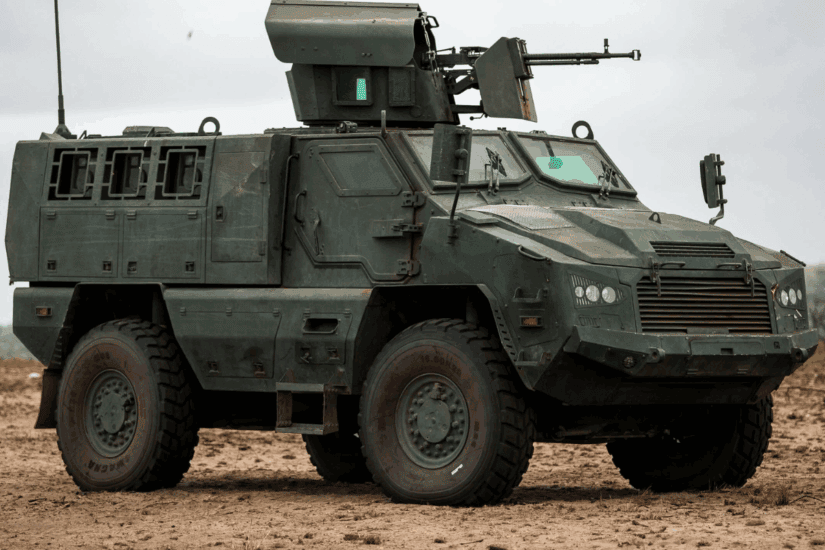
The Paramount-built Mbombe 4 is a South African built 4×4 mine-protected armoured vehicle designed for a variety of military missions. Pictures: Facebook/Paramount Group


The South African defence industry lekgotla which kicks off on Monday is perhaps one of the most crucial – and most anticipated – defence events in the past 30 years.
In the 1990s, we had an incredible and thriving local defence industry that was widely regarded as a global pioneer in mine resistant ambush protected vehicles.
We deployed the first combat helicopter to be designed and built in Africa; our scientists and engineers did pioneering work on unmanned aerial vehicles, or drones, they built surface-to-airmissiles and designed heads-up displays for pilots’ helmets.
As a defence force, declining budget allocations have meant that we have not been able to support them as we should.
Instead, those South African defence companies have been forced to find new markets for their products and even enter into partnerships with other defence companies from other countries to be able to survive.
In the meantime, the theatres of war have changed and the manner in which they are waged, as we have seen from Ukraine, where decades of strategic dogma have been found wanting, with conventional mechanised brigades being held up effectively by teenage gamers flying inexpensive armed drones.
The advent of AI and the Fourth Industrial Revolution takes this even further – and at warp speed.
The lekgotla is about far more than simply about finding ways of effectively and efficiently re-equipping the South African National Defence Force (SANDF); our local defence industry is even more important than that.
Aerospace and defence sit at the apex of any economy; they incubate and drive research and development and, as such, attract our very brightest graduates.
If we don’t have a flourishing and sustainable defence industry, it is nigh on impossible to keep them in the country after they graduate because we have nothing to offer them.
The defence industry, too, creates downstream and upstream opportunities, acting as a catalyst for the broader economy, whether it is using local raw materials in manufacture or creating economic jobs and opportunities in the small, medium, and micro enterprises sector through the greater supply chain.
In 1990, as the Cold War drew to a close, the industry employed about 130 000 people directly, while the research and development spend was about R6 billion. Today that has declined to R1 billion a year.
Over the same time, defence procurement has dropped from about R26 billion to less than R5 billion. Employment has followed the same trajectory.
There are about 600 companies in the South African defence ecosystem directly employing 20 000 people and indirectly supporting another 80 000 jobs – and yet the sector generates an annual turnover of just under R25 billion, of which almost 40% is exports.
There is incredible potential, but also great risk because if we do not work together, the country faces the sovereign risk of becoming a technology and price taker dependent on other countries’ defence companies for its defence, rather than developing its own solutions.
The defence industry is as much an instrument of foreign policy as the SANDF. The solutions it develops, primarily for its own country, can just as well be made available to other markets as we help friendly nations maintain order and keep the peace in their own states, while defending themselves against external threats, asymmetric or otherwise.
The defence industry is also so much more than the manufacture of guns, bullets and bombs, a fact which is often ignored by detractors but which is the first thing that will strike visitors to the biennial African Aerospace and Defence expo at Air Force Base Waterkloof in September.
Many innovations that stem from this sector have daily uses like GPS, which was originally a military application and today is available for free on a variety of apps, or the microwave which was born out of radar research.
But perhaps the biggest of all has been the internet, which was designed a platform for secure military communication in times of war and now has become part of daily life.
Next week, the defence industry lekgotla provides us with a unique opportunity to rejuvenate and support our own defence industry, bringing together senior government leadership, including our generals and admirals, to meet with the captains of industry to identify barriers for growth and cooperation and find ways of creating a cutting-edge, sustainable and innovative defence industry.
We need not just to re-equip our own defence force, but to create the kind of career growth for our engineers and scientists that currently only exists internationally and support our allies with defence solutions that are inherently African, yet of world-class standard.
Our national security goes hand in hand with economic strength and a flourishing defence industry can – and must – do both.
We have the skills, we have the people and we have the resources. We must harness all of that to ensure we don’t lose any of it, but instead build off the platform that we have.