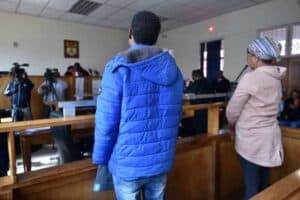
Minenhle Makhanya authorised non-security upgrades, including a swimming pool, tunnels and lifts, causing costs to balloon from R27.8 million to R216 million.
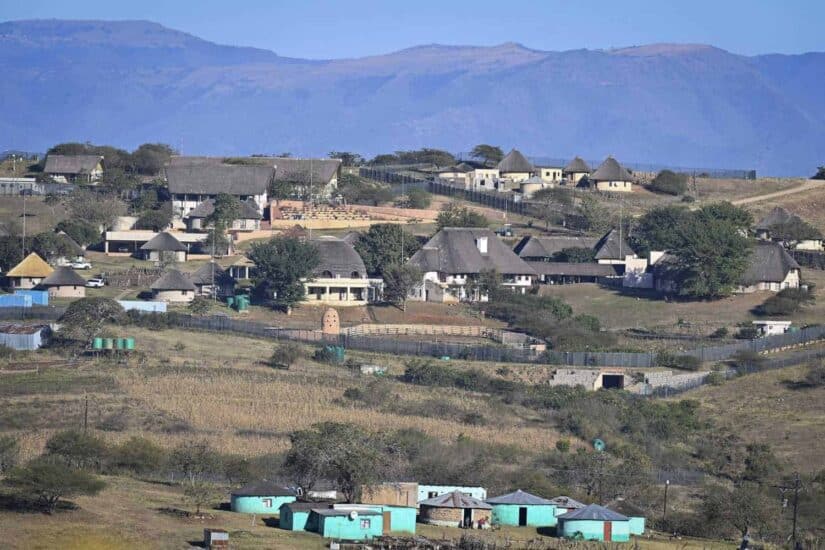
A general view of former president Jacob Zuma’s Nkandla homestead. Picture: Gallo Images/Volksblad/Mlungisi Louw


The Special Investigating Unit (SIU) has secured a judgment by the Special Tribunal ordering Minenhle Makhanya, the former architect and principal agent responsible for the security upgrades at former President Jacob Zuma’s Nkandla residence, to pay the National Treasury more than R147 million.
The amount represents the financial loss suffered by the Department of Public Works (DPW) as a result of unlawful conduct in the project.
Millions
Makhanya was ordered to pay R147 269 444.06, an amount which the SIU said represents the financial loss suffered by the DPW due to unlawful conduct in the project. He was also ordered to pay the costs of the legal proceedings, including the costs of two counsels.
The judgment, delivered on Wednesday, 26 August 2026, found that Makhanya’s appointment and subsequent conduct in the Nkandla upgrades were unlawful and resulted in significant financial loss to the State.
The Tribunal further ordered that the repayment will accrue interest at 11.25% per annum from the date of judgment.
Initial costs
The investigation into the Nkandla security upgrades was authorised in terms of Proclamation R59 of 2013, which directed the SIU to investigate allegations relating to DPW’s procurement and to recover financial losses.
Following Zuma’s election as President, the South African Police Service (Saps) and South African National Defence Force (SANDF) conducted security assessments and identified additional measures.
Based on these assessments, DPW initially determined the project cost at R27 893 067.46, which was authorised on 11 August 2009.
DPW was required to procure goods and services in accordance with procurement laws. Project manager DJ Rindel appointed Makhanya as principal agent on 27 August 2009.
The Tribunal found that his appointment was not preceded by a competitive bidding process, that there was no lawful justification for bypassing procurement requirements, and that Makhanya was not listed as a supplier with DPW.
Escalation of costs
The SIU investigation found that Makhanya authorised and oversaw works beyond the security measures identified by Saps and SANDF. The project cost escalated from R27.8 million to R216,010,478.24.
Structures authorised included tunnels with exits and lifts, 20 accommodation units for Saps and SANDF, a laundry facility, a visitors’ lounge, basement clinic parking, VIP parking, a fire pool, relocation of households, internal roads, air‑conditioning, and landscaping, totalling R68 506 106.
The Tribunal found Makhanya authorised and certified payments for structures not required by security assessments, failed to obtain written approvals for variations, certified payments above market costs, and approved payments for incomplete or unaccounted work.
He authorised payments to Moneymine Investments 310 CC and Bonelena Construction and Projects (Pty) Ltd amounting to R54 825 513, contrary to contract provisions.
Tribunal findings
The Tribunal found Makhanya breached statutory, professional and contractual obligations under the Architectural Profession Act, the Code of Professional Conduct, DPW’s Manual for Architects, and the JBCC agreement.
Defences raised by Makhanya, including claims he acted under Saps and SANDF instructions and arguments on prescription, were rejected.
“It is regrettable that the first defendant (Makhanya) stands alone as the person against whom the SIU has launched action, as he clearly did not act alone in allowing the costs of the upgrade at Nkandla to balloon,” Judge K. Pillay stated.
“However, as architect and principal agent, he bore the responsibility to ensure that the second defendant (DPW) did not incur fruitless and wasteful expenditure.”
The Tribunal declared invalid the contract concluded by or on behalf of the then Director‑General of DPW in relation to Makhanya’s appointment and ordered him to pay legal costs, including two counsels. The ruling runs to 73 pages, detailing breaches and obligations.
Recovery
The SIU accepted Makhanya’s submission reducing the claim by R7.8 million, which Zuma repaid for non‑security upgrades. This amount will be deducted from the total repayment.
The Tribunal’s orders form part of the SIU’s mandate to recover public funds lost through unlawful conduct. In line with the Special Investigating Units and Special Tribunals Act 74 of 1996, the SIU will refer any evidence of criminal conduct uncovered during its investigation to the National Prosecuting Authority.
The Nkandla upgrades were previously the subject of the Public Protector’s 2014 report Secure in Comfort, which found Zuma unduly benefited. The Constitutional Court later ordered Zuma to repay R7.8 million, and the phrase “pay back the money” became a rallying cry in Parliament.