
Auditor-general highlighted general overhaul contracts and security services for irregular expenditure
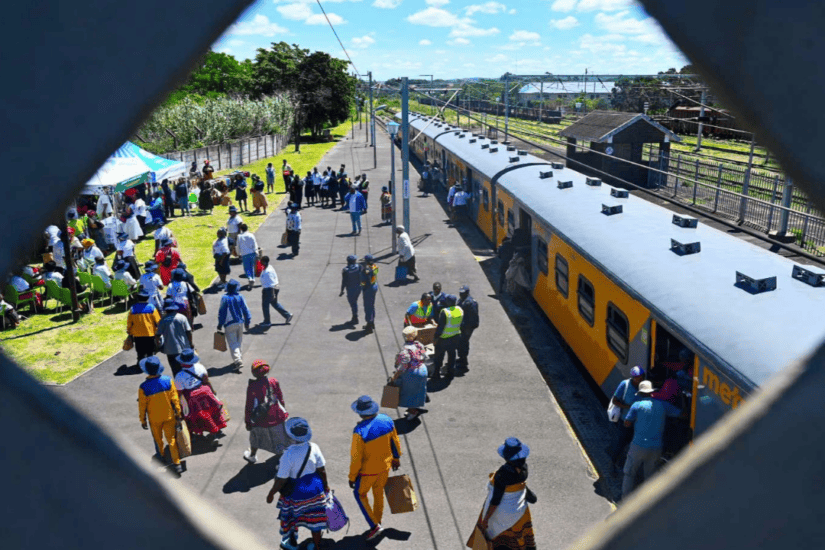
Picture: Passenger Rail Agency of South Africa (Prasa)


The Auditor-General of South Africa (AGSA) has raised concerns after identifying R932 million in irregular expenditure at the Passenger Rail Agency of South Africa (Prasa) that has not been dealt with.
Prasa’s irregular expenditure
R19.2 million in irregular expenditure was identified at Prasa during the 2025/26 audit cycle, indicating significant levels of non-compliance.
“The longer it takes the entity to conclude these processes, it then impedes the opportunities of those monies being recoverable, which then speaks to almost a billion rand that has been spent with no value to the entity or the state as a whole,” AGSA’s Aphendule Mantiyane said after the auditor-general met with members of the Portfolio Committee on Transport and Prasa.
“So its going to be critical for the entity to then deal with those balances speedily and make it a point to recover the money,” she added.
Meanwhile, Prasa noted that irregular spending was reduced by R23 billion, adding that behind these figures are South Africans getting to work and to school safely and affordably.
General overhaul contracts
According to AGSA, the matters surrounding irregular expenditure remain under assessment as Prasa is disputing the non-compliance and the associated irregular expenditure.
AGSA noted that this has been escalated to National Treasury.
It explained that the irregular expenditure investigated was related to general overhaul contracts.
Non-compliance
Mantiyane said that management is in the process of submitting a condonation request to National Treasury.
The second-highest irregular expenditure balance relates to security service contracts that have been extended on a month-to-month basis since 2020/21 due to delays in the procurement of replacement security service controls.
Irregular expenditure also arises from multiyear contracts that have not yet been investigated.
Reasons for not dealing with wasteful expenditure
Despite noting a decrease in fruitless and wasteful expenditure (FWE) over the years, Mantiyane said that it has not been adequately dealt with due to prolonged suspensions that are being considered for write-off, and management requesting approval from the board.
“Some FWE arose from interest charges incurred as result of late payments,” Mantiyane explained.
Investigations underway
AGSA added that the related investigations have not yet been finalised.
It suggested that the committee should continue to monitor the adequacy of governance, risk management and internal control processes to ensure that identified risks and deficiencies are addressed.
It also noted that Prasa has vacancies in key positions, including the chief procurement officer and chief financial officer.
Understaffed
“The SCM unit is understaffed, with insufficient capacity (i.e. vacancies) to handle the volume of procurement,” Mantiyane noted.
AGSA explained that both roles are filled in an acting capacity, which poses a risk to sustainable audit outcomes, as there is no permanent leadership to enforce controls and drive action plans.
‘Little progress’
AGSA is also worried about non-compliance.
“There has been little to no progress when it comes to compliance with key legislation, as we noted the most common areas of non-compliance,” Mantiyane said.
She noted that effective and appropriate steps were not taken to prevent irregular expenditure, fruitless and wasteful expenditure.
Investigations were not conducted to identify officials who incurred irregular, fruitless and wasteful expenditure.
‘Lack of accuracy’
She added that resources were not utilised economically.
“Some of the goods, works or services were not procured through a procurement process which is fair, equitable, transparent and competitive,” Mantiyane explained.
There is also a lack of accurate and complete financial statements that are supported by reliable information.
Targets missed
Despite the increase of passenger trips by 35% from the year on year to 103.8 million, Prasa has set a target of 160 million passenger trips and reported 103 million which AGSA said was a significant concern.
Mantiyane also noted that there were about three targets that were not achieved including: the number of passenger trips for Metrorail per annum, the number of train trips planes (scheduled) and the number of long-distance passengers.
“The failure to achieve the planned targets slowed progress towards accelerating access to an affordable transport network,” she warned.
Prasa said that the new passenger goal has been set at 600 million in the year 2030.