
Thousands continue to leave SA through Beitbridge as government prepares to implement major changes to citizenship, asylum and border management.
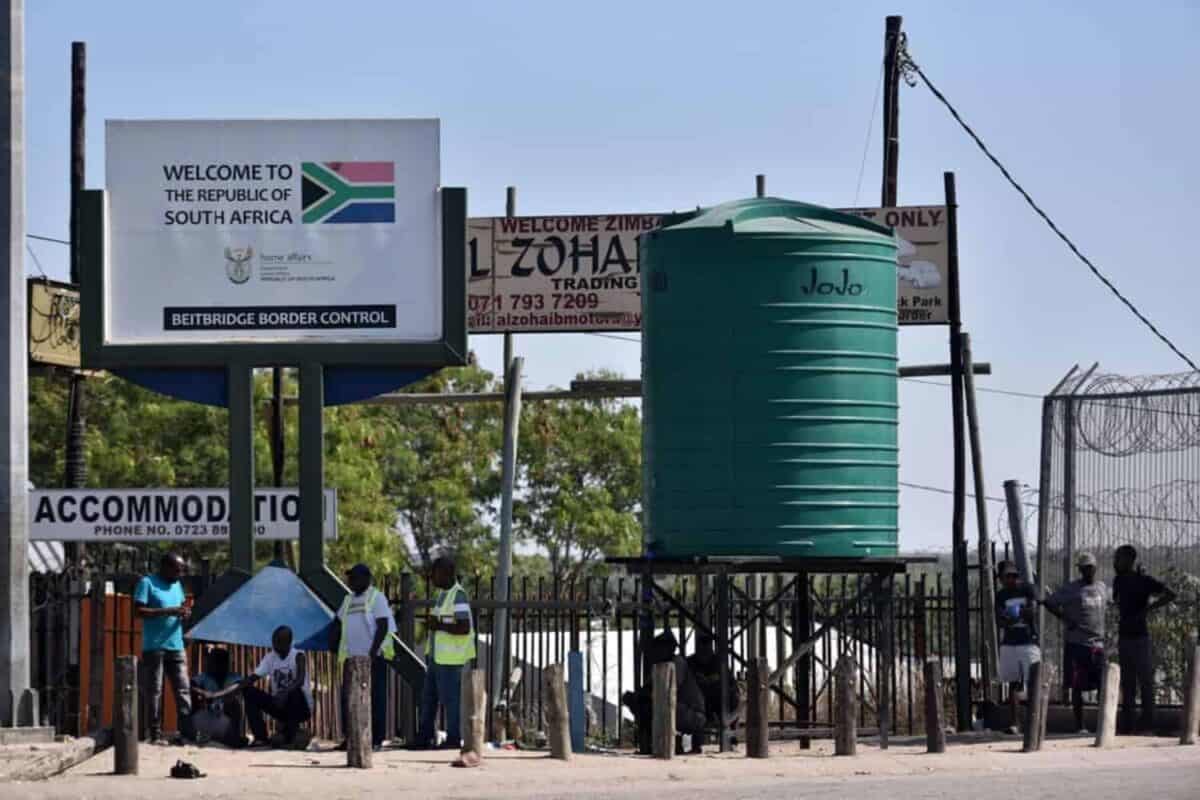
More than 35 000 people have left South Africa through Beitbridge while Cabinet-approved immigration reforms promise stricter asylum rules and enhanced border controls. Picture: Nigel Sibanda


More than 35 000 people have either been deported or voluntarily repatriated through the Beitbridge border crossing since the beginning of last month, with more than 2 400 since Wednesday alone, following the March and March protests against undocumented immigrants on Tuesday.
A temporary repatriation centre, capable of housing up to 20 000 people, was erected within days just out Musina, closest town to the border.
Immigration reform plans
Home Affairs Minister Leon Schreiber posted on social media that the “centre’s completion shows the excellence that exists within the department”.
But, as pressure mounts on government to tighten border enforcement, South Africa already has an ambitious blueprint to overhaul its immigration system.
Approved by Cabinet in April, the Revised White Paper on Citizenship, Immigration and Refugee Protection sets out sweeping reforms designed to strengthen border security, curb fraud and abuse, modernise immigration administration and align migration policy with economic growth objectives.
Among its most significant proposals is the adoption of the “first safe country principle“, which would prevent asylum seekers who have already received protection in another country, or travelled through a designated safe third country, from claiming asylum in SA.
Proposed changes to asylum and citizenship
The policy also seeks to strengthen regional cooperation in managing refugee flows. The White Paper replaces the largely time-based naturalisation system with a merit-based citizenship framework, introducing objective eligibility criteria, a citizenship advisory panel and a points-based pathway for qualifying applicants.
The reforms include new visa categories for remote workers, entrepreneurs, skilled professionals and sports and cultural talent, alongside a points-based system for selected visas and permanent residence.
It also proposes the roll-out of an electronic travel authorisation system to digitise visa applications, strengthen biometric screening and improve border security.
Government’s approach questioned
The Forum for South Africa accused government of being out of touch with the concerns of ordinary South Africans.
“South Africans are demanding secure borders, the enforcement of immigration laws and the removal of those in the country unlawfully. Instead of acting decisively, government continues to establish committees, hold dialogues and make excuses while communities are left to deal with the consequences,” it said.
The debate comes as Statistics South Africa’s latest Migration Statistics Report, based on the 2022-23 Income and Expenditure Survey, estimates that more than three million immigrants live in SA, representing about 5.1% of the population. Nearly two-thirds (63.6%) originate from Southern African Development Community countries, with most being men aged between 35 and 39.
Border processing and security measures
At Beitbridge, acting Border Management Agency commissioner Major-General David Chilembe, told the media: “We are dealing with three processes: deportation, voluntary repatriation and the normal facilitation of movement of people and goods.”
Chilembe said every deportation followed a strict legal process, including citizenship verification, biometric registration, fingerprint checks, criminal record screening and confirmation of nationality before any individual is returned to their country.
Fingerprint checks are also conducted against criminal databases to identify suspects attempting to evade prosecution by joining deportation convoys.
“Because of crime, we go through the fingerprints process so that when we find somebody trying to evade justice by getting into the repatriation, we can then deal with them,” Chilembe said.