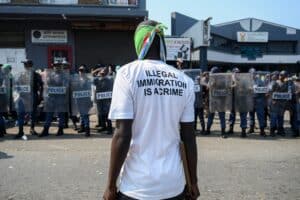
Group says focus is law enforcement for all nationalities and demands audits of visas permits and trading licences nationwide.
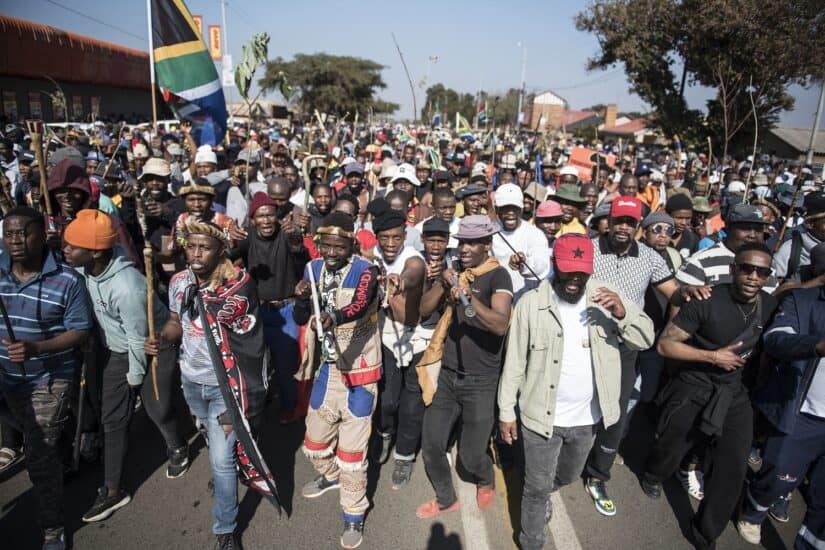
Soweto residents march through Soweto, 30 June 2026, protesting against undocumented immigrants during a nationwide anti-immigrant demonstration. Picture: Michel Bega The Citizen


The March and March movement has firmly rejected allegations that its anti‑illegal immigration protests are targeting poor black Africans.
Organisers insist their campaign is not driven by race, nationality, or socioeconomic status, but by a demand for equal enforcement of immigration and municipal laws.
March and March reject xenophobia claims
Since Tuesday’s intensification of nationwide demonstrations, critics have accused the movement of selectively focusing on African migrants while ignoring other foreign nationals who operate township businesses.
March and March countered that any perception of bias stems from geographic realities, where unregulated trading and undocumented residency are most visible in densely populated urban centres.
“The Immigration Act and municipal bylaws must apply equally to all non‑citizens, without exception,” the group said, stressing that its position is non‑discriminatory and rooted in systemic legal compliance.
“Any perception of selective focus is often a result of geographic layout. Unregulated trading and undocumented residency are frequently visible in densely populated urban centres and townships.”
When asked why Pakistanis, Ethiopians, Somalis and those from Bangladesh were not being evicted, the movement said it does not make any distinction based on country of origin.
Movement says it doesn’t make distinction based on country of origin
“We are demanding that the department of home affairs and local municipalities audit trading licences, asylum seeker visas and business permits belonging to nationals from South Asia, the Middle East, East Africa and Europe, just as they do with neighbouring African countries,” said the group.
“Unregulated business operations, tax evasion and undocumented immigration undermine South Africa’s economic sovereignty, irrespective of where the business owner was born.”
The group also said it remained a peaceful, disciplined and lawabiding movement and condemned any individual or groups that use the name of the movement to commit acts of xenophobia, violence, extortion, or harassment.
“We believe the struggle to restore the rule of law in South Africa must be conducted within the boundaries of the law itself.”
The organisation said the primary objective of Tuesday’s national day of action was to highlight the long-standing collapse of consistent border management and municipal law enforcement.
Protest to highlight immigration crisis
“The voluntary compliance we are witnessing, where individuals choose to return to their home countries or regularise their stay, proves that when a country visibly commits to the rule of law, it naturally deters unlawful immigration,” it said.
“While we welcome the renewed focus of various government departments, we maintain that this must not be temporary.”
The movement said the mobilisation would continue “including upcoming engagements in Mpumalanga and discussions with the Gauteng premier”.
It would also establish “localised, peaceful monitoring teams to keep municipal inspectorates accountable for auditing trading licenses and zoning violations”.