


A psychiatric report will determine whether Louis Liebenberg is fit to stand trial on fraud and racketeering charges.
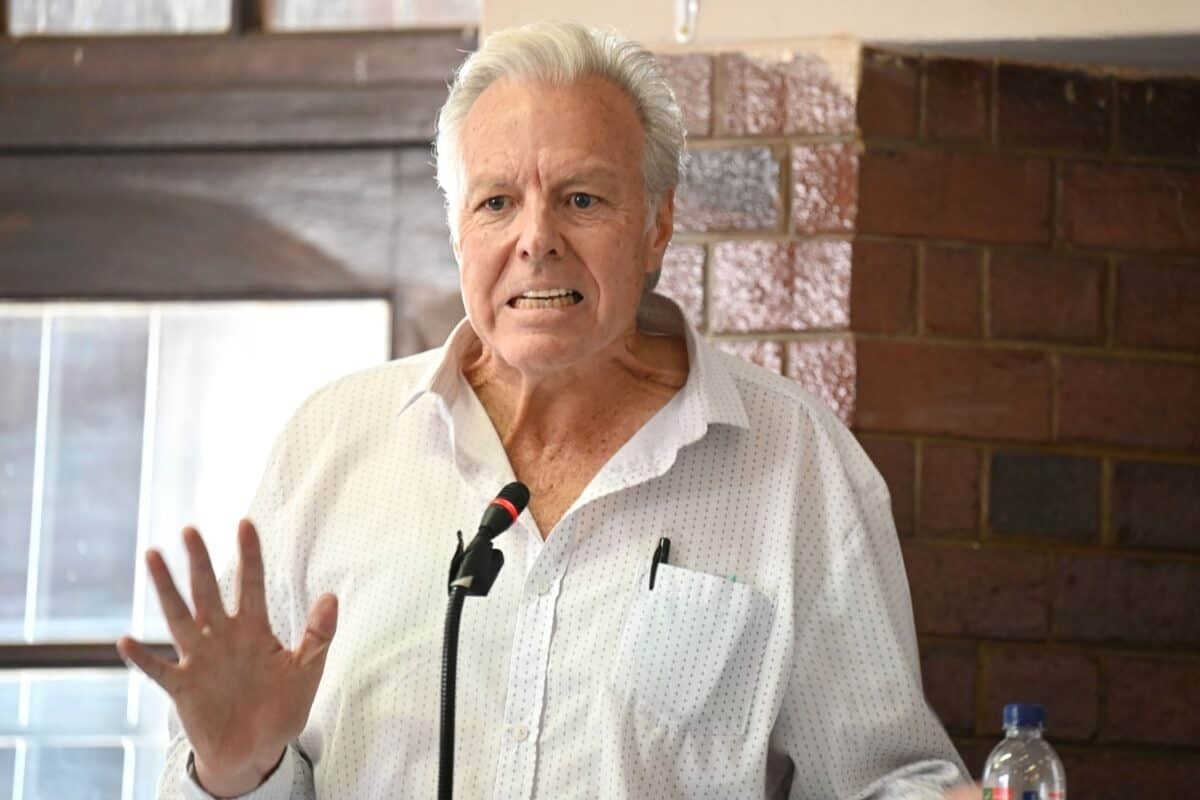
Notorious diamond dealer Louis Liebenberg defends himself during bail application after his legal representative withdrew from the case at Bronkhorstspruit Magistrate’s Court on November 25, 2024 in Bronkhorstspruit, South Africa. Picture: Gallo Images/Beeld/Deaan Vivier


The months-long wait is over for notorious diamond dealer Louis Liebenberg, who has finally been admitted to the Weskoppies Psychiatric Hospital for evaluation after misconduct in the Bronkhorstspruit Magistrate’s Court last August.
Liebenberg will spend the next month in the Weskoppies facility in Pretoria West, 3km down the road from the Kgosi Mampuru prison, where he was placed in C-Max while awaiting trial.
Accused faces multiple fraud-related charges
Liebenberg, his wife Desiree Liebenberg, Magdelena Petronella Kleynhans, Helena Dorothea Amy Schulenburg, Adriaan Dewald Strydom, Christelle Badenhorst, Nicolize van Heerden and Walter Niendinger face 42 counts of fraud (alternatively theft), five counts of racketeering, six counts of money laundering and various statutory offences.
They were arrested by the Hawks following an investigation into an alleged R4 billion diamond investment scheme.
Operating through entities like Tariomix and Forever Zircon, the syndicate targeted investors locally and internationally.
They promised high, short-term returns on diamond parcels that state prosecutors argue never actually existed.
Instead, investor funds were allegedly spent on luxury vehicles, real estate, mines and funding a lavish lifestyle.
The other accused are expected to return to court on 7 August, without Liebenberg.
Yesterday, Liebenberg made a brief appearance in the Bronkhorstspruit Magistrate’s Court before he was taken to Weskoppies.
He is expected to return to court on 13 August.
Legal process requires mental fitness assessment
Law expert Llewelyn Curlewis said it wasn’t uncommon for awaiting trial prisoners to be sent for evaluation, adding that Oscar Pistorius was sent for evaluation during his trial.
Curlewis said the law in SA dictates that a person cannot be convicted of an offence if that person lacks the necessary criminal capacity to stand trial and/or did not know and understand what he/she was doing at the time of the alleged conduct/offence.
Sometimes it’s both.
“The sooner this issue is disposed of in court, the better, or a lot of resources may be wasted. Whenever anyone in court – the defence, state or presiding officer – suspects or receives any information that suggests possible mental illness, temporary or permanent, the court must intervene and investigate it,” he added.
Curlewis said the magistrate in this matter did exactly that.
“Once the decision is made and an order made, the magistrate cannot unilaterally undo her own previous decision since only a high court has jurisdiction to do so. This order must be complied with unless and until set aside by a high court judge.
“Liebenberg’s lawyers unsuccessfully already attempted to do this,” he added.
Court to decide next steps after report
Curlewis said after 30 days, Liebenberg will return to court and an expert report will then be available from the panel that assessed him.
They will inform the court of their findings.
The court and other participants can then either accept or reject the recommendations and try to persuade the court. The court will make a ruling.
“If he is deemed eligible to stand trial, the matter will proceed. If not, he will not stand trial, may not be further prosecuted and will be considered to possibly become a judge’s patient (previously known as a state president patient), like the late Dimitri Tsafendas, who killed prime minister Hendrik Verwoerd in 1966,” Curlewis added.



