
A criminologist says construction mafia networks are increasingly embedding coercion within legitimate business and procurement processes.
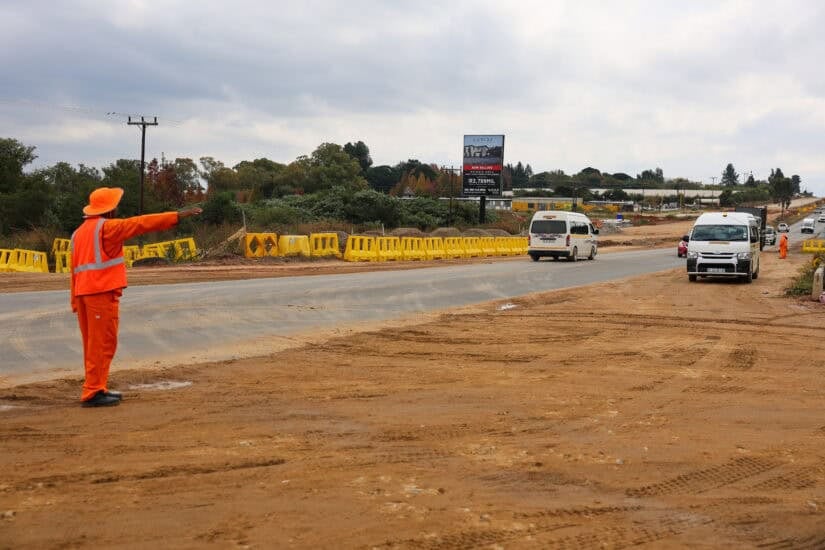
Coordination and continuity mark mafia infiltration of public works projects. Picture: Gallo Images/Lubabalo Lesolle


South Africa’s construction mafia networks have seemingly shifted from open intimidation and site attacks to sophisticated forms of economic coercion embedded within legitimate business processes.
This has been highlighted by a case involving a Gauteng contractor who allegedly lost control of a R12.8 million wastewater infrastructure subcontract after refusing demands from local business interests.
A breakthrough opportunity turns sour
In the case highlighted by MK Fraud Insights, Kabelo, not his real name, thought winning the contract would transform his business.
Instead, the project turned into a lesson in how construction mafia networks can infiltrate public works projects, redirect contracts and leave taxpayers footing the bill.
He had spent nearly a decade building his construction company from a rented tractor loader backhoe into a modest operation employing 19 people from Tembisa, Ivory Park and Olifantsfontein on the East Rand.
Securing an excavation subcontract on a major wastewater project in Ekurhuleni appeared to be his breakthrough opportunity.
The project aimed to install a new wastewater pipeline, pump station and access road to address recurring sewage spills affecting local communities.
For the first six weeks, work progressed smoothly and production targets were met.
Pressure to share the contract
Problems began when representatives of a local business structure asked why Kabelo had secured the contract without their approval.
They proposed that two nominated companies receive 40% of the subcontract’s value, despite not participating in the procurement process. Kabelo refused.
Soon afterwards, his trucks encountered repeated access restrictions controlled by a security company allegedly appointed through stakeholder channels.
Delays mounted, machinery stood idle and production targets slipped.
Kabelo later faced further pressure to channel labour, equipment and administrative work through selected companies, but again refused.
The situation escalated when one of his trucks was damaged and his foreman received messages containing pictures of his children.
Although criminal complaints were opened, investigators found no direct evidence linking the threats to the companies seeking involvement.
Eventually, project managers restructured the subcontracting arrangements, reducing Kabelo’s role, while a newly registered company took over part of the work.
Investigations reveal alleged links
Subsequent investigations allegedly uncovered links between supposedly independent suppliers, including shared contact details, administrators and bookkeeping services.
By the time the network was removed, Kabelo had retrenched seven workers, the project was completed nine months late and millions had reportedly been lost.
Criminologist Prof Kholofelo Rakubu said the incident reflects a broader evolution in organised crime in the construction sector.
“Modern construction extortion networks are no longer focused solely on disrupting projects. Their objective is to capture legitimate economic opportunities while maintaining the appearance of lawful business operation,” she said.
Criminal conduct hidden in plain sight
According to Rakubu, the most troubling aspect of such cases is that the criminal conduct is often hidden beneath seemingly legitimate commercial transactions.
“On paper, everything may appear compliant. There are registered companies, valid invoices, formal subcontract agreements and documented procurement decisions. The coercion is embedded in those processes,” she said.
Rakubu argues the conduct bears the hallmarks of organised crime rather than an ordinary commercial dispute.
She said organised criminal enterprises are characterised by coordination, continuity, financial motivation and the ability to infiltrate legitimate markets.
According to Kubu, the demand for a share of the contract without participating in the tender process, followed by operational disruptions when the demand was rejected, pointed to economic rent extraction through coercion.
When access becomes a source of control
She also highlighted what is known as “coercive governance”, where criminal networks begin exercising influence over functions normally controlled by legitimate institutions.
“In this case, influence over site access, labour supply, security services and subcontracting arrangements effectively becomes a form of economic regulation. Control of access becomes control of production,” Rakubu said.
Instead of a single act of violence, she said, contractors may face repeated delays, administrative obstacles and intimidation that gradually weaken their financial position until project failure becomes almost inevitable.
She said another significant concern is the possibility of network integration through multiple companies.
“Separate companies may appear independent, but forensic analysis can reveal that they function as components of a single enterprise,” Rakubu said.