



Coalitions are the best way to dodge accountability and deliver mediocrity.


“The President has deserted us. The government has deserted us. The ANC has deserted us. The mayor of Johannesburg has deserted us. We are in the dwwaaang.”
That is the feeling of one resident who has gone viral, and her sentiments echo across a Johannesburg struggling to stay standing.
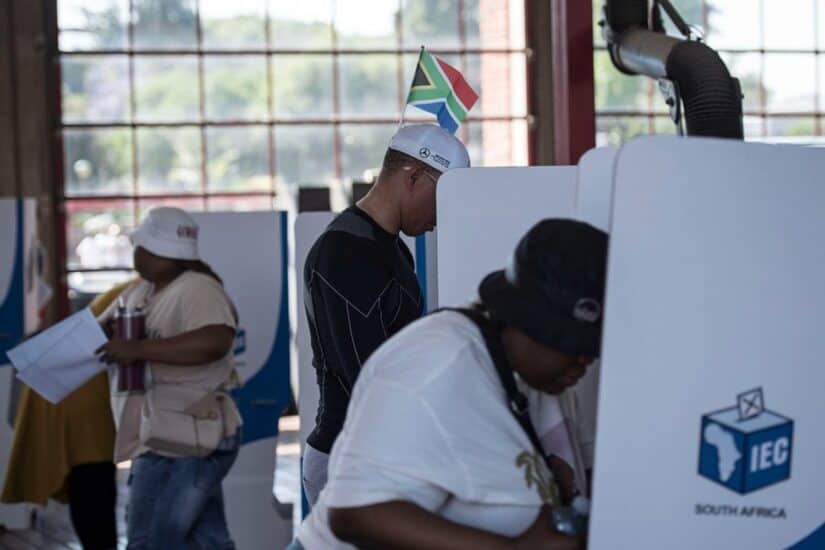
Voting day on Wednesday was an adventure of not only deciding who to vote for but also navigating rubbish on the road from failed Pickitup schedules, empty taps, and no power. All of it was a reminder of what we are voting for.

Get your results on
our Election Hub
Live results
And yet, residents seemed more sure about who they would not vote for than the alternative. It is a dilemma that will lead to coalition governments forming across the country.
Will anyone really walk away?
The talk on the street from as early as Monday was that the ANC and DA had been talking about exporting their government of national unity (GNU) coalition to local municipalities.
Current Joburg mayor Dada Morero and DA mayoral candidate both said the decision would be made by the national executive, but the shadow of Gauteng Premier Panyaza Lesufi, who threw a spanner in such plans after the last elections, looms large.
Whatever the coalition, the last decade has taught politicians what not to do. At the top of that list should be: handing the keys of the city to smaller parties so you can stay in power.
This most selfish of acts has exposed that parties do not put their electorate first but their narrow self-interests. It has left many of us to conclude that they will do anything to stay in power, even if it means harming those they claim to represent.
ANC secretary-general Fikile Mbalula said on Wednesday that “coalitions do not work in South Africa” because accountability becomes murky when there are so many chefs in the kitchen. He will find a nod of agreement from the ANC’s major rivals, who have also fought for a majority rule.
But until a party shows it can unify and fix communities, votes will continue to be fractured. As long as Mbalula’s party continues to give power to parties that represent a comparatively tiny percentage of voters, we will continue to see a decline in their ability to lead cities and municipalities.
Until we wise up to the fact that this strategy probably won’t change, we will continue to struggle with services.
Basic services and proceedings in Johannesburg and its council have collapsed, not solely because of the ANC but also because of inexperienced and greedy minority leadership. Often the ANC gets the blame when it is their coalition partners that mess up.
You should also be responsible
Despite a disastrous decade of coalitions, too many voters went into the booth still believing that the party they voted for would win an outright majority, rather than thinking of what that party working with others may mean for their lives.
If one party refuses to work with another, that already limits the impact your vote could have. You may vote for a party thinking it will change your situation, only to find that party works with another that you believe is the ultimate reason for the problem.
Everyone should have the right to have their vote represented, but will the voter also take responsibility if a politician from a party they voted for fails to deliver services, or even gives their power to another party?
Will the voter change their vote, or will loyalty blind them to their party’s faults and shift the blame to others?
We cannot begin to hold those in power accountable if we cannot see and rectify our own mistakes in the voting booth.