






Leaders of new and ambitious political parties make their case for why they should be allowed to upset the 'status quo'.
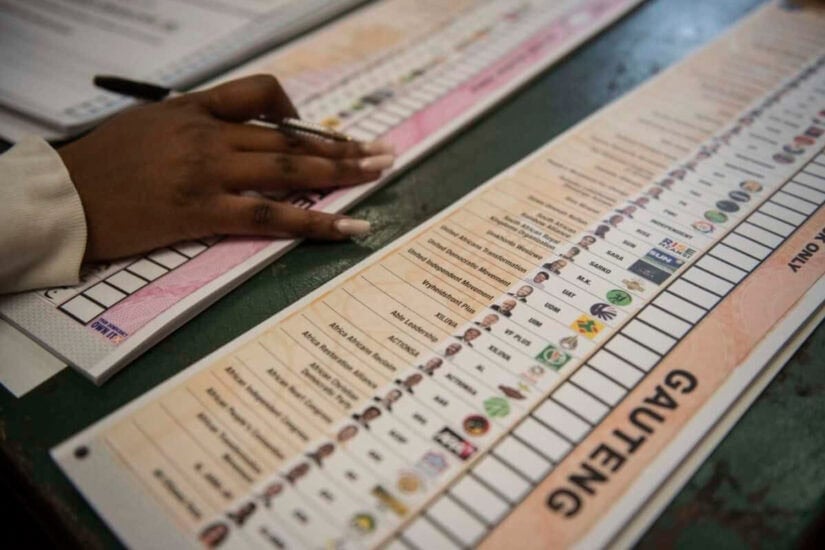


From the old guard to ambitious upstarts, over 500 political options will be on the various municipal ballots for the 2026 local government elections.
Established political brands still dominate the electorate’s consciousness, but the potential of new movements is evident in the fact that 10 of the 18 parties in the National Assembly were founded in the 2010s or later.
New iterations of old ideas and single-issue champions may be scoffed at, but ensuring every voice is given an equal platform is a foundational principle of South Africa’s modern democracy.

LIVE interactive map, latest news, multimedia and more!
View MapSo-called smaller parties explained how they try to distinguish themselves in a cluttered electoral space and what the country gained from such a variety of political options.
Most importantly, they responded to the age-old claim from established parties that voting for a “small” party was a wasted vote.
‘No first and second divisions’
The top half, or left-hand side of the double-column ballots, generally features parties with a similar first word.
The African Alliance Congress (AAC) was founded by Archbishop Tshidisang Simon Tsie, who is the party’s mayoral candidate for Mangaung.
Espousing Christian values and focused on unity and economic empowerment, the Archbishop reminded his illustrious opponents that all were equal on the ballot.
“Unfortunately for those who are making noise about “smaller” parties, the IEC has no first and second divisions in their party contact information,” the Archbishop joked.
He explained that at municipal level, voters had a greater opportunity to support leaders that reflected their immediate concerns and aspirations.
“South Africa is a diverse country, and no single political organisation should assume that it has all the answers to our challenges.
“Political diversity encourages accountability, fresh thinking and competition based on ideas and performance,” Tsie told The Citizen.
He said that the AAC understood that earning public trust took consistency and commitment over several election cycles, asking voters to embrace the future and not cling to the past.
“Every political party starts somewhere, and no organisation should be judged solely by its size or history.
“A vote is an expression of a citizen’s constitutional right. The most important question is not how large a party is today, but what it stands for and what it is prepared to do for the people of South Africa,” said the Archbishop.
The new kingmakers
Multiple parties have been founded as breakaways from the ANC, with former ANC member Muzi Hlengwa summing up why he formed African People First (APF).
“The ANC is no longer the vehicle to take us forward. I have always been a pan-Africanist and decided we should form a movement that would drive that ideology. For us it’s land first, and everything else will follow,” Hlengwa told The Citizen.
The APF leader and eThekwini mayoral candidate promised an end to tenderpreneurship, no more labour brokers, a gutting of taxes, and widespread water and electricity infrastructure investment.
Hlengwa said he enjoyed the small-party label and believed the future of politics was one without large parties, and that those that did exist would dance to the minority tune.
“When people say voting for smaller parties is throwing away your votes, they really do not understand the political space that we are in.
“The small parties are kingmakers now. They are the ones who decide who takes what,” Hlengwa said.
‘Every legitimate concern’
The Aboriginal Gorilla Fighters (ABGF) will be contesting at least 40 wards across the City of Cape Town on 4 November.
ABGF secretary-general Angeline Goliath said that despite the multitude of parties on offer, gaps remained in ideological coverage.
“The existence of many political organisations does not automatically mean that every community is adequately represented or that every legitimate concern is being addressed,” Goliath told The Citizen.
Her party “places military veterans, Aboriginal people and historically marginalised communities at the centre” of an agenda that drives service delivery and economic empowerment.
Based in Cape Town, ABGF’s core focus is section 5(1) of the Military Veterans Act, which covers the obligations and benefits due to former members of the armed forces.
“We believe democracy should never be limited to the voices of established political organisations. It must create space for those who have historically been excluded, overlooked or inadequately represented.
“We are not seeking to reinvent the promises of existing political parties. We seek to give greater political attention to concerns that we believe remain insufficiently addressed.
“Political relevance is measured by principles, integrity, leadership and service – not size, age or wealth.
“Every vote matters, and no vote loses its democratic value because it supports an emerging movement. Democracy belongs to every South African-not established parties alone,” Goliath concluded.
‘Capitalist Ubuntu’
The emerging philosophy of “Capitalist Ubuntu” will be on the ballot in Johannesburg in the shape of Galtson Anthony and his new party, Know Your Power (KYP).
In explaining Capitalist Ubuntu, Anthony said it was “building an economy that encourages entrepreneurship, ownership, investment and wealth creation, while ensuring that human dignity and social responsibility remain central to our progress”.
He stated that he two decades of entrepreneurship had left him convinced that solving problems was only achieved through active participation.
“I am not entering politics because I believe there are too few political parties. I am entering because I believe there is still work to be done, and I am prepared to take responsibility for being part of the solution.
“KYP is not here to make South Africa fit an ideology. We are here to find what works for South Africa, unlock its potential and build a future in which the next generation has the opportunity to lead, prosper and thrive,” Anthony told The Citizen.
He reminded voters that all parties started from scratch and stressed that supporter bases fluctuate.
“Size can bring resources and influence, but it does not automatically guarantee competence, integrity or delivery.
“Democracy is about choice, and people should be free to choose the party that best reflects their values, priorities and vision for the country without being made to feel that their vote is wasted.
“A vote is not wasted because it challenges the established order,” Anthony concluded.
‘Future of politics is in coalitions’
Another former ANC stalwart, Marius Fransman, has brought together a collection of community activists and experienced administrators to form People’s Movement for Change (PMC).
While founder and leader of the party, he won’t be on the ballot himself, choosing instead to let the youth forge their own paths across the country.
Fransman said South Africa had plenty of parties, but still lacked political leadership that truly resonated with the people.
He said the country needed an economic Codesa and wanted PMC candidates to place the real issues at the centre of politics.
“We believe that politics has become too focused on political parties, political personalities and political survival, while the real issues facing families and communities- housing, unemployment, crime, education, transport, basic services and economic opportunity continue to grow,” Fransman told The Citizen.
After almost two decades in provincial legislatures and parliament, Fransman has witnessed the fracturing of political power and the rise of the upstarts.
“The argument that voters should only support established parties because smaller parties cannot make a difference is precisely the type of politics that keeps the status quo in place.
“The results of 2021 and 2024 showed the future of politics is in coalitions. Small parties today decide who governs,” Fransman concluded.



