


The petrol price is set to increase by over R3, paraffin will increase by R4.22 and both grades of diesel will increase by R6.19.
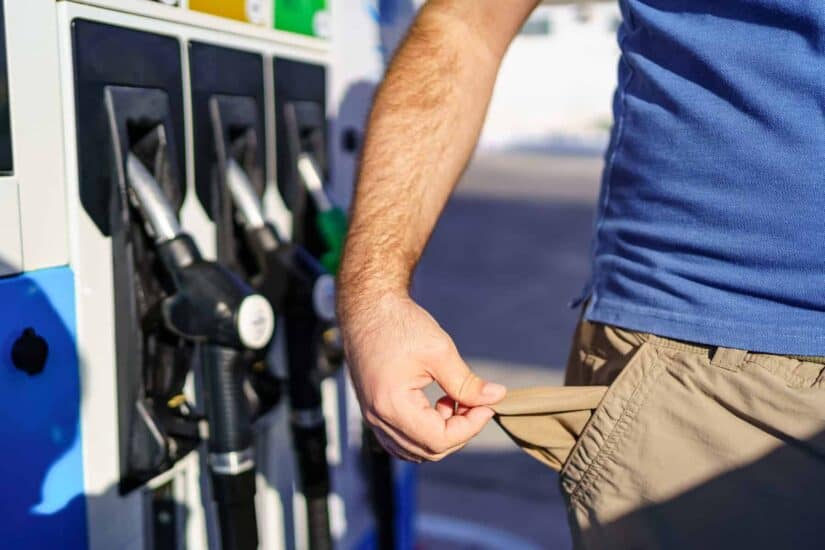
Picture: iStock


Data collected by a premium private insurer has illustrated the infrequency with which South African motorists are visiting the petrol pumps.
The country’s drivers will again be hit with a petrol increase north of R3, with diesel going up by a further R6 and some change on Wednesday.
Based on telematics and fuel reward card swipes by more than 200 000 clients, Discovery Insure has revealed a drastic drop in fuel spending.
However, analytics show a massive spike in the days before April’s increase, with the department of mineral and petroleum resources (DMPR) admitting the surge in purchases was a challenge for its “rate of replenishment”.
The department has since responded to questions about the country’s fuel reserves, stating how many barrels of crude remain in the Strategic Fuel Fund (SFF).
Drop in public fuel spend
Discovery Insure said on Monday that its clients had purchased 35% less fuel in April, processing 28% less transactions over the same month.
The insurer added that its data showed that total trips were down by 10% and that the total distances driven were down by 9% for the month.
While April was littered with public holidays, adjusted data showed little variation.
“Even when removing the Easter weekend – 3 to 6 April – from the data, trips and distance travelled were still down by 8%,” Discovery Insure said.
A survey conducted by the company on its high-income earners showed that 58% of customers had increased their use of e-hailing services compared to last year, with that number increasing to 70% among 18 to 30 year olds.
Rising fuel costs were the reason cited for 35% of respondents, while convenience was cited by 54% of respondents.
CEO Robert Attwell said that even the government’s temporary forfeiting of the fuel levy was not enough to sway motorists.
“The data shows a clear and immediate response to higher petrol prices. Consumers are tightening their belts by driving less, combining trips and being more deliberate about when they use their cars,” Attwell said.
How much fuel in reserve?
For the two days before the increase, data showed motorists flocking to the pumps to maximise their spend.
“On 30 and 31 March, daily fuel transactions doubled compared to the rest of the month, while total spend on fuel rose by 81%,” Attwell said.
“Fuel spend started to pick up slightly in the third week of April, showing that while people responded quickly to manage costs, they started to find a balance.”
The DMPR said that it was working with the petroleum industry to manage the situation, outlining its response in a recent reply to a written parliamentary question.
“Panic buying ahead of the last price change did challenge the logistics as the rate of replenishment at service stations could not match the surge in demand,” it said.
“Recognising that there may be a temptation to hoard, the department engaged the consumer commission and also published an email where complaints could be directed to.”
In terms of reserves, the department replied that it had 8.05 million barrels of crude oil in the SFF as of 31 March “equivalent to approximately 40 days of refining capacity of the country”.
The United States Energy Information Administration has said that a standard barrel of crude oil produces 75 litres of petrol.
That would give South Africa 603.7 million litres of petrol stock lying unrefined in reserve.
A 2021 portfolio committee presentation from the department put South Africa’s refining capacity at 720 00o barrels par day.
However, Bloomberg reported last week that South Africa had lost roughly 50% of its refinery capacity since 2021.



