
Hlabisa said allocating more funding without strengthening municipal capacity wouldn't resolve the country's infrastructure challenges.
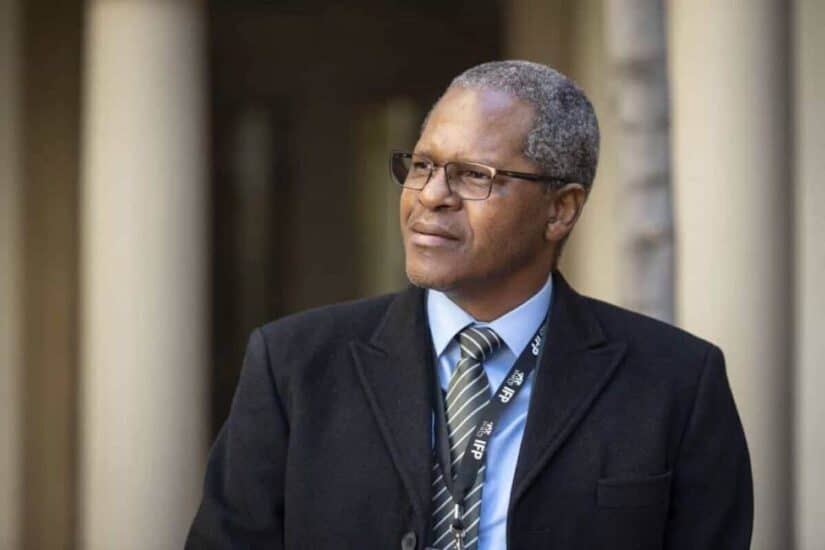
Minister of Cogta, Velenkosini Hlabisa. Picture: Michel Bega/The Citizen


Municipal infrastructure challenges cannot be resolved through funding alone if councils continue to face critical shortages of technical skills, Cooperative Governance and Traditional Affairs Minister Velenkosini Hlabisa has warned.
Speaking at the Municipal Infrastructure Support Agent (MISA) recognition ceremony for graduates, apprentices and bursary recipients, Hlabisa said ageing infrastructure, financial constraints and a lack of skilled professionals continue to undermine municipalities’ ability to deliver basic services.
Skills shortages deepen municipal crisis
Hlabisa said local government remained at the frontline of service delivery, but many municipalities were struggling to meet their constitutional obligations.
“When a family turns on a tap expecting clean water, when a commuter drives safely on municipal roads, when refuse is collected on schedule, or when electricity reaches homes and businesses without interruption, local government is fulfilling its constitutional mandate,” he said.
“However, we must also acknowledge that many municipalities continue to face significant challenges in fulfilling these obligations.”
He said municipalities across South Africa continue to grapple with ageing infrastructure, inadequate maintenance, rapid urbanisation, historical backlogs, financial constraints and shortages of technical skills.
According to Hlabisa, many municipalities inherited infrastructure that has already exceeded its intended lifespan, while ageing water pipelines continue to result in unacceptably high water losses.
He said electricity distribution networks require extensive refurbishment, wastewater treatment plants need urgent upgrades and roads and stormwater systems in many communities are deteriorating faster than they can be repaired.
“These infrastructure challenges are not merely engineering concerns. They directly affect economic growth, public health, investor confidence, social stability and the dignity of our people.”
Money alone will not solve municipal problems
Hlabisa said allocating more funding without strengthening municipal capacity would not resolve the country’s infrastructure challenges.
“This reality reminds us that building capable municipalities requires far more than allocating financial resources. Infrastructure funding alone cannot solve these challenges if municipalities lack the technical expertise required to plan, design, implement, operate and maintain infrastructure assets.”
He said this was why MISA continued to play a critical role in supporting municipalities by developing engineers, artisans, planners, technicians and other technical professionals needed to sustain municipal infrastructure.
“Strengthening municipalities begins with strengthening people.”
Youth unemployment remains a major concern
Hlabisa also linked municipal capacity challenges to South Africa’s high youth unemployment rate, saying too many graduates remain unable to find work because they lack workplace experience.
“Thousands of graduates remain trapped in a cycle where they cannot obtain employment because they lack experience, yet they cannot gain experience because employment opportunities are unavailable.”
He warned that youth unemployment contributes to poverty, inequality and social instability while depriving the economy of much-needed skills.
“As a government, we cannot accept youth unemployment as inevitable. We must create practical pathways that connect education to employment, qualifications to professional competence, and ambition to opportunity.”
MISA programmes building municipal capacity
Hlabisa said MISA’s Technical Bursary Programme, Apprenticeship Programme, Experiential Learning Programme and Young Graduates Programme were helping build a pipeline of skilled professionals for municipalities.
He said more than 1 700 apprentices have completed training through MISA since 2014, including 97 apprentices who completed trade testing during the 2025/26 financial year.
More than 860 young graduates have also participated in structured workplace development programmes, with many now serving as professionally registered engineers, engineering technologists, technicians and planners.
Hlabisa added that 43 bursary recipients completed their qualifications in 2025 in disciplines critical to municipal development, while 46 young graduates joined the programme during the current financial year.
“This demonstrates a deliberate and sustainable talent development pipeline that benefits both municipalities and young South Africans.”
Professionals urged to serve with integrity
Addressing graduates and apprentices, Hlabisa urged them to use their skills to improve communities while rejecting corruption.
“Your qualifications are not only personal achievements; they are a public trust.
“The knowledge and skills you have acquired must now be placed at the service of our communities.”
He also called on young professionals to uphold integrity and accountability.
“Our country requires professionals who reject corruption, who value excellence above convenience and who understand that every rand invested in infrastructure belongs to the people of South Africa.”
Hlabisa said municipalities could only become capable and sustainable if they attracted, trained and retained technically skilled professionals.
“If we continue investing in our young people, if we continue building technical capability in local government, and if we continue placing youth at the centre of municipal development, then we will build municipalities that work for all our people.
“And when municipalities work, communities prosper. When communities prosper, South Africa succeeds.”