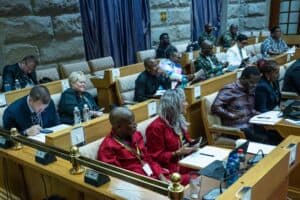
South Africa and the World Bank have signed a $1.5 billion (R24.66 billion) Development Policy Loan agreement.
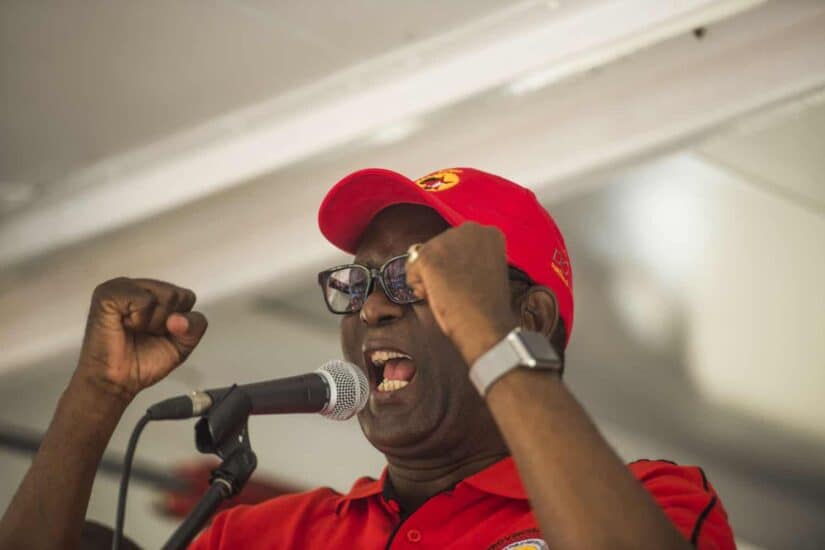
Saftu general secretary Zwelinzima Vavi. Picture: Gallo Images/Alet Pretorius


The South African Federation of Trade Unions (Saftu) has demanded answers about South Africa’s decision to accept a US$1.5 billion (approximately R25 billion) Development Policy Loan from the World Bank.
In a statement on Tuesday, the federation’s general secretary, Zwelinzima Vavi, said the loan could have certain strings attached, including the commercialisation of public services and increased private-sector participation in strategic public infrastructure.
“Saftu reiterates its longstanding demand that government immediately publish the full World Bank loan agreement together with every policy commitment, prior action, implementation benchmark, procurement obligation, monitoring framework, repayment schedule and every condition attached to this facility.
“Parliament, organised labour and the South African public have a democratic right to know precisely what obligations government has undertaken in their name.”
Vavi cautioned that “there is no such thing as free money”.
“Every loan carries obligations. Development Policy Loans are specifically designed to support policy reforms negotiated between governments and international financial institutions.
“South Africans cannot be expected to endorse an agreement whose contents remain hidden from democratic scrutiny. Transparency is not optional – it is a constitutional and democratic imperative,” said Vavi.
South Africa’s independence
He said at the heart of this debate lies a fundamental question of democratic “sovereignty.”
“Economic policy in South Africa must be determined by its people through their democratic institutions – not by unelected officials sitting in Washington or by international financial institutions acting primarily in the interests of global finance. South Africans fought for the right to determine both their political and economic future.
“That sovereignty must never be compromised through debt agreements negotiated behind closed doors,” he said.
More details about the loan
According to the South African government, the loan is expected to create more than 600 000 job opportunities and will address the country’s infrastructure backlog.
On Tuesday, The Citizen reported that the loan will be repaid over 15 years, with South Africa getting a three-year grace period. The interest rate is variable and is based on the United States (US) benchmark Secured Overnight Financing Rate (SOFR), plus an additional 1.35%.
National Treasury said this is the fourth Development Policy Loan South Africa has secured from the World Bank as part of the country’s ongoing partnership with the lender. Concessional loans from institutions such as the World Bank are cheaper to service than loans raised at market rates.