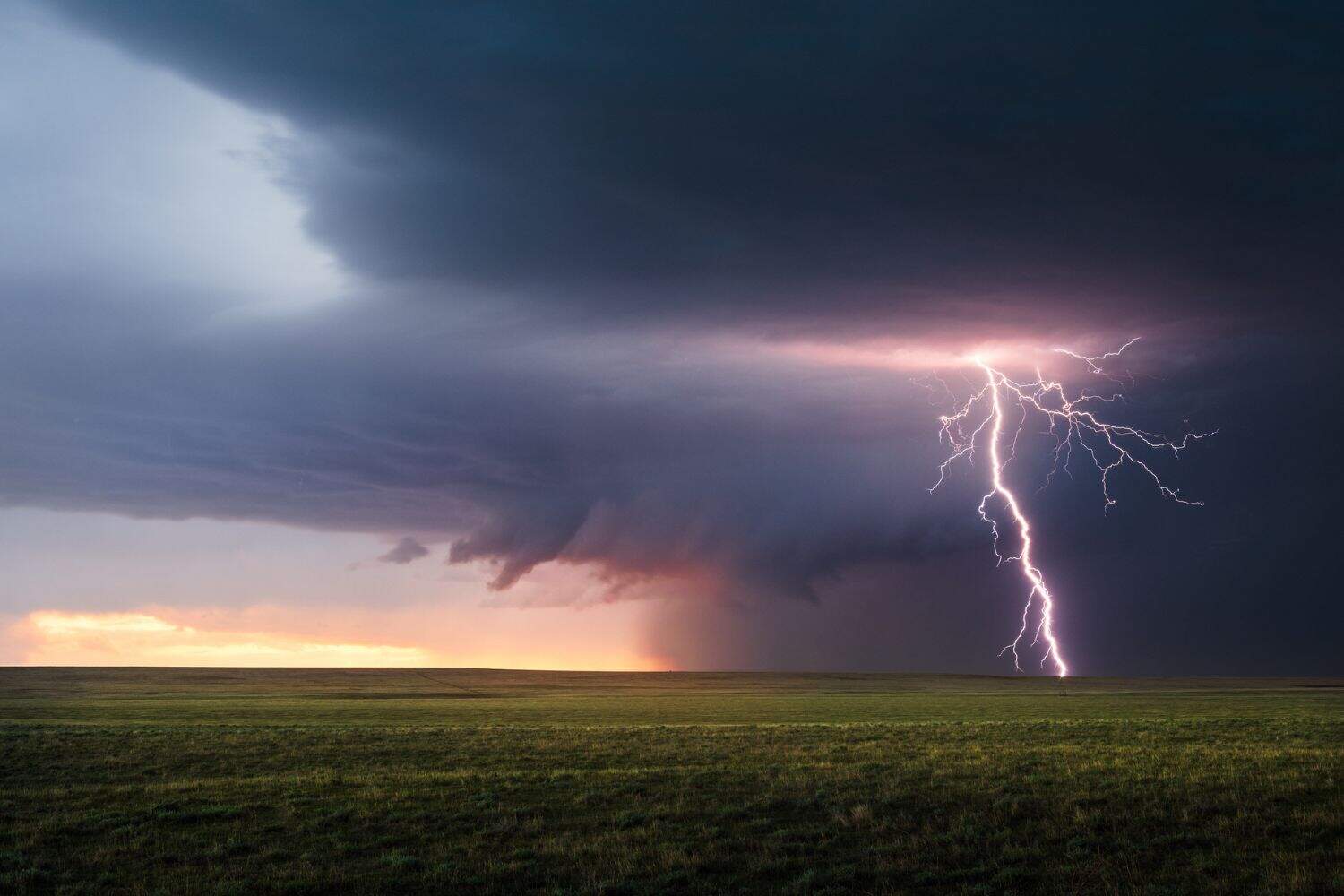
The South African Weather Service says South Africa faces one of the highest lightning risks in the world.
Picture: iStock


The South African Weather Service (Saws) has issued heightened safety warnings after reports that 40 people were struck by lightning in Majaneng, a rural village near Hammanskraal in Gauteng.
The incident occurred during an intense thunderstorm event that produced nearly 2 000 lightning strikes within a 20-kilometre radius of the settlement.
According to the weather service, the lightning activity was concentrated between 12pm and 10pm on 3 January, with monitoring systems recording 1 830 strikes during this period.
The weather service added that the most dangerous hour was between 5pm and 6pm, when 713 strikes were detected, accounting for 39% of the day’s total activity.
“The negative strokes were much stronger, with a maximum of -179.7 kA recorded, indicating an exceptionally powerful lightning strike during the period,” the weather service stated.
ALSO READ: Weather alert: Thunderstorms flooding and fire danger to hit four provinces
South Africa’s lightning risk
Long-term observations show South Africa ranks among the world’s most lightning-prone countries, with risk concentrated in the eastern regions.
The weather service data covering 2006 to 2022 indicate that the highest densities occur in Mpumalanga, Limpopo, and northern KwaZulu-Natal, where values “locally exceed 15 to 20 flashes per square kilometre”.
Gauteng experiences moderate lightning activity, with approximately 5-10 flashes per square kilometre, driven by afternoon and evening convective storms during the summer rainfall season.
How lightning causes harm
The weather service explained that people do not need direct hits to suffer injuries.
“Ground current is the leading cause of lightning-related injuries in South Africa,” the weather service noted.
It added that electricity from ground strikes spreads outward and can affect multiple people simultaneously.
“Each lightning strike releases enormous energy, heating air within the channel to approximately 30 000°C and generating peak electrical currents around 30 000 amperes.
“Electrical currents of only a few amperes can be life-threatening to humans,” the weather service warned.
It warned that gatherings in open spaces significantly increase the risk, particularly when people stand close together near tall objects, metal equipment, or temporary structures such as tents and gazebos that offer no adequate protection.
ALSO READ: No load shedding, but severe weather impacting Eskom networks nationwide
Safety precautions
The weather service urged the public to take immediate action upon hearing thunder.
People should seek shelter in fully enclosed buildings or vehicles with closed windows, avoiding open fields, hilltops, trees, metal fences, and water bodies.
If no shelter is available, individuals should “spread out, crouch low with feet together, minimise contact with the ground, and avoid lying flat.”
“After a thunderstorm, activities should only resume at least 30 minutes after the last sound of thunder.”
The weather service emphasised that lightning strike victims do not carry an electrical charge and can be safely assisted if emergency services are contacted immediately.
The weather service offers a buffer-zone lightning alert service that provides advance warnings of lightning activity.
Communities, event organisers, schools and workplaces are encouraged to follow weather alerts, particularly during the summer thunderstorm season.
“Lightning-related injuries and fatalities are largely preventable through awareness, preparedness, and timely action,” The weather service stated.
READ NEXT: Severe thunderstorms expected to continue into new year