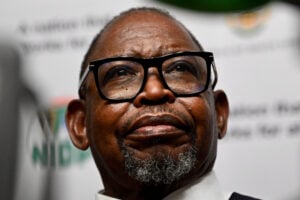
While survivors demanded action, many religious leaders pushed back against the process itself.
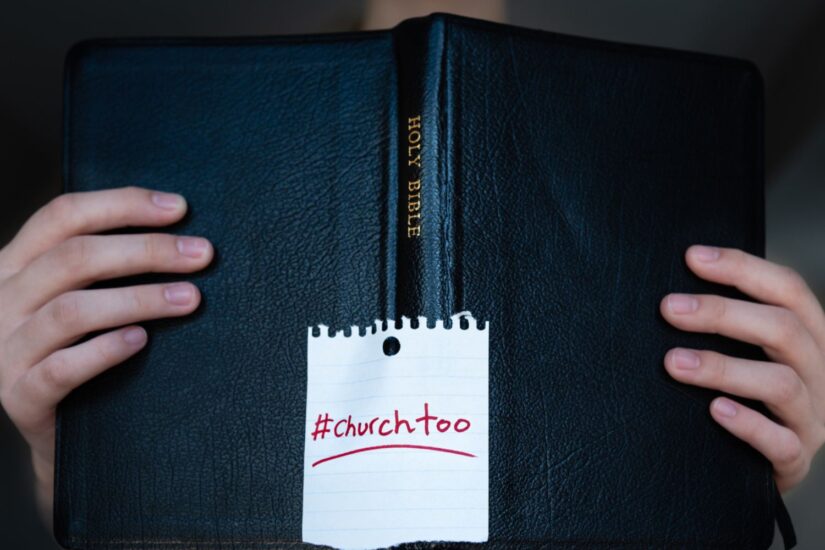
Image for illustration purposes. Picture: iStock


As religious leaders argue over state regulation, abuse survivors are asking a harder question: Where has the church’s own accountability been all along?
For years, survivors of abuse in South Africa’s religious spaces have carried their pain largely in silence. They have been told to forgive, to submit, to protect the institution.
Now, for the first time, their voices are being heard in parliament.
Parliament on Tuesday convened one of its most contested consultative meetings in recent memory, bringing together faith leaders, abuse survivors, and civil society organisations to wrestle with a question cutting to the heart of constitutional democracy. They ask who holds religious leaders accountable, and how?
The Portfolio Committee on Cooperative Governance and Traditional Affairs (Cogta), chaired by Dr Zwelini Mkhize, called the virtual meeting following escalating tensions between segments of the religious sector and the CRL Rights Commission, particularly around its Section 22 committee, tasked with developing a voluntary self-regulatory framework for the Christian sector.
“Parliament remains the appropriate and constitutionally mandated platform for all sectors of society to raise concerns, seek clarity, and contribute to policy and legislative processes,” Mkhize told participants.
A system that protects institutions, not survivors
It was the survivors who cut through the noise.
Erika Bornman told the committee she was abused as a child in the church and, when she reported it through internal processes, was told to “repent of the sin of making a man of God stumble and speak of this to nobody, not even your mother.”
She said these words are still being spoken to victims across South Africa today, by men who know “with absolute certainty that no council, no code of conduct, and no body of their peers will ever hold them to account.”
Her challenge to religious leaders who declared their support for accountability was direct.
“These churches have existed in South Africa for decades, some for centuries. Where has that accountability been? Where are the registers of removed pastors? Show us. Where are the cross-denominational records that prevent a predator dismissed from one congregation from being welcomed into the next? Show us.”
Jill Harper, a member of We Will Speak Out South Africa and the Faith Action Collective to End Gender-Based Violence, shared her own experience of seeking pastoral help while living with domestic violence.
Her pastor refused to see her, citing geographical parish boundaries.
When her abuser arranged couples counselling at his own church, the pastors there told her to “forgive, be more supportive, and submit – as if those words could protect me. They did not ask if I was safe or provide information about shelters, the police, counselling, or legal remedies.”
She called for “an independent, impartial office empowered to receive complaints, facilitate mediation, and review institutional responses.”
Pontsho Segwai of We Will Speak Out told the committee that faith institutions remain among the most influential social structures in the country, yet too often survivors experience them “not as places of refuge, but as spaces where power can be abused, where harmful patriarchal interpretations are reinforced, and where silence is prioritised over justice.”
‘A constitutional protector must not become a constitutional controller’
While survivors demanded action, many religious leaders pushed back hard against the process itself.
Pastor Giet Khosa, general-secretary of the International Federation of Christian Churches (IFCC), warned that the draft framework “may move forward beyond lawful cooperation and education into direct or indirect state regulation.”
Archbishop Thami Ngcana of the Council of Independent Churches put the constitutional argument most bluntly: “A constitutional protector should not become a constitutional controller.”
Procedural objections were equally sharp. The South African Council of Churches raised concerns about the unilateral appointment of the committee chair, underrepresentation of women, and vague language that “could invite state interference in doctrine.”
Reverend Sellpy Khumalo of the Apostolic Faith Mission called for a national consultative conference and compared the current leadership of the Cultural, Religious and Linguistic (CRL) Rights Commission unfavourably with that of a previous commission.
“The combative stance and approach that has been demonstrated is not showing the promotion of rights that we seek as religious groups,” he said.
‘The government is creating a platform for us to self-regulate’
Not all speakers opposed the process.
Reverend Welcome Methula argued that opposition to Section 22 rests on a fundamental misreading of its intent.
“The CRL Commission has never talked about the issues of doctrine. They’ve talked about the issues of compliance, the issues of ethics,” he said.
“What the government is doing is to create the platform for us to self-regulate, but the misunderstanding is as if the government wants to rule it or dominate it, which is a misconception.”
Path forward
In closing, Mkhize identified areas of emerging consensus, that abuse in the religious sector is real but not the norm, that existing laws must be fully applied, and that all parties ultimately support a religious-sector-led ethical code of conduct.
The disagreement, he said, centres on whether Section 22 poses a risk of state regulation and whether the process has been sufficiently inclusive.
“The section 22 committee does not have authority to regulate religion,” he said. “What is being discussed is the ethical code of conduct, and even those opposed to section 22 are not opposed to that.”
For survivors, the stakes could not be higher.
Written submissions were due to the committee by 1 June.