Industry says 10 million cubic metres of construction spoil dumped at sea will kill squid breeding grounds and destroy 2 500 jobs.
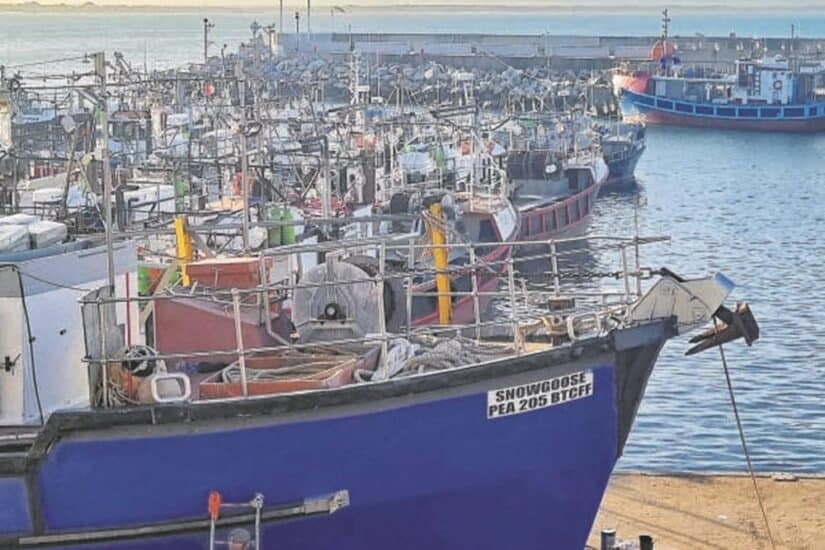
Between 50 and 55 fishing boats sail out of Port St Francis and deliver an annual catch of between 6 000 and 7 000 tons. Picture: Supplied


Squid fishing in South Africa is conducted primarily along the Eastern Cape coast between Tsitsikamma and Gqeberha.
“Chokka”, as it is known locally, is particularly important economically for the Kouga district, employing about 2 500 fishermen from Humansdorp, St Francis, and Jeffreys Bay, says Greg Christy, spokesperson for the industry on behalf of the SA Squid Management Industrial Association for the Thyspunt Alliance.
Christy warns currents will spread silt
Fishing is complemented by onshore ancillary operations such as boat maintenance, mechanical engineering and refrigeration businesses.
“The main problem is the potentially 10 million cubic metres of sand Eskom is looking to pump out to sea during the construction phase,” he says.
Spoil will be pumped directly onto the squid breeding grounds, maintains Christy.
“That silt won’t stay where it’s dumped… it will be dispersed by currents from Oyster Bay to Jeffreys,” he says.
“The seafloor will change, killing all life, and our beautiful ocean will turn turbid because the muck will be churned up every time there’s a swell or wind.
50-55 boats yearly
“Squid lay eggs in specific areas and return year after year to exactly the same spawning spots. They are also short-lived – their lifespan is between a year and 18 months – so any environmental hiccough will wipe out up to twothirds of the breeding stock.
“Two successive years of disruption and you’re talking the destruction of a resource and the collapse of a local industry.”
Between 50 and 55 boats sail out of Port St Francis and deliver an annual catch between 6 000 and 7 000 tons.
The overall industry wage component in Kouga is about R500 million a year, he says.