
No consensus on content of agency agreement yet.
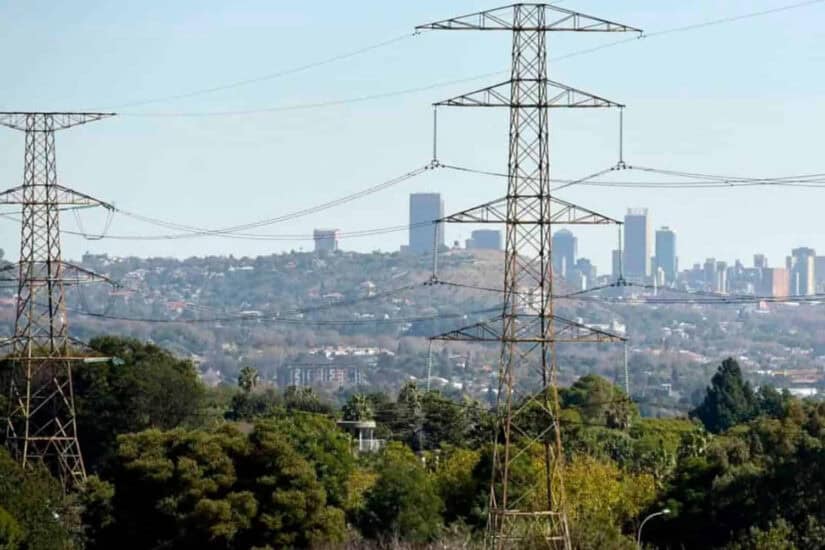
Image for illustrative purposes. Picture: Neil McCartney / The Citizen


The South African Local Government Association (Salga) has asked National Treasury for six months’ grace for 14 defaulting municipalities that must sign agreements appointing Eskom as their agent to manage their electricity operations before 1 September.
This comes as municipal arrear debt to Eskom has increased to R119 billion, according to a recent statement by the utility.
Such agreements, referred to as Distribution Agency Agreements (DAAs), were first proposed by Eskom as a measure to arrest the rapidly increasing arrear debt of municipalities to the utility.
Backed by National Treasury, they are widely seen as a solution for communities experiencing frequent power outages in dysfunctional municipalities.
Treasury’s DAA push
So far, only three agreements have been concluded – and with little evidence of success. Nevertheless, National Treasury wants to increase the number of municipalities with DAAs to 30.
If the 14 municipalities fail to meet the deadline, they will be removed from National Treasury’s debt relief programme.
In such a case, the following may happen:
- Eskom may resume credit control measures, including attaching the municipality’s main bank account;
- Eskom may charge interest at the prime lending rate plus 2.5% on all new debt;
- The municipality may lose access to new National Treasury funding for the installation of smart meters;
- National Treasury may withhold funding from the municipality; and
- National Treasury may withdraw all other support to the municipality.
National Treasury has been critical of the content of the three existing agreements, saying they are skewed in favour of Eskom.
Eskom, however, indicated to Moneyweb that the current agreement is the only version available to the identified municipalities.
A task team – comprising Eskom, National Treasury, the Department of Cooperative Governance and Traditional Affairs (Cogta), the Department of Electricity and Energy, and Salga – has so far been unable to agree on amendments.
Salga’s legal opinion
Salga says it has obtained a legal opinion on the matter and now wants the parties to use that as a basis for the amendments.
Zamo Gwala, chief officer for municipal finance and fiscal policy at Salga, says the legal opinion confirms the association’s view that municipalities must follow the process prescribed in Section 78 of the Municipal Systems Act for a DAA to be lawful.
This was not done before Eskom concluded a DAA with the Merafong Local Municipality, based in Carletonville, forming the basis of a legal challenge brought by AfriForum.
The other two DAAs – in Maluti-a-Phofung Local Municipality, based in Harrismith, and Emfuleni Local Municipality, based in Vanderbijlpark – are the result of court orders.
The Section 78 process includes a study to assess whether the service should be provided internally or through an external mechanism, considering cost, capacity, service quality, risk, and sustainability.
It also requires consultation with local communities, organised labour and other interested parties.
If an external delivery mechanism is proposed, a detailed feasibility study must be conducted, covering financial, technical, legal and institutional considerations.
If an external mechanism is selected, the municipality must follow a procurement process during which Eskom, should it decide to throw its hat in the ring, will have to compete against other bidders.
Salga argues that it will be impossible for the affected municipalities to complete this process before 1 September, and has therefore called for a six-month extension.
According to Gwala, the legal opinion also finds that the current DAA requirement for all revenue from municipal electricity sales to be paid into Eskom’s bank account, instead of the municipality’s, is unlawful.
The legal opinion also states that municipal unions must be consulted.
It further raises questions about what guarantees municipalities will have regarding the condition of electricity infrastructure when Eskom hands it back at the end of the contract period, and what recourse will be available if Eskom fails to collect the revenue.
Court backs due process
Dr Beyers Naudè Local Municipality, based in Graaff-Reinet, won a court interdict in June to stop Eskom from cutting electricity supply to three towns after the municipality failed to meet a National Treasury deadline to adopt a council resolution in support of a DAA.
The municipality argued, among other things, that it had not seen the draft DAA and was therefore unable to consider it.
Eskom told the court it “had not been disclosed because [it] remained subject to negotiation”.
The court found that Eskom “appears to have dismissed, or merely paid lip service to”, the extensive requirements set out in the Municipal Systems Act and the Electricity Regulation Act relating to the DAA.
It further ruled that “as a distinct sphere of government”, the municipality was “entitled – if not statutorily obliged – to seek legal advice and follow the legally prescribed procedure before reaching a decision on the possible conclusion of a DAA”.
This article was republished from Moneyweb. Read the original here.