
Neither Zuma nor French defence company Thales pursued further appeals against a ruling by Judge Nkosinathi Chili.
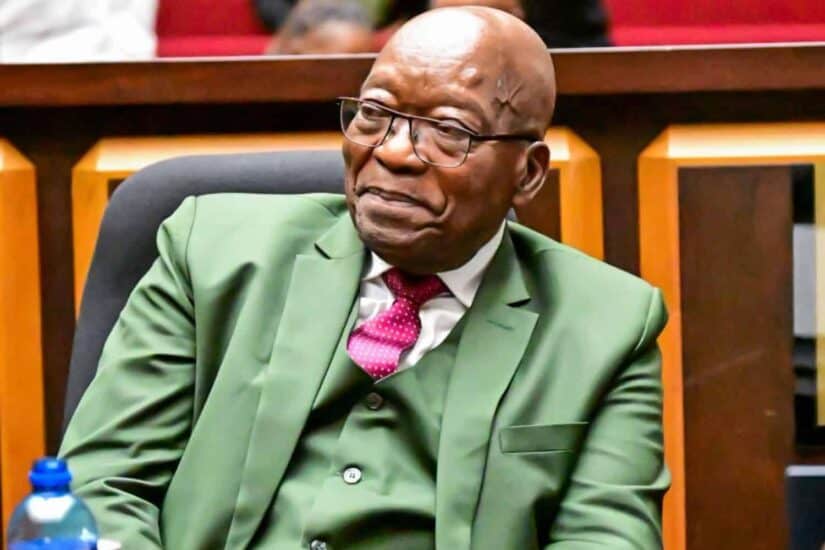
Former president Jacob Zuma in the Pietermaritzburg High Court. Picture: X/@MkhontoweSizwex


Former president Jacob Zuma has abandoned his latest attempt to challenge a court ruling that cleared the way for his corruption trial to proceed, ending another chapter in a legal battle that has delayed the arms deal case for more than two decades.
Neither Zuma nor French defence company Thales pursued further appeals against a ruling by Judge Nkosinathi Chili, effectively bringing an end to the latest round of litigation and opening the door for the long-delayed criminal trial to move ahead.
No applications
According to National Prosecuting Authority (NPA) spokesperson Kaizer Kganyago, neither Zuma nor Thales has filed an application for leave to appeal “in time or at all since 14 May 2026,” the day of the judgment, News24 reported.
“In the result, the trial court’s order that the trial will commence on 1 February 2027 is now final. The State is ready to proceed,” he said this week.
Major victory
The development represents a major victory for prosecutors, who have repeatedly argued that the matter has been trial-ready for years but has been held up by a succession of legal challenges.
In his ruling earlier this year, Judge Chili delivered a scathing assessment of the repeated delays that have characterised the case, finding that the persistent litigation could no longer justify postponing the criminal proceedings.
Arguments rejected
Chili rejected arguments that outstanding appeals should prevent the trial from proceeding and concluded that the interests of justice demanded that the matter finally be heard.
The case centres on allegations arising from South Africa’s controversial multibillion-rand arms procurement deal. Zuma and Thales have pleaded not guilty to charges including corruption, fraud, racketeering and money laundering.
‘Stalingrad’
The latest setback is particularly significant because it follows years of efforts by Zuma’s legal team to challenge various aspects of the prosecution, including repeated attempts to remove lead prosecutor Billy Downer. Courts have consistently dismissed those applications.
In court papers previously reported by The Citizen, Downer accused Zuma of employing what has become known as a “Stalingrad strategy” to prevent the case from ever reaching trial.
In the affidavit, Downer detailed how Zuma’s alleged Stalingrad Strategy had delayed his trial for years after then-acting NPA head Mokotedi Mpshe’s unlawful 2009 decision to withdraw the corruption case against Zuma and French arms company Thales was invalidated.
The charges against the duo were reinstated in 2018. Zuma and Thales then tried, and failed, to seek permanent stays of their prosecution
“The delay has in large part been due to Mr Zuma’s alleged ‘Stalingrad strategy’, through which he allegedly seeks to avoid having to face the charges against him,” Downer argued.
Legal challenges
Downer said the former president had repeatedly launched new legal challenges whenever previous ones failed.
“He does this by launching and prosecuting multiple challenges of various kinds. They have all failed. He then pursues them through successive attempts to appeal. When a challenge finally peters out, he initiates a fresh challenge through another round of litigation.”
Zuma’s day in court
The veteran prosecutor went further, arguing that Zuma’s conduct contradicted his public insistence that he wants his day in court.
“The purpose is contrary to his public rhetoric that he wants his day in court – to avoid ever standing trial,” Downer said.
Zuma’s decision not to pursue further appeals stands in contrast to the fierce criticism levelled at Judge Chili’s ruling when it was first handed down.
Judgement flawed
Through the Jacob Zuma Foundation, the former president maintained that the judgment was fundamentally flawed and accused the court of misdirecting itself on both the facts and the law.
The foundation’s spokesperson Mzwanele Manyi argued that Zuma’s constitutional rights as an accused person had been undermined and insisted there were strong prospects that a higher court would overturn the ruling.
Despite those objections, the appeals ultimately did not materialise, and the ruling remains intact.
Removing Downer
According to Downer’s submissions, the former president’s latest attempt to remove him from the case was legally defective because such a challenge could only be ventilated after a conviction and sentence, if one were ever secured.
“As the High Court’s refusal of Mr Zuma’s attempt to have me removed as a prosecutor was a decision made during a criminal trial, it may be appealed only if and when Mr Zuma is convicted and sentenced,” Downer argued.
Zuma’s second failed attempt to force Downer’s removal followed his unsuccessful efforts to privately prosecute Downer and journalist Karen Maughan for allegedly violating the NPA Act by sharing publicly available court papers that contained a sick note from one of the former president’s doctors.
Battles
With the latest appeal battle abandoned, the focus is expected to shift away from procedural disputes and back to the corruption allegations themselves.
More than 20 years after the arms deal saga first entered South Africa’s political consciousness, Jacob Zuma and Thales now appear closer than ever to finally answering those allegations in open court.
The 84-year-old Zuma and French arms manufacturer Thales face multiple charges, including fraud, corruption, money laundering, and racketeering, linked to the controversial multibillion-rand arms deal procurement concluded in the late 1990s while he was vice president.
The state alleges that Zuma was kept on a corrupt retainer by his former financial advisor, Schabir Shaik, who allegedly used his political clout to further his own business interests.