Domino Foundation targets reading crisis
The Domino Foundation launches a grassroots literacy drive to help 400 Grade Four learners in Inanda improve reading skills.
NEARLY three years after South Africa was ranked last out of 50 countries in an international assessment of Grade Four reading literacy, efforts are intensifying to reverse the trend at grassroots level.
Also read: Sai Centre Durban North to host blood drive
The assessment revealed that 81% of 10-year-old learners in the country were unable to read for basic understanding in their home language — a statistic that sent shockwaves through the education sector.
In response, the educational team at The Domino Foundation stepped in to address the challenge, initially focusing on senior grades at one of the schools where the organisation works.
A “literacy champion” position was sponsored by a firm of attorneys for 2025 and 2026, with early signs showing encouraging progress. However, Domino leaders recognised that long-term change would require intervention at a foundational level.
“We knew it was vital to tackle the problem down at the lower end of the scale,” said Thobile Msani, head of Domino’s Life Skills cohort.
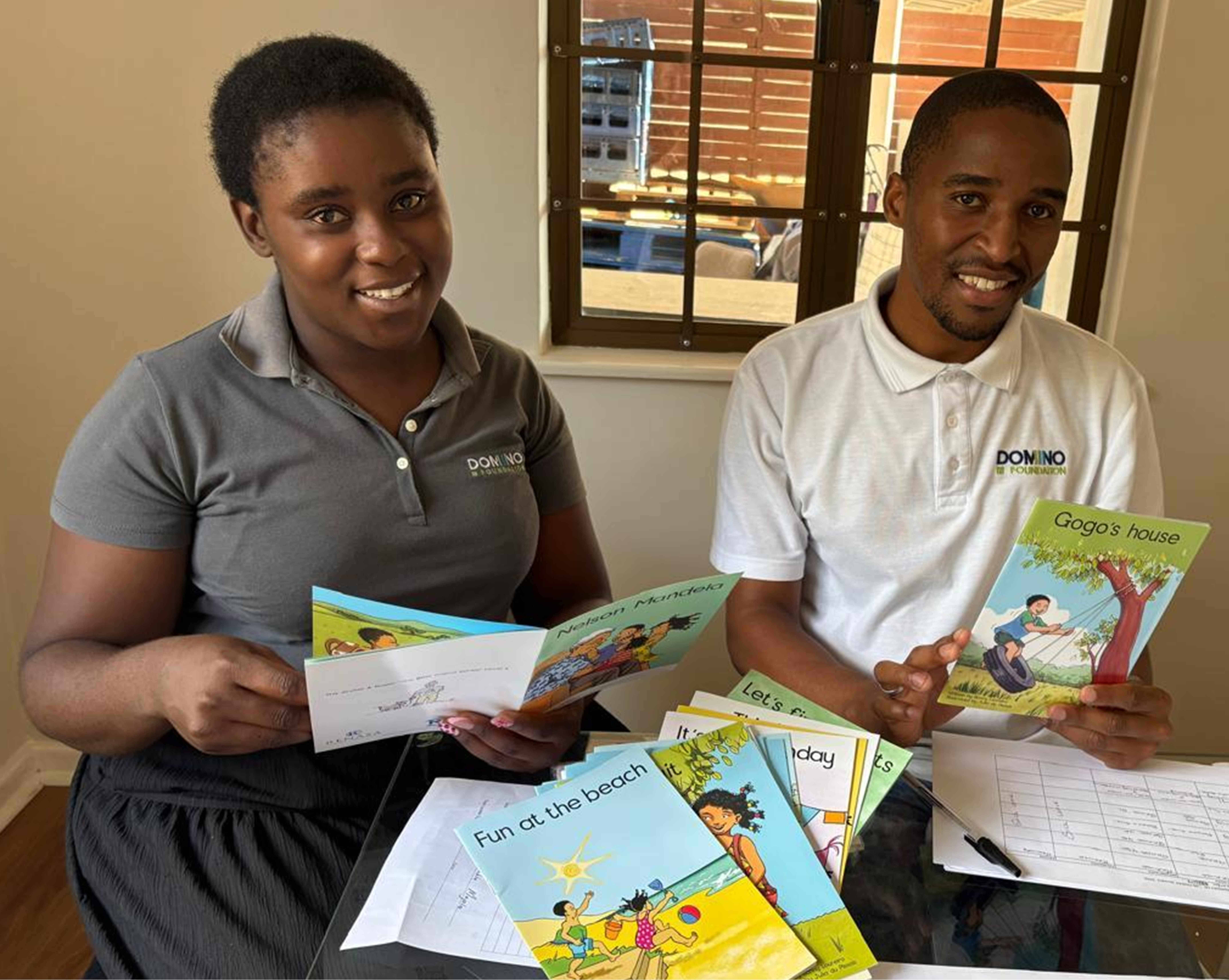
This year, four youth workers have been tasked with delivering foundational English lessons to 400 Grade Four learners at Inanda and Ekuthuleni Primary Schools. The learners are taught in groups ranging from 40 to 60 pupils.
The youth workers underwent training through the Neema Gateway into Reading programme, supplemented by in-house training from Domino’s Education Co-ordinator, Nicky Walton. Wandile Ntsimbi, one of the youth workers, said many children face significant barriers to literacy.
“The children struggle to distinguish between letter sounds and names. While some can write words as they sound, there is a group of learners who cannot write a single word,” he said.
His colleague, Nonhlanhla Majola, explained that the team works to create a supportive learning environment.
“We keep our weekly lessons fun and they are a safe place where children can speak up and speak out, practising saying the sounds of the alphabet and spelling out three-letter words,” she said.
Msani emphasised that the youth workers are not replacing classroom teachers but are working alongside them to build capacity.
During the first two terms, teachers remain in the classroom to observe and support the Life Skills team as they conduct the Gateway into Reading lessons.
In the third term, teachers begin leading part of the lesson while being observed, with the goal that by the fourth term they can independently deliver the full programme to their classes.
For more from Northglen News, follow us on Facebook , X or Instagram. You can also check out our videos on our YouTube channel or follow us on TikTok.
Click to subscribe to our newsletter – here