Witrand rehabilitation centre battles to cope with waiting list
The use of harmful substances like alcohol and drugs is a serious concern in communities and the broader North West Province.
The use of harmful substances like alcohol and drugs is a serious concern in communities and the broader North West Province.
These substances are dangerous as they negatively affect an individual’s physical, mental, social, financial and spiritual well-being. Lately, most people, young and old, are caught up in alcohol and drug abuse with devastating long-term effects.
In communities across the province, rehabilitation facilities face the challenge of the increasing incidence of substance abuse among people. Centres often get so full that even the J.B. Marks Treatment Centre at Witrand Hospital has a waiting list. The situation indicates that the centre cannot cope with the demand for the rehabilitation of substance users.
According to Mrs Elizabeth Mpoloken, the CEO of Witrand Hospital, Witrand’s substance rehabilitation unit had admitted a total of 84 people with substance abuse disorder from 1 April 2021 to 28 February 2022. The majority (37 users) come from Potchefstroom, followed by Mahikeng with 16 users, the Kosh community with 13, Vryburg, including Wolmaransstad, referred eight users and other areas, 10.
Rehabilitation is the process of helping people with Substance Use Disorder (SUD) achieve the highest level of functioning, independence and quality of life possible. Rehabilitation does not reverse or undo the damage caused by substance abuse but helps restore the individual to optimal health, normal functioning and well-being instead.
Consequently, children are also exposed to alcohol and drugs from a tender age. Many families, relatives, friends and communities struggle to cope with the stressful situation that people with SUD put them in. The police cannot cope with the high incidence of crime committed by people with SUD.
More worrying is that substance abuse affects the user’s occupational and social functioning, resulting in the development of SUD, which, ultimately, leads to a person wanting more, uncontrolled addiction, poverty, engaging in criminal activities, long-term mental and physical illness and distress, economic and societal loss, including the loss of life.
“The rehabilitation programme caters for all legal substances (socially acceptable substances like alcohol, over the counter medications, etc.), and illegal substances (nyaope, mandrax, crystal meth, etc.) After detox, users are encouraged to replace and unlearn negative behaviour, feelings, thoughts and coping mechanisms”, Mrs Mpoloken explained.
In explaining the admissions criteria, Mrs Cathy Monyemore, the J.B. Marks Treatment Centre manager said, “The admission for substance use rehabilitation is either voluntary or involuntary (court-ordered). “The application for voluntary admission is made through the social workers at the Department of Social Development’s service points in areas where prospective service users live. Involuntary admission is done with the clerk of the court at the local magistrates’ court where the prospective service users reside.
“At Witrand Substance Rehabilitation Unit, the intake consists of comprehensive assessment and evaluation to create an individualised developmental plan (IDP) for treatment. A multidisciplinary clinical team (MDT) comprising a medical doctor, psychologist, occupational therapist, social workers, professional nurse, etc., attend to the service users while they are admitted.
“People who complete a substance rehabilitation programme can expect to progress through at least four distinct phases of the treatment process. Two phases, intake post-screening and detoxification (management of unpleasant withdrawal symptoms) are done at Witrand rehabilitation unit,” said Dr Wana, the clinical manager of Witrand Hospital.
“The third phase is rehabilitation (life skills tool kit) and the last, aftercare (ongoing recovery). The last two are the main services at the J.B. Marks Treatment Centre, also at Witrand hospital,” Dr Wana added.
Safely removing addictive substances from your body
The withdrawal syndromes associated with certain types of physical substance dependence can be markedly unpleasant and dangerous. People at risk of developing these dicey withdrawal syndromes benefit from the added supervision, monitoring and, potentially, the pharmacologic interventions in medical detox settings like Witrand Sub-stance Rehabilitation Unit.
“With the successful completion of detox, the next phase of recovery is rehabilitation. This phase allows for intensive therapy, where you can examine the underlying issues that lead you to your substance use disorder” said Dr Wana.
What do rehabilitation programmes involve?
Rehabilitation involves medical treatment (if necessary, based on an assessment), educational activities (life skills), recreational activities and extensive therapy, which aim to rectify drug-seeking behaviours, instil better coping mechanisms, and teach important relapse prevention skills,” emphasised Mrs Monyemore.
She further explained that after-care services are necessary as part of ongoing recovery, to provide individuals with long-term support and continued relapse prevention opportunities.”
The journey from an SUD to a healthy, sober life is not easy or quick. There is no quick fix in quitting substances; one small step can lead to abstinence.
The first step is to decide that you want to quit using substances and commit to a rehabilitation programme.
For many, it takes a lifelong commitment, dedication and hard work. The road towards sobriety may seem difficult, but professional treatment helps many people who start the endeavour.
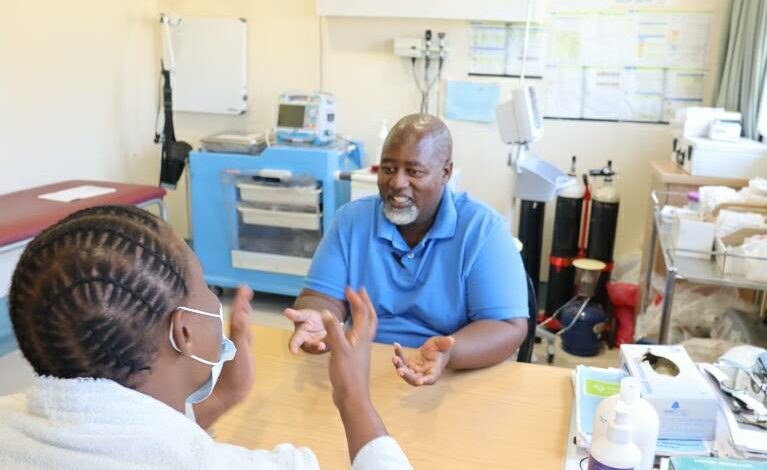
Mr Morake Lempe, a trained psychiatric professional nurse who has worked with and rehabilitated substance users for a very long time, says it is the service user’s responsibility to apply the learnt skills and knowledge after termination or discharge from the rehabilitation programme.
The support of family and significant others is of paramount importance to avoid relapse. It benefits service users to have caring family members or friends who are willing to support them throughout the process.
The service users can get further assistance (aftercare services) on an outpatient basis once they have completed the programme or have been discharged.