Bekkersdal’s water crisis deepens
To protect their right to safe drinking water in Bekkersdal, civil organisations conducted another round of water tests. After finding signs of contamination, they are now urging the municipality to take immediate action.
Organisations and residents in Bekkersdal have once again joined forces to demand clean water after recent tests confirmed signs of contamination.
Civil society organisations – Be the Future Foundation, WaterCAN, the Ahmed Kathrada Foundation, and Defend Our Democracy – first raised concerns in July, warning the Rand West City Local Municipality (RWCLM) about suspected contamination in the water supply in Bekkersdal and Simunye.During this time, the organisations conducted independent tests and found that seven of 11 water samples were unsafe for human consumption.
• Also read: E. coli concerns in our water supply? Municipality denies, but activists push back
New tests confirm contamination
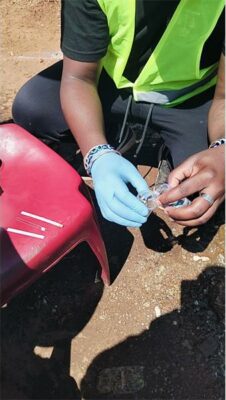
In September, nine more tests were conducted on tap water in Bekkersdal. Be the Future executive director, Sandile Soxokashe, said all nine samples tested positive for E. coli and total coliforms, indicating faecal contamination.
The organisations are now pressing the municipality to take immediate action and ensure safe drinking water.
‘A moral and governance failure’
“We are deeply concerned about the municipality’s continued silence and inaction in response to the urgent water safety warnings.
“The lack of action exposes communities to water that may cause illness or worse. The organisers believe that the municipa-lity’s failure to act is not just a governance failure but also a moral one, and we are determined to push for change,” he said.
If the municipality fails to respond, the organisations plan to escalate their concerns to provincial and national government structures and pursue legal action.
“We will continue to push for immediate action, including issuing a Boil Water Notice, conduc-ting comprehensive municipal water testing and fixing long-dormant water reticulation infrastructure,” Soxokashe added.
• Also read: Water war: Municipality denies claims of contaminated water
The organisations have called on the municipality to:
• Issue a Boil Water Notice for residents of Bekkersdal and Simunye
• Conduct comprehensive municipal water testing to confirm contamination
• Develop an urgent response plan with civil society and community leaders
• Repair long-dormant water reticulation infrastructure and non-functional water tanks
• Ensure every resident’s right to clean and safe drinking water, as enshrined in the South African Constitution
Municipality yet to respond
The Herald contacted municipal spokesperson Phillip Montshiwa on September 30 about the concerns. He acknowledged receipt of the request but has not yet provided feedback.
• Read the initial article here: ‘Deafening silence’ as residents fear contaminated drinking water
Understanding water testing
The Herald spoke to Dr Ferrial Adam, executive director of WaterCAN, a civil society organisation working to safeguard South Africa’s water resources through citizen science, advocacy and accountability campaigns.
Adam’s work involves co-ordinating national water testing programmes, suppor-ting communities to report pollution, training citizen scientists and engaging with government and water boards to drive systemic reform.
She explained that water testing follows the South African Natio-nal Standards (SANS 241) framework for assessing drinking water quality.
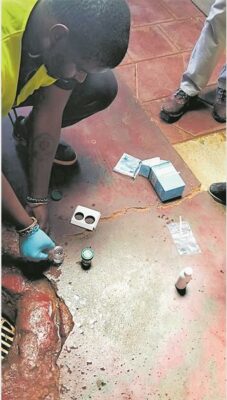
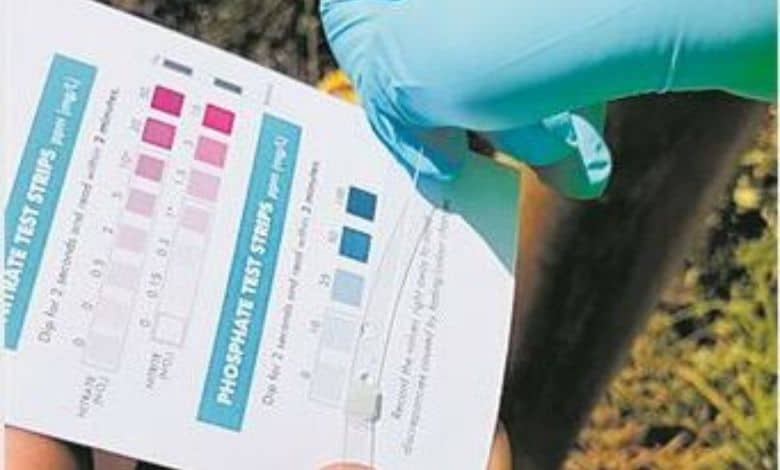
In citizen-led projects such as this one, WaterCAN and its partners use iLAB-developed Water Test Kits to mea-sure both chemical and microbiological parameters. Samples are collected from taps, tanks, and rivers, and analysed for pH, nitrates, nitrites, phosphates, chlorine, and bacterial contamination such as total coliforms and E. coli.
When contamination is detected, follow-up tests verify the results before escalation. Tests typically include chemical contaminants like nitrates, nitrites, phosphates, chlorine, alkalinity, hardness, and pH balance, while microbiological tests detect E. coli and total coliforms.
Industrial testing may also identify heavy metals, hydrocarbons and other pollutants from upstream discharge.
Preliminary microbiological results are usually available within 24 to 48 hours, while full laboratory verification can take three to seven days, depending on logistics and capa-city.
• Also read: Rand West urges residents to curb excessive water use
Signs of unsafe water
Adam noted that unsafe drinking water can often be identified by:
• Discolouration or foam
• Strong chemical or sewage odours
• Metallic or bitter taste
“According to national water regulations, municipalities and Water Services Authorities are required to test potable water at least weekly for microbiological parameters and monthly for chemical parameters. The Department of Water and Sanitation provides oversight,” she explained.
• Also read: Stage 2 water restrictions lead to critically low reservoir levels
She also highlighted common causes of water contamination:
• Broken or ageing infrastructure, such as leaking sewage pipes and bursts
• Raw sewage discharge into rivers and streams
• Illegal connections
• Illegal dumping of industrial and household waste
• Poor maintenance of water tanks and local storage systems
• Corruption and neglect within municipal water departments, leading to delayed repairs and inadequate monitoring
Adam warned that exposure to contaminated water may cause diarrhoea, cholera, dysentery and skin infections due to E. coli and other bacteria.
Chemical pollutants and heavy metals pose longer-term risks, including kidney and liver damage, reproductive problems and cancer.
“For children, these risks are particularly severe and often lead to dehydration, malnutrition, and missed education,” she said.
If contamination is confirmed, Adam stated that local authorities should issue ‘Do Not Drink’ notices, conduct confirmatory samp-ling, identify contamination sources, repair leaking sewage lines, flush local systems and provide clean tanker water to affected areas.
• Also read: Residents face water interruption due to burst pipe
To protect themselves, residents are encouraged to:
• Participate in citizen science testing using WaterCAN kits
• Clean and maintain water tanks regularly
• Avoid dumping waste near water sources
• Report leaks and sewage spills immediately to municipalities and advocacy groups
• Support awareness campaigns to hold local authorities accountable for water and sanitation maintenance