
Update: Three beaches still closed for bathing
There is limited impact on Pipeline Beach and Amanzimtoti Main Beach due to their distance from river mouths and the effect of dilution.
REUNION, Doonside and Umgababa beaches are still closed for bathing.
This is according to ward 97 councillor, André Beetge, who said that the closures were implemented on instruction from the Shark Board after stormwater runoff turned the ocean brown, leaving zero visibility in the water.
Also read: Multiple people rescued at Baggies Beach
“With rain predicted for much of the remainder of 2025, it is important to understand the impact this has on beach water quality, particularly in terms of E. coli contamination and water visibility,” said Beetge and explained that both these factors are largely influenced by what is washed downstream from inland areas.
“This can include stormwater entering wastewater systems, infrastructure blockages, informal settlements and illegal or irregular dumping.
“Beaches located adjacent to, or in close proximity to, river mouths such as Reunion, Doonside, Winklespruit, and Umgababa, are therefore more prone to water quality impacts. This is in contrast to beaches like Pipeline and Amanzimtoti Main Beach, which are situated further from river mouths (about 3.8km south of the Ezimbokodweni River and 1.3km north of the Amanzimtoti River, respectively),” Beetge said.
He continued by saying given that easterly winds are currently more predominant, effluent and/or contaminated discharge is generally pushed in a southerly direction. “As a result, there is limited impact on Pipeline Beach and especially Amanzimtoti Main Beach due to their distance from river mouths and the effect of dilution.
Also read: South Coast beaches water quality and bathing status update
“Apart from the Ezimbokodweni River, which consistently affects Isipingo and Reunion (and occasionally Pipeline), Doonside is possibly the most vulnerable beach. This is because the Little Amanzimtoti River flows through rural areas and passes the Kingsburgh wastewater treatment works, which may be compromised during periods of heavy rain or flooding.
“The brown “flotillas” often observed along the coastline after rainfall, commonly mistaken for sewage outfall, are largely a combination of sand and plant matter. However, this material may still be contaminated with both human and animal faecal matter collected upstream,” Beetge said.
“Water quality testing is currently being conducted more frequently than weekly. The latest results, released on December 24, confirmed that Pipeline, Amanzimtoti, and Winklespruit met the required standards and were safe for bathing. In contrast, Reunion and Doonside did not meet the required E. coli limits,” he said.
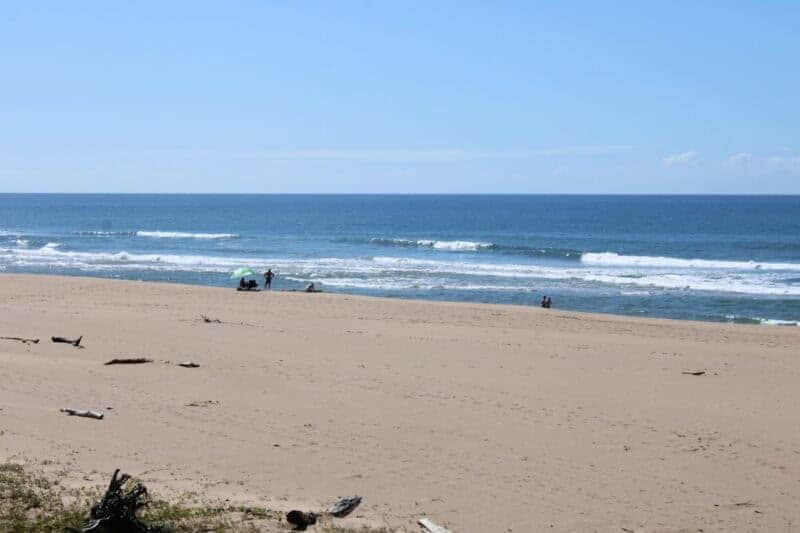
At Umgababa Beach, E. coli levels were deemed safe for bathing, however, reduced water visibility caused by sand and plant matter has negatively impacted conditions, and the beach currently remains closed to bathers.
“Officials continue to monitor conditions closely as we await the latest water quality results following the long weekend and ahead of the New Year holiday period,” Beetge concluded.

Do you have more information pertaining to this story? Feel free to let us know by commenting on our Facebook page or you can contact our newsroom at 031 903 2341 and speak to a journalist.