
Race Coast and 4Racing are smoothing the path for punters, owners and trainers.
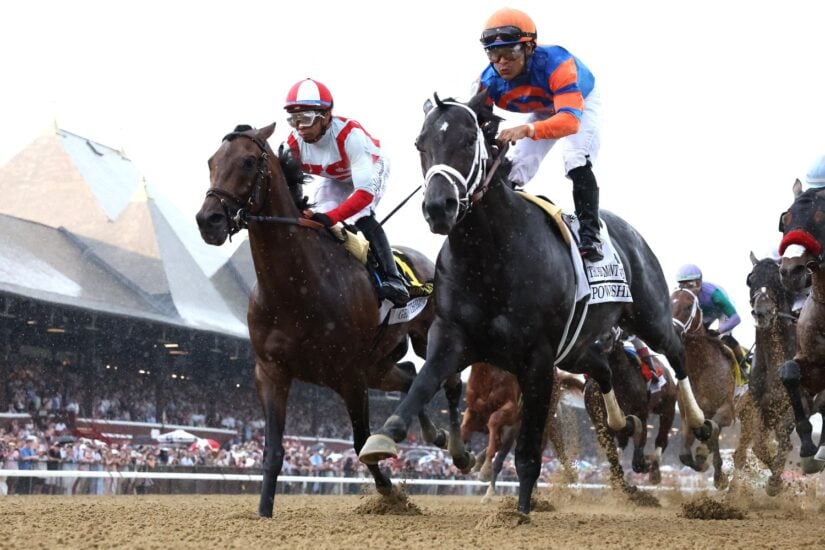
Operators have agreed to align and synergise grassroots programming and related processes across the board on a national level. Picture: Al Bello/Getty Images North America/AFP


Newcomers to horse racing find the blizzard of numbers swirling around them a bit daunting. And it doesn’t help when digits and codes mean different things at different racecourses.
So, this week’s news that South Africa’s two racing operators – Race Coast and 4Racing – have agreed “to align and synergise grassroots programming and related processes across the board on a national level” is welcome.
Even seasoned horse players will cheer. Variety might be the spice of some areas of life but, when it comes to finding winning wagers, a smooth, familiar path is devoutly to be wished.
For punters, a major change will be carded saddle-cloth numbers reflecting the barrier draw of the relevant runner in all racing centres countrywide.
The other important change for the public at large is “a national reversion to programming traditional MR Handicapping styling of race categories”.
Many of the other measures affect owners and trainers.
The press release explains: “In a shift from the traditional top-weight-down or alphabetical order in 4Racing regions in recent years, all South African races will reflect runners carded according to barrier positions, regardless of the allocated weights.
“While this not only means a standardisation of the South African racing product to an international audience, it also makes it easier for newcomers and racing fans in general to follow their selections from the saddle cloth number and colour, through to the starting stalls, where the number and colour will be clearly displayed.
“Reserve runners will no longer be allocated a barrier draw, but should there be a scratching, the reserve will automatically take up the barrier of the scratched horse that it replaces.”
Uniformity and standardisation
Standardisation of race conditions and rules and procedures governing eliminations, as well as uniformity in the criteria and procedures relating to the cancellation of races, are among the changes to be introduced on 1 November 2026.
Standardised conditions for the reduction of stakes in cases of reduced fields will be applied across the country, while supplementary entries – as available in KwaZulu-Natal and Western Cape – will be introduced in Gauteng and Eastern Cape for minor races, providing trainers with an additional opportunity to enter horses after the initial entry stage.
The “unique position and equine demographics” of the Eastern Cape has been considered.
“Gqeberha … ideally have to open entries two weeks before declarations as their jockey group is sourced, to a large degree, from out of the province. Therefore, more notice is needed to engage riders, with associated travel arrangements,” explained 4Racing’s Colin Gordon, who added he was pleased with the spirit of co-operation between the operators.
Race Coast chief operations officer Dean Sawarjith said: “Racing faces many challenges in the competition for the customer rand, and simplifying an understanding of the mechanics for the racing public and all stakeholders made sense. Having the racing operators on the same page and working together means less complications for all, in an environment where we encourage trainers to travel to optimise earnings opportunities for their owners. The benefits to the broader SA racing industry must always be our collective first consideration.”
The changes are timed to coincide with stakes increases. Race Coast has boosted its combined stakes in KwaZulu-Natal and Western Cape to R270-million, an increase of 20%. 4Racing has boosted stakes substantially across its Eastern Cape and Highveld regions.
Detailed information on the changes has been published on www.sahorseracing.co.za.