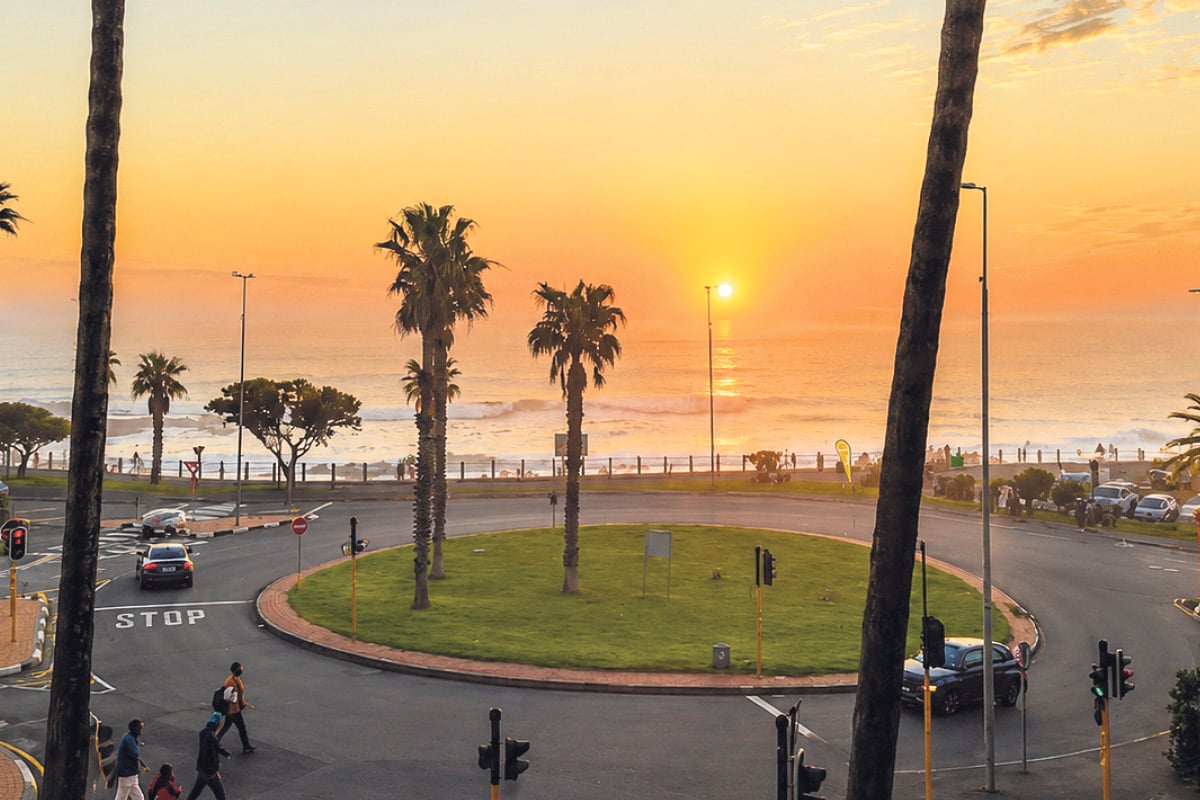
Luxury in a suite with a view.
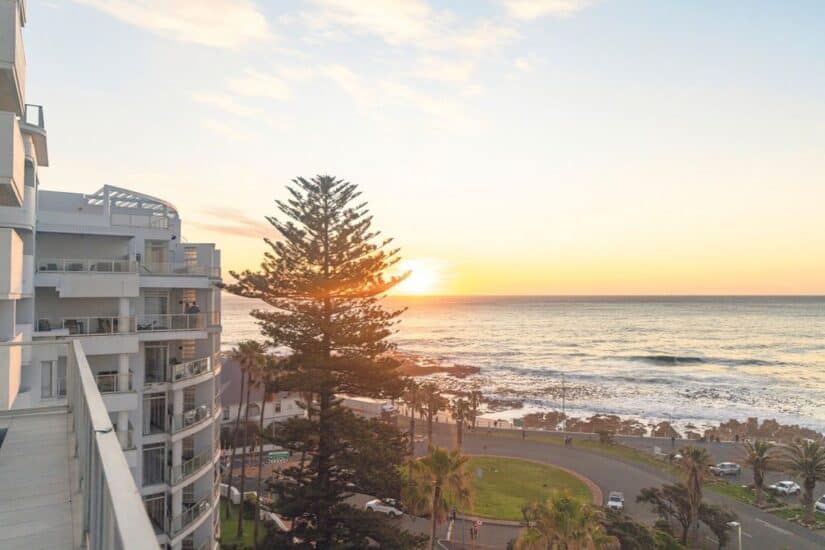
VIEWPOINT. The Peninsula’s pool deck combines outdoor dining and relaxation within sight of Beach Road and the Atlantic Ocean beyond. Pictures: Brian Berkman and Supplied


New Cape Town neighbourhoods have reinvented themselves as successfully as Sea Point.
Once regarded largely as a quiet seaside suburb favoured by retirees, it has evolved into one of the city’s most energetic urban precincts, where residents, digital nomads, families and international visitors mingle along the promenade from before sunrise until long after sunset.
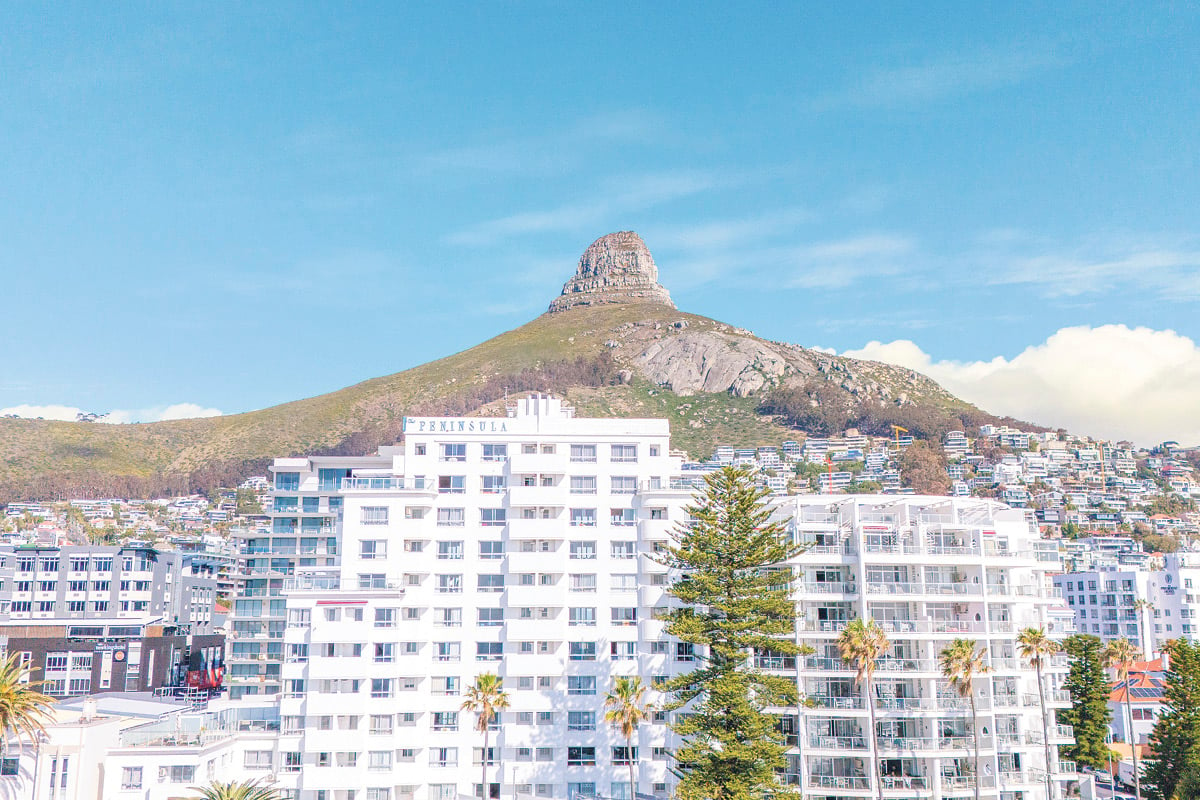
Regent Road hums with cafés, bars, neighbourhood restaurants and independent boutiques, while Lion’s Head rises dramatically behind the apartment blocks and mansions that face the Atlantic Ocean.
Occupying one of the Atlantic Seaboard’s most enviable addresses at 313 Beach Road, The Peninsula All-Suite Hotel has quietly evolved alongside the suburb for more than four decades.
Rather than chasing every new hospitality trend, it has refined what first made it distinctive: generous apartment-style accommodation, panoramic ocean views and a style of hospitality that encourages guests to settle in for a week at a time rather than simply stay over.
Entering via Queens Street under its triple height portecochèr allows guests to disembark undercover before parking.
Rotating electric doors manage the flow while a second entrance better suits people with limited accessibility.
Reception desks are positioned in a sunken main lounge area.
The Atlantic stretches almost uninterrupted in front of the hotel, while Lion’s Head and Signal Hill provide an unmistakably Cape Town Table Mountain backdrop.
A leisurely stroll of only a few paces leads to the cafés, restaurants and supermarkets of Regent Road, while the Sea Point Promenade invites walkers, runners and cyclists.
Clifton’s beaches, the V&A Waterfront, the Table Mountain Aerial Cableway and the city centre are all within easy reach, making the hotel equally attractive to holidaymakers and business travellers.
Using the hotel’s complimentary shuttle or the MyCiti bus, directly outside the hotel, makes getting around easy.
Unlike most hotels in Cape Town, however, The Peninsula offers no conventional hotel rooms.
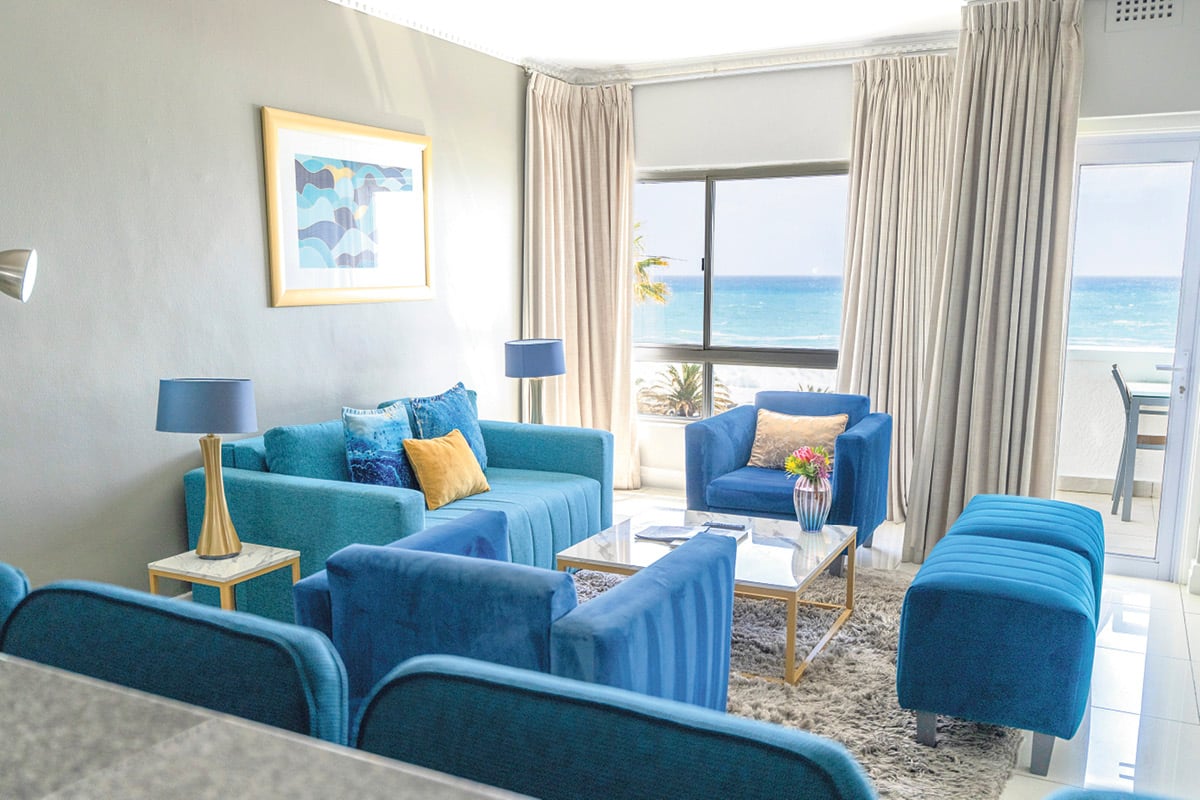
Every one of its 110 units is a suite, ranging from compact studios to spacious one-, two- and three-bedroom apartments, each with its own kitchenette or full kitchen.
The concept, introduced long before “apartment hotels” became fashionable, has proved remarkably resilient.
For families, longer-stay visitors and those combining work with leisure, the extra living space offers flexibility that many traditional hotels simply cannot match.
Chris Godenir has witnessed much of that evolution.
Having managed the hotel for nearly two decades, and recognised nationally as Fedhasa Hotel General Manager of the Year in 2024, he has overseen a period during which both Sea Point and the hotel have steadily reinvented themselves without abandoning their identity.
“Sea Point, like the Peninsula, has evolved and is now a young, trendy and upmarket precinct,” he says.
Both suburb and hotel have matured, rather than been replaced.
One of the more interesting aspects of The Peninsula’s approach is that it resists the temptation to undertake dramatic, allat-once refurbishments.
Instead, approximately a fifth of the suites are refreshed each year as part of a rolling programme, allowing the hotel to remain operational while steadily modernising.
This year’s refurbishment takes its inspiration from Art Deco.
The Peninsula today is made up of an original local of Art Deco flats and a larger, ’80s built extension.
Artist Angela Maritz is commissioned annually to create original works reflecting each refurbishment theme, giving the refreshed suites an identity rooted in the property’s own story, rather than an imported design.
The approach inevitably means guests encounter a property in transition, rather than one emerging from a single, comprehensive renovation.
“Every building needs to weather the test of time,” says Godenir.
“The Peninsula reinvests around R10 million every year to keep the building fully functional.”
That honesty is reflected in the hotel’s online reputation.
Across major booking platforms, guests are strikingly consistent in what they value most: the exceptional location, panoramic ocean views, spacious suites and, above all, the warmth and professionalism of the staff.
Equally consistent are observations that some bathrooms and furnishings are beginning to show their age.
Rather than dismissing those comments, Godenir sees them as part of managing a property that is continually evolving rather than periodically closing for reconstruction.
“The heart of our organisation is its people,” he says.
“That’s where we stand out. Our location is exceptional with views that will never change.”
I can’t argue with either point. We occupied 205, a second-floor two bedroomed suite.
One enters into the sitting room and kitchen, then the second bedroom and its separate bathroom.
Further on is the master bedroom which leads to a large balcony.
The en-suite bathroom has a corner tub plumbed for spa-bath us, coming at an additional cost.
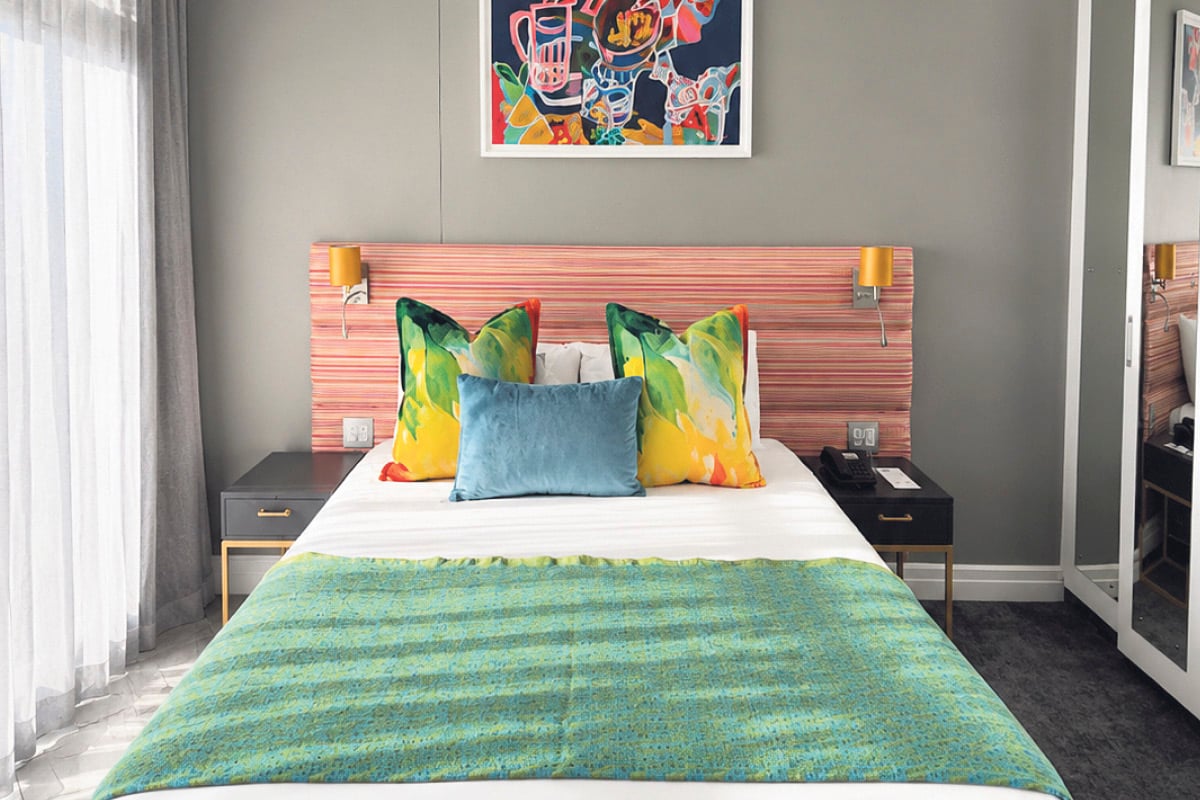
The apartment-style configuration has become increasingly relevant as travel habits have changed.
“Being able to give guests the option to cater for themselves or use the service of a four-star hotel gives them choice and cost-effectiveness,” Godenir says.
He points to another shift that few hotels anticipated a decade ago: guests no longer stop working simply because they are travelling. The excellent, free wi-fi supports this.
Separate living areas make it possible for one guest to work, while another relaxes on the balcony overlooking the Atlantic.
Under Godenir’s leadership the hotel has earned recognition for environmental initiatives ranging from water conservation to energy efficiency, while community outreach projects have become an important part of its identity.
Those priorities are closely connected to Godenir’s outlook.
He has spoken openly about a life-changing accident in 1988, describing it as the event that reshaped his personal priorities and leadership philosophy.
Rather than viewing management primarily as hierarchy or authority, he speaks instead about purpose, empowerment and creating opportunities for others – themes that recur consistently whenever he discusses the hotel.
Perhaps nowhere is that philosophy more evident than among returning guests.
Phillip Joffee, now living in Australia, first stayed at The Peninsula more than three decades ago and estimates he has returned over 40 times.
“My association with The Peninsula goes back 34 years,” he says.
“There are staff members who have been here for more than 20 years, and that makes it feel like coming home.”
It is difficult to imagine stronger praise for any hotel. Our stay included the hotel’s excellent buffet breakfast.
I was fascinated by the hotel’s pancake robot – a machine that makes a portion of two hot pancakes at the push of a button.
I also liked their big sausage selection offering chicken, beef and pork sausages.
The Peninsula has relied on thoughtful, incremental renewal, unusually spacious accommodation and a service culture that has earned remarkable loyalty from both staff and guests.