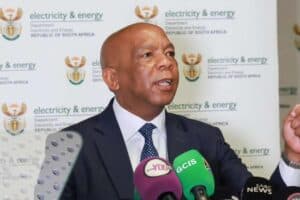
This is all about the process of unbundling Eskom.
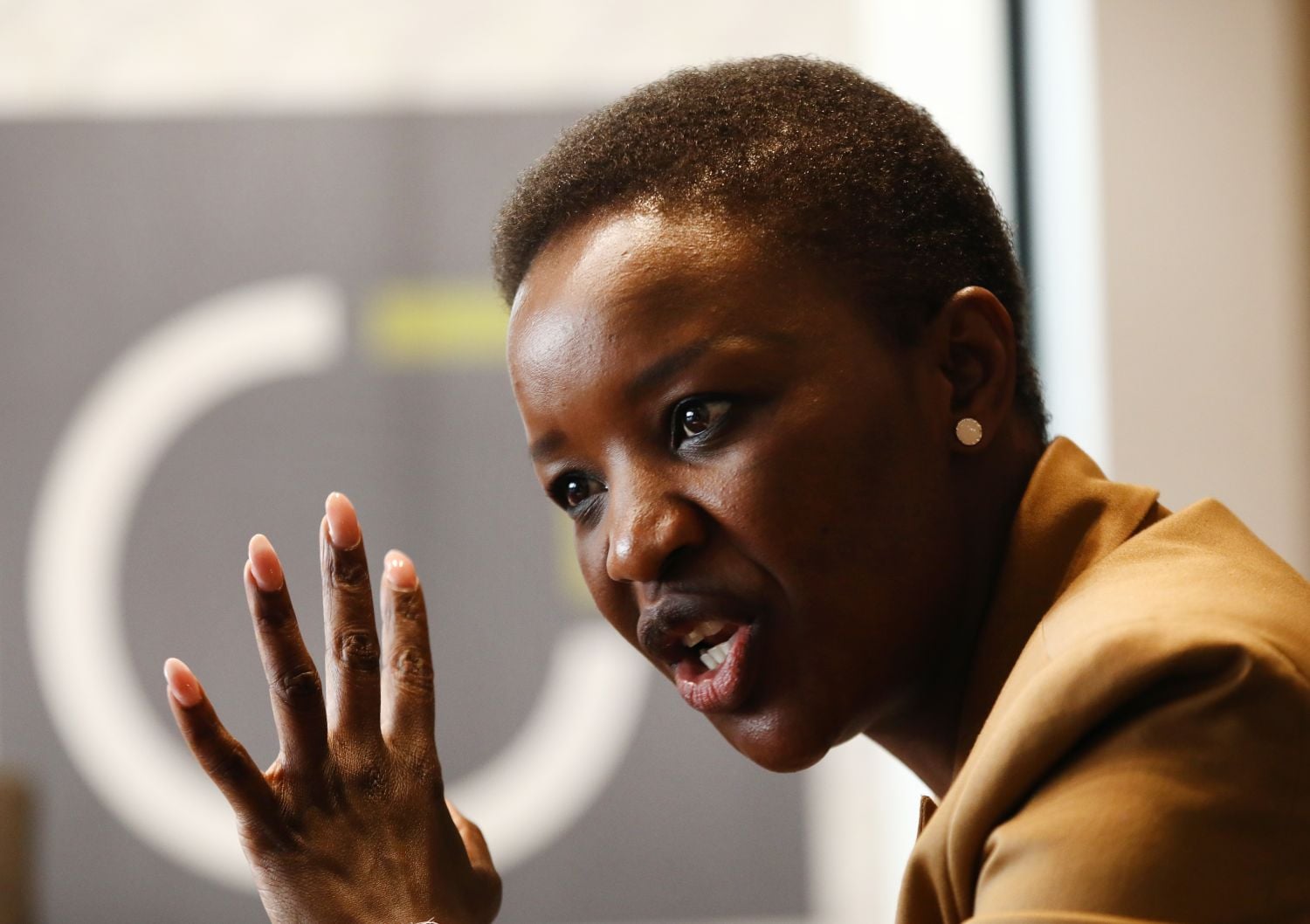
BLSA CEO Busisiwe Mavuso says the advocacy group remains committed to Eskom’s success, but that cannot extend to accepting a rewriting of settled policy. Picture: Masi Losi/Gallo Images


Business Leadership South Africa (BLSA) CEO Busisiwe Mavuso has hit back at Eskom chairman Mteto Nyati’s suggestions that the business groups, including Business Unity South Africa (BUSA), have “hidden agendas” and are “seeking political interference in Eskom’s transmission restructuring”.
Mavuso sends weekly newsletters as an informational update and a strategic communication tool designed to explain the organisation’s stance on key issues, showcase its work, and influence conversations about the country’s economic future.
But this week was different. This week’s newsletter addressed Nyati’s comments made on social media and radio, stating that the BLSA remains “committed to Eskom’s success, but that cannot extend to accepting a rewriting of settled policy.”
Business groups want special treatment
Nyati said he has noticed a troubling pattern: business and political leaders, both black and white, believe that rules and ethical standards that apply to others do not apply to them.
He said he has been asked several times by elites to interfere in operational or procurement matters.
In the same breath, he took aim at BLSA and BUSA for actively advocating for political intervention to transfer Eskom’s transmission assets.
Both business groups are advocates for economic transformation. But what have they actually achieved, and what do they do, you might ask.
According to the BLSA website, the group has contributed over R700 million and skills to the Port of Durban and national corridors.
“This resulted in a 79% reduction in backlogged ships at anchorage, improved container turnaround times, and the allocation of rail slots to 11 private operators”.
BLSA CEO addresses Eskom chair claims
Mavuso, in her newsletter, said, “It was alarming this week to hear Eskom board chair Nyati argue, first on social media and then in a radio interview, that BLSA and BUSA are guilty of the kind of political interference we have spent years campaigning against.”
“He went further, suggesting that if we are not simply accepting Eskom’s own account of the matter, our advocacy must be ‘driven by… other interests’ rather than the interests of the country.”
She said Nyati is fundamentally mistaken both on the motives for the group’s advocacy and what good governance demands of the Eskom board.
Mavuso and Nyati see eye to eye
Mavuso said she and Nyati see eye to eye on some issues, such as the idea that “rules should bind the powerful as they bind everyone else”.
She highlighted that business leaders who ignore established procedures and ask state-owned enterprise boards for favours, while publicly demanding clean governance, deserve the criticism he levelled at them.
“If individuals are doing what he describes, they should be named and held to account, and we support that without reservation,” Mavuso added.
“But conflating that behaviour with BLSA’s position on the independent transmission system operator (ITSO) is very disingenuous and gets the substance completely the wrong way around, in three ways.”
Unbundling of Eskom
This is all about the process of unbundling Eskom. Mavuso said the group’s position is designed to resist precisely the pattern Nyati rightly criticises.
“The whole reason for separating ownership from Eskom is to remove the conflict of interest that arises when the same entity is both generator and gatekeeper of the grid – an entity that runs the network but doesn’t own it cannot be relied on to treat every generator on it equally,” she said.
“Structural separation will ensure that insiders or incumbents are not favoured. When the operator of the transmission network is institutionally separate from electricity generation, it is better able to provide non-discriminatory access to all generators and to inspire confidence among investors that access decisions will be made impartially.
“Describing advocacy for that separation as if it were itself a request for favourable treatment is the inverse of what we are advocating for.”
Nyati’s experience with business leaders
Mavuso said what Nyati criticises and what he describes experiencing from individual business leaders is undisclosed, personal, and made in private, away from any public record.
“What BLSA does is the opposite: we publish our position, we sign joint letters with BUSA, we engage Parliament and the Presidency in the open, and we track outcomes through the BLSA Reform Tracker for anyone to see.”
She added that transparency is the distinguishing feature of legitimate advocacy, and it is exactly what separates it from the behaviour he is right to condemn.
“What Nyati described in his 702 radio interview – that Eskom’s board and ‘a minister in that line’ have concluded the assets should remain within the National Transmission Company South Africa and Eskom – is the position Eskom itself proposed in December, and which the president publicly overruled two months later,” noted Mavuso.
Mavuso’s view on operators
“An operator that does not own the assets it manages has no balance sheet of its own, and therefore no capacity to raise the financing needed for the R440 billion transmission expansion South Africa urgently needs,” said Mavuso.
“It would also remain permanently dependent on Eskom for its financial standing, which is the opposite of the independence Nyati says matters.
“Continuing to advocate for that outcome in the media is a position at odds with agreed policy. This raises legitimate concerns about governance and accountability. Eskom should not be allowed to act in conflict with agreed policy while frustrating a competitive electricity market that is plainly in the public interest.”
BLSA is not asking for much
She added, “We are not asking for anything beyond what Eskom’s own shareholder has already made clear is public policy.
“We are asking that Eskom stick with that policy and implement the unbundling without further delay.”
Mavuso also reiterated the group’s commitment to Eskom’s success.
“We have said so consistently, including on the utility’s genuine operational turnaround under CEO Dan Marokane,” she said.
“But that support cannot extend to accepting a rewriting of settled policy, still less a suggestion that our motives require justifying.
“Our positions have been published consistently and argued openly. They are available for anyone to scrutinise. And we will continue to advocate for the full liberalisation of the electricity market.”