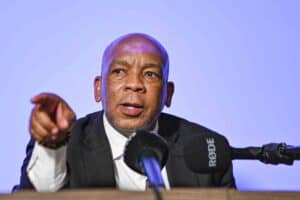
Koeberg, has had three radioactive contamination incidents in recent weeks.
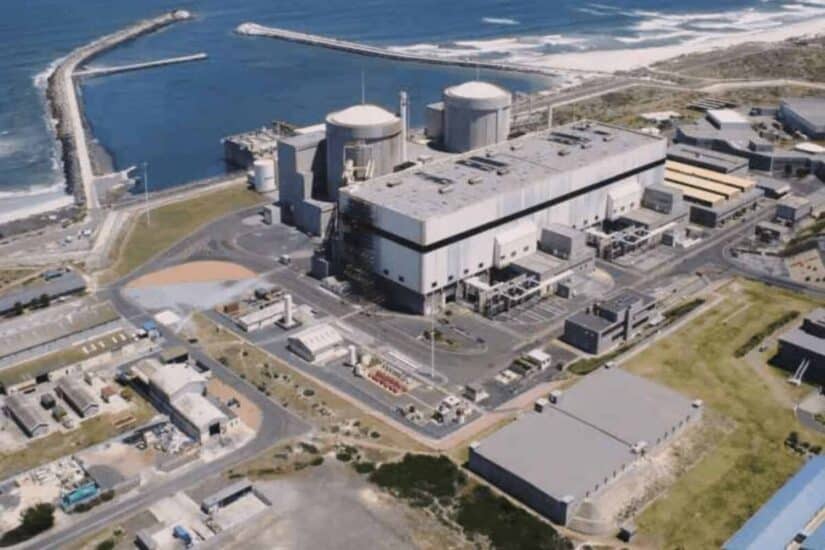
Koeberg Nuclear Power Station. Photo: ESI Africa


Electricity Minister Dr Kgosientsho Ramokgopa has assured that the Koeberg Nuclear Power Station is safe following widespread reports of radioactive contamination during maintenance work, adding that the nuclear build programme will continue as planned.
Ramokgopa, joined by Eskom executives, moved to reassure South Africans about the safety of the Koeberg Nuclear Power Station after recent maintenance‑related incidents triggered public anxiety.
Nuclear contamination
The briefing on Sunday followed three airborne contamination events recorded at Unit Two of the Koeberg Nuclear Power Station during planned maintenance between 30 June and 7 July.
This was due to a power outage to the ventilation units serving temporary maintenance tents inside the reactor building.
No radioactive material was released into the environment, and there was no risk to nearby communities.
No danger
Officials emphasised that the events were contained, posed no danger to the public, and demonstrated the strength of South Africa’s nuclear safety systems.
Ramokgopa said the government had deliberately convened a media briefing to counter “misinformation, disinformation, and propaganda” that can fuel suspicion.
“Koeberg has been able to operate in a safe, efficient and reliable manner for more than 40 years, with little to no incidents,” he said.
“We are proceeding with the nuclear build programme, looking forward to an additional 20 years of life for the two units, as we introduce 5 gigawatts of new nuclear build.”
Public anxiety
He stressed transparency as a safeguard against public anxiety.
“We don’t want to enter the next phase of nuclear procurement with a cloud of suspicion. We are safe. There is no reason to be suspicious. The exposure at Koeberg is, in fact, no more than what we encounter in our daily lives.”
Containment
Eskom chairperson Mteto Nyati confirmed that “during scheduled maintenance between 30 June and 7 July, elevated airborne radioactive contamination was detected inside controlled sections of the Koeberg power station.”
“These events were fully contained within the facility. There was no release into the environment, no risk to the public. The recorded levels were extremely low – less than the radiation exposure from using your cell phone for several minutes.”
Worker exposed
Workers exposed received radiation at levels “lower than those from a dental X‑ray” and that Koeberg’s power has been “essential in stopping load shedding in the country over the last several years.”
“Koeberg’s long track record, and the way recent incidents have been handled, confirm that we have the systems, skills and leadership to operate nuclear assets safely, and to deliver the next generation of nuclear capacity for South Africa.”
Nuclear incident
Chief Nuclear Officer Velaphi Ntuli explained that the incidents occurred during steam generator testing, a routine process after life‑extension work.
“It is common in the industry that when you do this activity, it will generate localised radioactivity. We plan for it, and we implement diverse radiation protection protocols to protect our workers, the public and the environment,” he said.
Ntuli confirmed precautionary evacuations and monitoring
“The maximum dose during all these events that our workers received was 20 microsieverts, compared to the annual limit of 20,000 microsieverts. Under no circumstances did we have fuel melting or an incident with fuel, so potassium iodide tablets were not necessary.”
Safeguards
He described strict safeguards.
“Our protocols dictate that in the event of an alarm, all work stops, workers evacuate, and radiation protection surveys are conducted. Once conditions are verified as safe, work resumes. Every worker leaving containment passes through six different monitoring instruments to ensure they are free of contamination.”
Compliance
Ntuli underscored Eskom’s commitment to openness and compliance.
“We remain committed to being transparent and to ensuring that we comply with all the statutes set out by our National Nuclear Regulator. We will continue to engage with the public in a transparent manner,” he said.
Ntuli stressed that safety procedures are robust and well‑established.
“From a procedural point of view, we have strong systems in place. Our workers are trained to safely manage any condition – from normal operations to deviations – in line with established global standards. These safeguards are designed to protect our employees, the public, and the environment at all times.”
📌 WATCH | Minister Kgosientsho Ramokgopa and Eskom brief the media on Koeberg Unit 2 Inspection incident#GovZAUpdates https://t.co/xFndYJEg7e
– South African Government (@GovernmentZA) July 19, 2026
SA nuclear ambitions
Officials also highlighted South Africa’s broader nuclear ambitions.
“Building on this foundation, Eskom is advancing 5.2 gigawatts of new nuclear capacity by 2039, in line with the Integrated Resource Plan. Solar, wind, and other energy sources are supported by the presence of nuclear power. It is a coherent and consolidated energy mix that will power South Africa sustainably,” Ramokgopa said.
“We will not allow misinformation to derail our nuclear programme. We are confident, transparent, and safe. Koeberg has operated for 40 years, will operate for another 20, and will anchor the next phase of South Africa’s energy future.”
He also emphasised that Koeberg’s power has been essential to preventing load shedding in the country over the past several years.