Lifting of merger notification thresholds brings some relief.
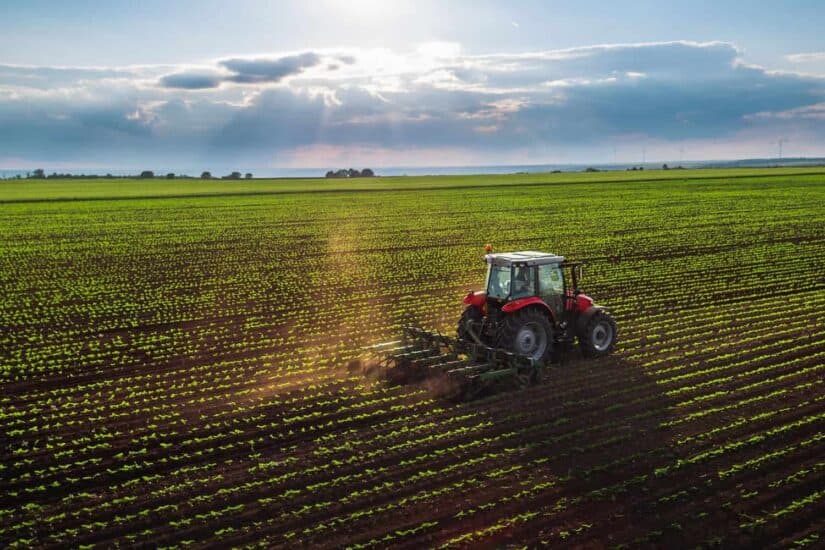
Picture: iStock


The farming sector is particularly vulnerable during times of economic turbulence, and the impact of external factors such as climate change and geopolitical developments has exacerbated the situation.
Although there are no reliable statistics on the number of farming entities entering business rescue, there is anecdotal evidence of a steady increase since 2020 – first due to the Covid-19 pandemic, and now due to geopolitical and climate risks.
Belinda Scriba, director in Cliffe Dekker Hofmeyr’s dispute resolution practice, says half the turnarounds she has dealt with have been successful.
Among the reasons so many farm rescues fail is the inability to find post-commencement finance, waiting too long before applying for business rescue, and delays in approval from the competition authorities.
Merger approvals
A positive development in recent times is the increase in the monetary thresholds for merger notifications, which exempts smaller farming operations from having to obtain approval.
The lower threshold for merger notifications has been lifted from R100 million turnover to R200 million for the target firm. The combined turnover of the target and acquiring firms has been increased from R600 million to R1 billion.
In cases where approval is required the “failing firm” defence is not an “absolute defence”, says Andries le Grange, director in the competition law practice at Cliffe Dekker Hofmeyr.
This contrasts with international thinking that competition will not substantially lessen if a failing firm’s market share is passed on to another firm in a merger or acquisition.
In South Africa, according to Le Grange, the authorities would typically consider whether or not the firm can be saved and whether a merger with other potential purchasers may be “less anti-competitive”.
He was speaking during a Cliffe Dekker Hofmeyr webinar on business rescue in the agricultural sector through a Competition Commission lens.
The Senwes/Suidwes merger
Le Grange gave the example of a merger between two major agribusinesses – Senwes and Suidwes – in 2020.
Suidwes was in severe financial distress with the possibility of liquidation hanging over it.
The Competition Commission recommended the prohibition of the transaction, but the Competition Tribunal approved it with significant conditions.
Senwes and Suidwes had extensive overlaps in their silo operations and high market shares when certain operations were combined.
The tribunal considered whether placing Suidwes in business rescue would save it. Evidence presented by business rescue practitioners demonstrated that this would not have been a viable option.
Once the Competition Commission assumed that the firm was failing, it then considered whether two alternative buyers presented a lesser anti-competitive outcome.
“Ultimately the merger approval process is likely to delay matters,” says Le Grange.
If the information is collated and there is sufficient motivation of the urgency for the transaction to proceed, the authorities are generally quite responsive to that risk.
“Unfortunately, there are certain unavoidable prescribed steps, but at least there is recognition that from an urgency perspective, [cases involving] firms in distress need to be handled on an expedited basis.”
Complex businesses
Scriba says business rescue in the farming sector is inherently complex.
Farms are remote and the size and extent of the operations makes it difficult to assess the assets, inspect the stock and maintain security over it.
Many farming operations have group structures, either through multiple entities, family trusts or interrelated party vehicles, where one entity owns the farm while another runs the farming operations.
Once the business is in financial distress the ideal would be to find a business rescue practitioner with experience in the farming industry.
The lack of knowledge regarding crop cycles, livestock, veterinary requirements, seasonal weather implications, water rights and supply chains can delay the process.
Over and above the “normal complications”, dealing with external factors such as climate change and geopolitical developments has become increasingly relevant.
Scriba refers to reports from 2023/24 indicating that the El Niño-effect has led to a 22% drop in the annual maize crop in SA. Flash flooding in some regions, and flash droughts, heat waves and wildfires in others, have increased.
This year there are already signs of below-average rainfall in winter rainfall areas with the potential of drought over the next year or two.
Politics and money
Geopolitical activity – including the Russia-Ukraine War, the US trade war, and the US-Iran conflict with the closing of the Strait of Hormuz – has impacted commodity prices and the availability of resources such as fertiliser.
A critical factor for a successful turnaround is the availability of post-commencement finance.
Scriba says the demand for liquidity in a farming environment is constant.
The challenge is to find a lender that operates in the farming sector and has the appetite to provide financing.
Lenders will consider the health of the company, whether it can be rescued, and whether the proceeds will be sufficient to repay post-commencement financing.
This will require an honest and realistic assessment of the farm’s productivity capacity, its markets, the cost structure, and the reasons for ending up in business rescue.
“There must be confidence in the practitioner’s ability to turn the business around,” says Scriba.
“Timing will be critical.”
This article was republished from Moneyweb. Read the original here.