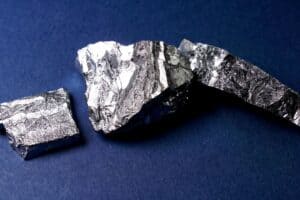
The mining and quarrying industry recorded the largest decrease.
Picture: iStock


South Africa’s economy declined by 0.2% in the second quarter of 2026 following several quarters of growth.
Statistics South Africa (Stats SA) released the Gross Domestic Product (GDP) figures for the period on Tuesday, 8 September 2026. The figures showed that several industries declined, while those that increased did not grow enough to make a positive dent.
GDP is the total market value of all final goods and services produced within a country in a set time. It measures the size and health of an economy.
Economic decline vs growth
GDP growth means the economy is expanding, with businesses producing and selling more goods and services, which can support investment, job creation and government tax revenues.
When GDP declines, economic activity shrinks, which can put pressure on businesses, investment and employment while reducing household spending and government revenue.
However, economic growth does not necessarily mean all South Africans are immediately better off, as the impact depends on factors such as population growth, inflation and whether the growth creates jobs.
Contributors to economic decline
According to Stats SA, the mining and quarrying industry recorded the largest decline, at 3.0%, contributing -0,1 percentage point. The largest negative contributors were platinum group metals (PGMs), manganese ore, gold and iron ore.
The trade, catering and accommodation industry fell by 1.9%, contributing -0.2 percentage points. Wholesale trade, motor trade, and food and beverages reported lower economic activity.
The manufacturing industry decreased by 1.8%, contributing -0.2 percentage points.
“Seven of the ten manufacturing divisions reported negative growth rates. The largest negative contributions were reported for the food and beverages; furniture and ‘other’ manufacturing; and basic iron and steel, non-ferrous metal products, metal products and machinery divisions,” said Stats SA.
Positive contributors
Among the industries that recorded growth were finance, real estate and business services, which grew by 0.3%, contributing 0.1 percentage point. The main contributors were financial intermediation, insurance and pension funding, and other business services.
Followed by the transport, storage and communication industry, which increased by 0.9%, contributing 0.1 of a percentage point. Land transport reported increased economic activity.
General government services increased by 1.0%, contributing 0.1 of a percentage point. This was mainly due to higher compensation for employees in extra-budgetary and higher education institutions and the provincial government.
The personal services industry increased by 0.6%, contributing 0.1 of a percentage point. Increased economic activity was reported for community services and other producers.
Expenditure on GDP
Stats SA reported that expenditure on real GDP fell by 0.2% in the second quarter of 2026, after a 0.4% increase in the first quarter of 2026.
Household final consumption expenditure (HFCE) rose by 0.4%, contributing 0.3 percentage points to the overall negative growth. Services, durable goods and non-durable goods posted positive growth.
The main positive contributors to the increase in HFCE were expenditures on food and non-alcoholic beverages (1.2% and contributing 0.2 of a percentage point), ‘other’ (0.6% and contributing 0.1 of a percentage point), recreation and culture (0.8% and contributing 0.1 of a percentage point) and health (0.7% and contributing 0.1 of a percentage point).
Negative contributors
The negative contributors were expenditures on housing, water, electricity, gas and other fuels; transport; communication; and clothing and footwear.
Final consumption expenditure by general government increased by 0.4%, contributing 0.1 percentage points to the total negative growth. This was mainly driven by higher employee compensation.
Gross fixed capital formation decreased by 0.2%. The negative contributors to the decrease were construction works (-4.0% and contributing -0.7 of a percentage point), transport equipment (-3.4% and contributing -0.4 of a percentage point), other assets (-1.7% and contributing -0.2 of a percentage point) and transfer costs (-7.9% and contributing -0.2 of a percentage point).
R8.8bn build-up of inventories
“There was an R8.8 billion build-up of inventories (seasonally adjusted and annualised value). Large increases in two industries, namely trade, catering and accommodation and manufacturing, contributed to the inventory build-up,” said Stats SA.
Net exports contributed negatively (-1.1 percentage points) to expenditure on GDP. Exports of goods and services increased by 0.9%, largely influenced by increased trade in pearls, precious and semi-precious stones and precious metals; chemical products; live animals and products; and paper and articles of paper.
Imports of goods and services rose by 4.9%, largely driven by increased trade in machinery and electrical equipment; mineral products; chemical products; and artificial resins and plastics.