Gauteng High Court declared Dlamini's precautionary suspension unlawful and set it aside.
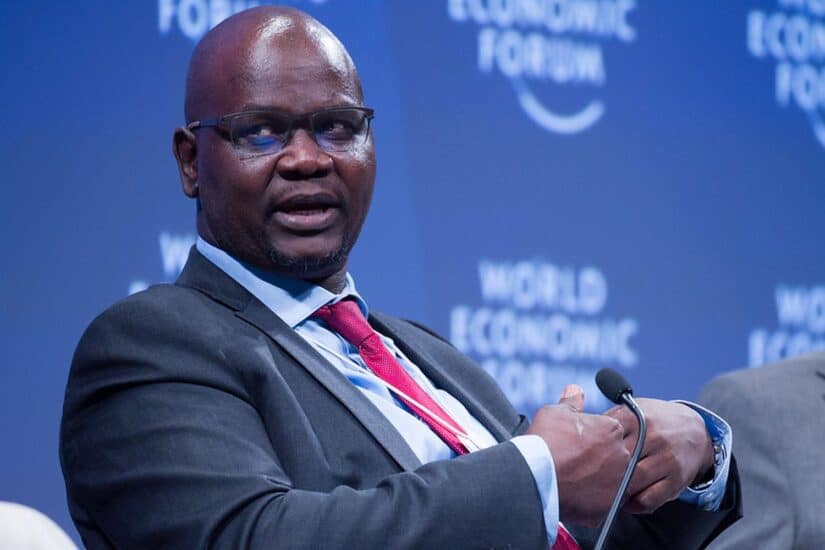
Investigations into allegations made against PIC CEO Patrick Dlamini are underway. Picture: Flickr


Finance Minister Enoch Godongwana says it is too early to tell if Public Investment Corporation (PIC) CEO Patrick Dlamini is guilty of the allegations levelled against him, as they are still being investigated. The minister’s comment comes after a Gauteng High Court ruling reinstated Dlamini at the helm of the state-owned asset manager.
Dlamini approached the court to have his precautionary suspension declared unlawful and therefore set aside following a string of allegations made by a whistleblower. Judge Mandla Mbongwe in the Gauteng High Court did as Dlamini sought.
On Tuesday, Mbongwe declared Dlamini’s precautionary suspension unlawful, invalid and of no force or effect, setting it aside with immediate effect.
PIC matters still under investigation
Godongwana told Newzroom Afrika allegations made about Dlamini and the corruption at the state-owned asset manager are still under investigation by a couple of institutions.
“The SIU is doing an investigation on the basis of an approach by the former chairperson to the PIC [Deputy minister David Masondo], the Auditor General has flagged material irregularities in relation to Daybreak, which is a wholly owned subsidiary of the PIC, the Financial Sector Conduct Authority, which provides licensing for all financial institutions is also conducting an investigation to look at the governance issues, given its license conditions,” he said.
“Now, I’m raising all of these things to suggest to you that, before we can make a conclusion whether Patrick is tainted or not, we must allow that process to unfold.”
PIC to institute independent investigation
Godongwana added that PIC will also launch an independent investigation to verify the allegations made by the whistleblower.
A 26-page whistleblower complaint was the reason that saw Dlamini get suspended by the PIC board. This all stems from a 2013 PIC loan of R333 million to Acapulco, a black economic empowerment (BEE) partner, to acquire a 25% stake in Lanseria Airport, according to Daily Maverick.
After Acapulco repeatedly failed to repay the loan, the debt grew to about R630 million, prompting the state-owned asset manager to enforce its security and take ownership of the shares. Acapulco challenged the move through arbitration and was awarded about R410 million, despite still owing the PIC around R630 million.
The outcome prompted Dlamini to commission a PwC forensic investigation into the transaction and arbitration. Acapulco subsequently filed a R900 million damages claim against both the PIC and Dlamini personally, while also accusing him of executive misconduct in correspondence to the PIC board.
Allegations facing Dlamini
The whistleblower allegations against Dlamini focus on his decision to commission the PwC forensic investigation into the Lanseria transaction, whether he had the necessary authority to do so, and whether he properly managed alleged conflicts of interest.
If an investigation proves he failed to manage the alleged conflicts of interest, he would have violated his fiduciary duties under Section 76 of the Companies Act.
The publication alleged that the PIC’s official Letter of Authority appointing PwC to run the forensic audit bore Dlamini’s signature alone, with no accompanying board resolution. If Dlamini initiated a high-stakes forensic probe into an active BEE partner unilaterally, he bypassed standard Delegation of Authority protocols.
Dlamini, fighting for his precautionary suspension that came from these allegations, argued the board breached its fiduciary duties and internal policies, including whistleblower protocols, by removing him without proper notice.
Whistleblower policy
Dlamini also contended that the anonymous whistleblower complaint is not protected under the Protected Disclosures Act, arguing that it was submitted by external “concerned citizens” rather than PIC employees.
He maintained that the legislation applies only to employees who disclose information about their employers and does not extend protection to outside parties.
However, the board’s legal representatives countered that, irrespective of whether the complaint falls within the scope of the Act, the Companies Act and the PIC Board Charter place an independent fiduciary obligation on the board to investigate any serious allegations of misconduct against the chief executive.
Board lacked authority
Tuesday’s judgment against Dlamini’s precautionary suspension found that the PIC board lacked authority in its decision, as it acted without the required ministerial and Cabinet approval.
Under section 6 of the PIC Act, the minister of finance appoints the CEO of the Public Investment Corporation (PIC) in consultation with the Cabinet. The board’s role is limited to selecting and recommending a suitable candidate.
The suspension of the CEO can be recommended by the Human Resources and Remuneration Committee, initiated by the chair, and approved by the minister in consultation with Cabinet.
Judge Mbongwe said: “None of these prerequisites [was] met. The board acted unilaterally, without ministerial approval and in disregard of its own policies. The suspension was, therefore, ultra vires and invalid.”
Godongwana welcomes judgment
Godongwana has since welcomed the judgment to reinstate Dlamini. “The Minister believes this judgment vindicates the actions taken by National Treasury and Cabinet to restore governance at South Africa’s largest asset management institution.
“These actions were both good and necessary, triggered in part by the hasty removal of Dlamini without due consultation and process,” he said.
Godongwana has since appointed a new board, chaired by Deputy Minister in the Presidency for Planning, Monitoring and Evaluation, Seiso Mohai. A move the Democratic Alliance (DA) has criticised.
Change is near
A new board was appointed after the previous one, chaired by Masondo, resigned. The DA said Ashor Sarupen, the second finance deputy minister, who is the party’s member, was overlooked to be chair.
PIC board is traditionally chaired by a deputy minister in the economic cluster. The DA has previously said the PIC board must not be chaired by a politician, as recommended by the Mpati Commission.
However, it seems this will soon be done. Godongwana, on The Clement Manyatela Show, said the state-owned asset manager will soon have a chair that is not a political appointee.
This is as Godongwana prepares to table a report to Cabinet, which will see through the implementation of the Mpati Commission, that the chair of the PIC should be an independent, non-executive person with expertise in pension funds and financial markets rather than a political appointee.