



Madibeng and Msunduzi municipalities also exposed.
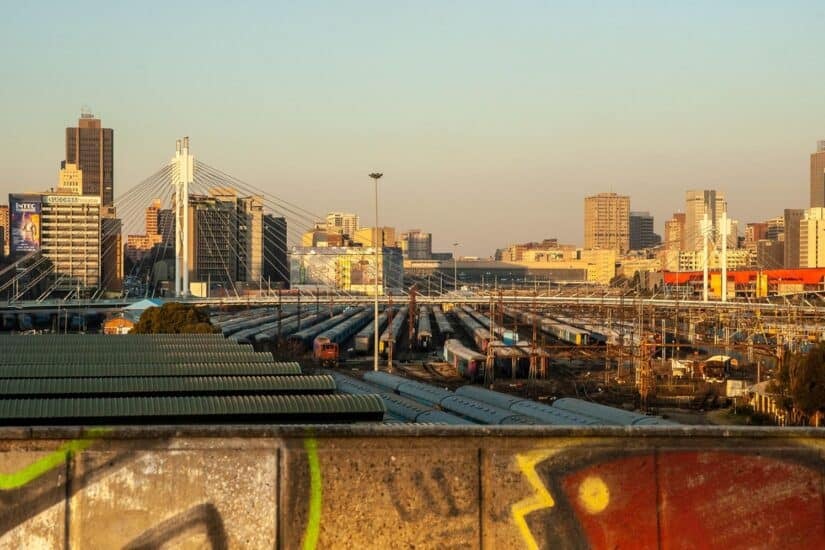
Companies claiming refunds of the difference between the older and newer tariffs will ‘necessitate’ additional charges for poor consumers who are subsidised by industry. Picture: iStock


The City of Joburg (CoJ) has approached the High Court in Pretoria in an urgent bid to protect it from “mass refund demands and a plethora of litigation” from consumers who want refunds for their total electricity purchases in 2024/25.
This after energy regulator Nersa missed a court-imposed deadline to redetermine the tariffs by 30 June 2026, leaving CoJ in a situation where the tariffs for that period were declared unlawful and set aside.
Consumers demand repayment from municipalities
Not having any lawful tariff in place exposes the metro to claims to repay the total amount consumers pay for electricity in that financial year.
Three other municipalities found themselves in the same dilemma – the Ekurhuleni metro in Gauteng as well as the Madibeng and Msunduzi local municipalities, based in Brits and Pietermaritzburg respectively.
While Ekurhuleni obtained an extension from court on 7 July, thereby protecting themselves from such claims, Madibeng and Msunduzi have not approached the court for such.
The new deadline for redetermining Ekurhuleni’s tariffs is 30 September.
City of Joburg approaches High Court
CoJ’s application stems from an order made by Judge Anthony Millar in the same court in November last year, setting aside the 2024/25 electricity tariffs of the four municipalities.
Nersa conceded that its decisions in this regard were unlawful.
In January this year, Millar ordered Nersa to redetermine the tariffs for all four municipalities by 30 June, failing which a default position would apply for the applicants, namely either those set in 2023/24 or Eskom’s Megaflex tariff – both considerably lower than the unlawful tariffs that Nersa initially approved.
The applications – brought by the Casting, Forging and Machining Cluster of South Africa (CFMC) in the cases of Johannesburg, Ekurhuleni and Madibeng; the company Autocast in Madibeng; and the Pietermaritzburg and Midlands Chamber of Business in Msunduzi – initially asked for relief only for the applicants.
Arguments
Nersa, which failed to participate in the proceedings up to the eve of the hearing in November, then filed papers objecting to the narrow scope of the proposed order.
It argued that if the tariffs need to be rectified, it must be rectified for all customers in the four municipalities.
The court agreed and left the option open to the parties to come back to court for an extension, should Nersa fail to finalise the redetermination by the deadline of 30 June.
Several issues were raised by the applicants and other parties during the public participation process that Nersa was obliged to follow for redetermining the tariffs.
Nersa
However, Nersa seemed set to make a determination and announced a special meeting of its executive committee on 29 June for the final decision.
At the meeting it however announced that it was unable to come to a decision in any of the cases.
On 30 June it informed the municipalities by letter that it was unable to meet the deadline.
Urgent (and less-urgent) applications …
Ekurhuleni launched an urgent application by 2 July. The CFMC agreed not to oppose it, provided its members benefit from the default position. Ekurhuleni agreed and got its order on 7 July.
The CoJ initially refused to agree to this condition and had to abandon its initial application.
It has however now conceded to it and is approaching the court again for the extension on this basis.
‘Floodgates for litigation’
In its motivation to court, it says the absence of an extension would “open the floodgates for litigation against the City of Joburg”.
“The threat of mass refund demands and a plethora of litigation undermine the City of Joburg’s capacity to govern, ultimately impacting the community as a whole.”
It points out the risk of disruptions to its budget, which will affect its ability to deliver basic services, and that large power users – who generally subsidise the tariffs for poor households – will demand refunds, which will necessitate additional charges to those poor consumers.
The matter will be heard on Tuesday (21 July).
Refund claims of up to 17% being readied …
In the meantime, the original applicants are getting their claims together.
Melanie Veness, CEO of the business chamber in Msunduzi, says about 700 businesses were members at the time and will qualify for a credit.
CFMC project leader Steve Jardine says close to 20 of its large power user members qualify (about 14 in Ekurhuleni, four in Joburg, and one in Madibeng).
The difference between the 2023/24 and 2024/25 tariffs, which these companies will now be entitled to claim back, is significant.
In Msunduzi, for example, it was on average 15%, with some business categories seeing increases of up to 17%, while in Ekurhuleni the average increase was 11%.
What about smaller power users?
Once Nersa has redetermined the tariffs, the process of reconciling the new tariffs over the remainder of the municipalities’ customer bases will begin.
This may prove to be a huge undertaking, with credits to those overcharged and additional charges to those undercharged.
Poor consumers who were heavily subsidised by industry may bear the brunt of this, and it remains to be seen how municipalities will deal with the matter so close to the elections in November.
Similar court challenges have already been launched to the tariffs determined for the same four municipalities’ electricity tariffs for 2025/26. These will be heard in November.
The applicants are also gathering relevant information regarding the recent determination by Nersa of the 2026/27 tariffs for those municipalities to have sight of, and will consider similar challenges for this period.
One of the main issues is the validity of the Cost-of Supply (CoS) studies underpinning the tariff determinations, where the same flawed study is often used for multiple years.
This article was republished from Moneyweb. Read the original here.



