'Younger people and those earning lower incomes are now the most stressed.'
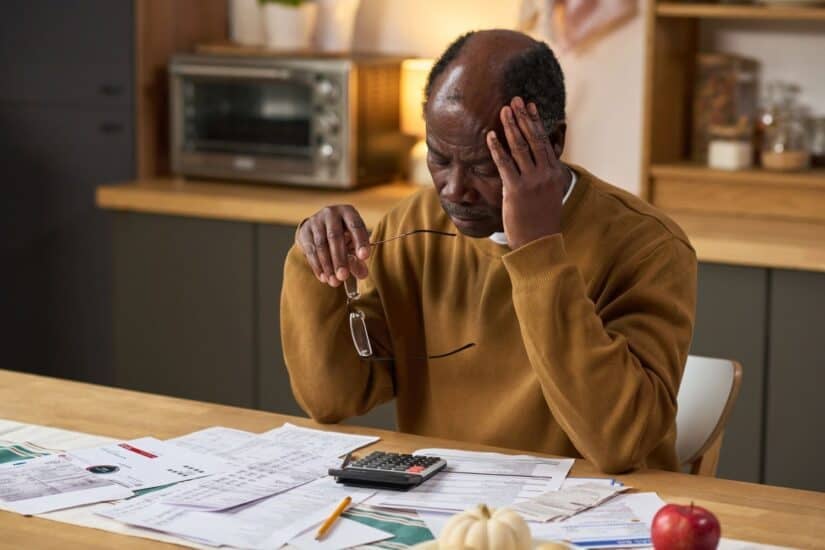
Findings reveal more than half of the respondents now spend more than 40% of their take-home pay on debt repayments. Picture: iStock


More South Africans are coming under increasing financial pressure as the rising cost of living continues to outpace household incomes, forcing many families to make difficult choices about how they spend, save and manage debt.
The DebtBusters’ 2026 Money-Stress Tracker, released on Tuesday, revealed that 72% of respondents admitted to money stress, a slight increase from last year and a reversal of a steady decline from a high of 78% in 2023. Concerningly, people earning more than R20 000 per month are found to face the most debt-repayment pressure.
DebtBusters’ Money-Stress Tracker is one of South Africa’s largest assessments of how financial stress affects people’s home life, work life, and health. The 2026 survey had 18 000 respondents.
Most people are worried about cost-of-living
The report highlighted that for the past two years, people’s financial anxiety was caused by increasing interest rates; however, short-term cost-of-living concerns currently dominate.
Most respondents said they fear running out of money before the end of the month or not having enough money to cover debt repayments.
Another concern was about inflation and living costs increasing by close to a third, and worry about the cost of electricity was significantly higher – up 99% compared to 2025.
Living costs result in more debt repayment
The report found that rising living costs have also resulted in more pressure to repay debt.
More than half the respondents now spend more than 40% of their take-home pay on debt repayments. People taking home more than R20 000 a month face the most debt-repayment pressure.
Benay Sager, executive head of DebtBusters, said this group is the backbone of South Africa’s middle-class population – and 75% of them spend more than 30% of their after-tax income on debt repayments.
“Younger people and those earning lower incomes are now the most stressed. Three-quarters of respondents aged under 35 years say they are anxious or stressed about their finances.
“Financial anxiety amongst those aged 24 or younger has increased by 18% compared to last year. This group is particularly worried about paying off debt and the rising cost of living.”
Women more financially stressed than men
Same with the previous years’ findings, the 2026 report found that women are significantly more financially stressed than men.
“They rate higher across all of the eight concerns other than retirement, possibly because they prioritise (and are expected to prioritise) more immediate concerns,” said Sager.”Home-life stress for women has reached a five-year high.”
Four primary factors have emerged as the most important indicators of money-related stress. These include feeling financial stress, feeling home life stress, spending more than 40% of income on debt repayments, and feeling stuck.
“The share of respondents experiencing each of these primary factors was higher this year than in 2025. Home-life stress levels have spiked sharply, which is of particular concern.”
When financial stress infiltrates the home
Psychologist Andrea Kellerman said when financial stress infiltrates the home and is no longer left at work or contained within monthly budgeting, the opportunity for emotional recovery is lost.
“Emotional resources become depleted, patience decreases, communication deteriorates, and conflict becomes more likely. Gradually, the home shifts from being a place of restoration to becoming another source of psychological pressure.”
However, Sager points out that fewer people are enthusiastic about cutting back on monthly spending (possibly an indication of savings fatigue), but more are making a plan.
Youth and budget
Sager noted that younger people are 1.5 times more likely to follow through with a budget and four times more likely to be looking for a higher-paying job. They also show 58% more intent in dealing with money stress.
“Overall, South Africans show a lot of entrepreneurial spirit when dealing with money stress, whether, for example, making or growing things to sell, buying or selling online, or renting spare accommodation,” he said.
“When addressing financial stress, fewer say they are embarrassed to ask for help, and negative sentiment about debt counselling has declined by 23% over the past three years.
“Willingness to act, increased awareness, and less resistance to getting help offer some hope that the 80% of South Africans with unsustainable debt levels who could benefit from debt counselling will increasingly start to take the opportunity to rebuild their finances.”