


The proposed tariffs come ahead of the expiry of the temporary 10% tariff on South Africa and other countries on 24 July 2026.
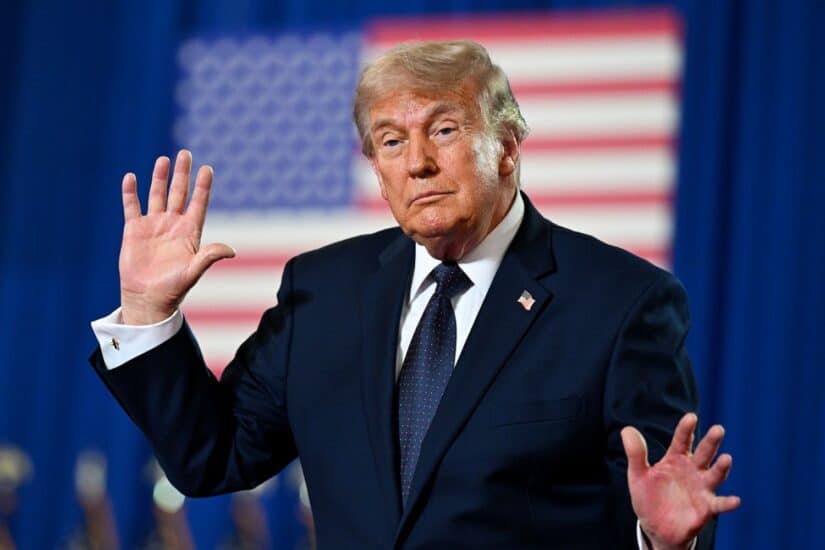
US President Donald Trump. Picture: Gallo Images


The Trump administration has proposed a 12.5% tariff on imports from South Africa as part of a broader trade action targeting economies over concerns about forced labour supply chains.
The move follows a US trade representative finding that 60 countries have not done enough to prevent goods made with forced labour from entering their markets.
“The failure of our most important trading partners to address the importation of goods made with forced labour is unacceptable. This creates a dynamic where American workers are forced to compete globally on an unlevel playing field,” said ambassador Jamieson Greer.
“Some trading partners have taken initial steps to prevent the importation of forced labour goods, including through USMCA and commitments in agreements on reciprocal trade. However, each of our trading partners must do more to ensure that trade does not perversely encourage and entrench forced labour globally.”
US believes some countries have not done enough
The Trump administration has proposed 10% additional tariffs on 14 economies that it believes have measures in place to address forced labour.
“For economies that impose a forced labour import prohibition, that have committed to impose and enforce such a prohibition through an agreement on reciprocal trade, or economies that have imposed a partial regime with the effect of preventing the importation of certain forced labour goods, the US trade representative proposes 10% as the rate of additional duties,” reads the statement.
This includes the United Kingdom, European Union, Bangladesh and Canada.
US hurts SA
South Africa falls into a group of more than 40 countries that the Trump administration has found to have done little or nothing to address forced labour, thus prompting the proposed 12.5% tariff.
“USTR found that South Africa has failed to impose and effectively enforce a forced labour import prohibition.
“For all other economies, the US trade representative proposes 12.5% as the rate of additional duty,” reads the statement. This includes China, Nigeria, Japan, New Zealand and others.
“We will no longer tolerate this disparity,” said Greer.
The US trade representative also proposes a textile mechanism that would allow for a certain volume of apparel and textile imports from certain economies to enter the US at a reduced Section 301 tariff rate.
US reports on SA
The office of the United States trade representative released a report titled “Acts, Policies, and Practices of Various Economies Related to the Failure to Impose and Effectively Enforce a Prohibition on the Importation of Goods Produced with Forced Labour”, which details its findings for each country.
When it comes to South Africa, the report said: “Some comments suggest that South Africa’s existing labour laws, anti-trafficking laws and customs laws provide a legal framework for South Africa to prohibit the importation of goods produced with forced labour.
“A legal framework that could provide a basis for a forced labour import prohibition, however, is distinct from a measure that forbids the importation of goods produced with forced labour legally.
“For the foregoing reasons, the results of this investigation indicate that the acts, policies and practices of South Africa related to the failure to impose and effectively enforce a forced labour import prohibition are unreasonable and burden or restrict US commerce.”
Public comments accepted
The proposed tariffs come ahead of the expiry of the temporary 10% tariff on South Africa and other countries on 24 July 2026.
However, the proposal is still subject to public comments and hearings before any final decision is made.
“To be assured of consideration, interested persons should submit requests to appear at the hearings, along with a summary of testimony by June 22,” reads the media statement. “Written comments are due by July 6, 2026.”



