Maake-KaNcube will briefly take up the Archie Moroka role at the upcoming iPendoring Awards.

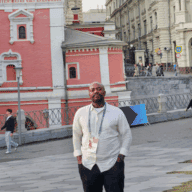
Sello Maake KaNcube reflected on an old character he played, Archie Moroka, on Generations. Picture: Oupa Bopape/Gallo Images via Getty Images


There are a few fictional characters whose names are instantly recognised. Archie Moroka is among those few.
The actor who played the role, Sello Maake-KaNcube, has long accepted that the role has a life of its own.
“You know, I never thought of it, I never thought it would have such an impact,” Maake-KaNcube tells The Citizen.
The seasoned actor will briefly take up the role at the upcoming iPendoring Awards, which mark three decades of championing South Africa’s indigenous languages.
His participation in the awards ceremony, to be hosted at the UJ Arts Centre in Johannesburg, will see Maake-KaNcube reprise the role he first took up about 30 years ago on Generations.
“It didn’t need much preparation because I know and remember, even scantly though, because this was 30 years ago,” says Maake-KaNcube about his preparation for the awards.
ALSO READ: ‘Life will humble you’: Sello Maake kaNcube’s estranged wife reflects on their marriage
Archie Moroka – a South African favourite
After leaving Generations, Maake-KaNcube moved to the UK, where he spent about five years working on other projects.
“I was actually shocked when I returned to find out that people still said ‘Archie, Archie…’ and that has carried on, it never ceased.”
Maake-KaNcube is reprising the role, particularly the aspect of Moroka being an advertising mogul, which he played on Generations.
The show’s creator, Mfundi Vundla, based Moroka’s character on his brother, Peter Vundla, who co-founded South Africa’s first black-owned ad agency, Herdbuoys, in 1991.
“I think [on Generations] is where people saw black people in the corporate space for the first time, so it was ground-breaking.”
Such was the paradigm shift brought by the show and its characters that South African businessman and former CEO of General Electric for Southern Africa, Nyimpini Mabunda, once attributed his business success to the fictional character.
“So Archie became a very inspirational character in people’s lives,” says Maake-KaNcube.
“I remember Thuli Madonsela, who said her father was a great fan. ‘I just loved the way that boy speaks English,'” says Maake-KaNcube, quoting the former public protector’s father.
A few years ago, an insurance company ran an ad poking fun at the fact that people still see Maake-KaNcube as Archie Moroka.
“I think that ad, introduced me to the younger generation that never saw me when I was being ‘Archie’.”
ALSO READ: Noxolo Grootboom on getting back the love she gave to South Africa
Rich South African lingo
From Tuesday until 4 December 2025, iPendoring will host the Indigenous Language Imbizo and celebrate 30 years of creative excellence at the awards ceremony.
These events spotlight how indigenous languages are thriving in the digital age, inspiring the next generation and remaining central to South Africa’s cultural and commercial landscape.
Hosted at the Keorapetse William Kgositsile Theatre at the University of Johannesburg’s Arts Centre, the Imbizo features three panel discussions exploring mother tongue literacy innovation, the implications of the Competition Commission’s media report for indigenous language publishing, and the role of language as cultural resistance and identity.
“I don’t think we have captured the brilliance and the beauty that South Africa has,” says Maake-KaNcube.
“Even now, the way we use African languages, we’re using them as a synonym. It’s unlike when we used to see in productions like Bophelo Ke Semphekgo where I played Dr Mashobadieta… in those times language was used in its purest form.”
Maake-KaNcube adds that today’s actors are being trained in other languages so that they don’t perform in their mother tongue.
“Can you imagine training an Afrikaans actor without Afrikaans… that will never happen.”
Maake-KaNcube laid the blame on the government’s inability to sufficiently instil the country’s official languages.
“Our government, they purported to say we have 11 official languages, which in itself is a fallacy because it’s not living up to that policy, it [government] doesn’t even have the plans about that policy, how to implement that policy
“They are robbing us of the richness in our culture.”
NOW READ: ‘Help me protect my home’: Gcina Mkhize appeals for legal assistance in house eviction case