
Designer Phillip Botha turned recycled paper bags into dress to challenge fast fashion waste and our growing throwaway culture.

Upcycled paper-bag handbag. Picture: Hein Kaiser


Creator and designer Phillip Botha has turned recycled paper bags into a Cleopatra-inspired cocktail dress.
He did this to make a statement about throwaway culture, fast fashion waste, and how everyday items destined for the bin can be given an entirely new life.
This, as millions of tons of discarded clothing litters landfills around the world. This while consumer lust for cheap clothes seems eternally insatiable.
It is estimated that around 92 million tonnes of textile and clothing waste is dumped or burned globally every year. It is equivalent to a truckload of clothing every second. Less than 1% of used clothing is recycled into new garments, while annual fast-fashion waste could reach 134 million tonnes by 2030 if current consumption patterns continue.
In fact, in July this year the European Union finally introduced a measure of regulation, banning large companies from destroying unsold clothing, footwear and accessories.
The rules prohibit affected businesses from simply burning or dumping new, unsold stock. Companies must also disclose how much unsold merchandise they discard.
Medium-sized businesses will be brought into the system from 2030, while separate EU measures are making producers responsible for the collection, sorting and recycling of textiles they place on the market.
It’s becoming law to recycle old fashion
Botha said the disposable mindset along with fast fashion had helped create a culture where clothing could be dumped as soon as the next trend arrived.
Despite fashion’s habit of continually rediscovering its own past.
“We have changed into a throwaway society. The moment that it’s no longer fab or happening, the item that you got, you simply chuck it, and you buy the latest and greatest,” he said.
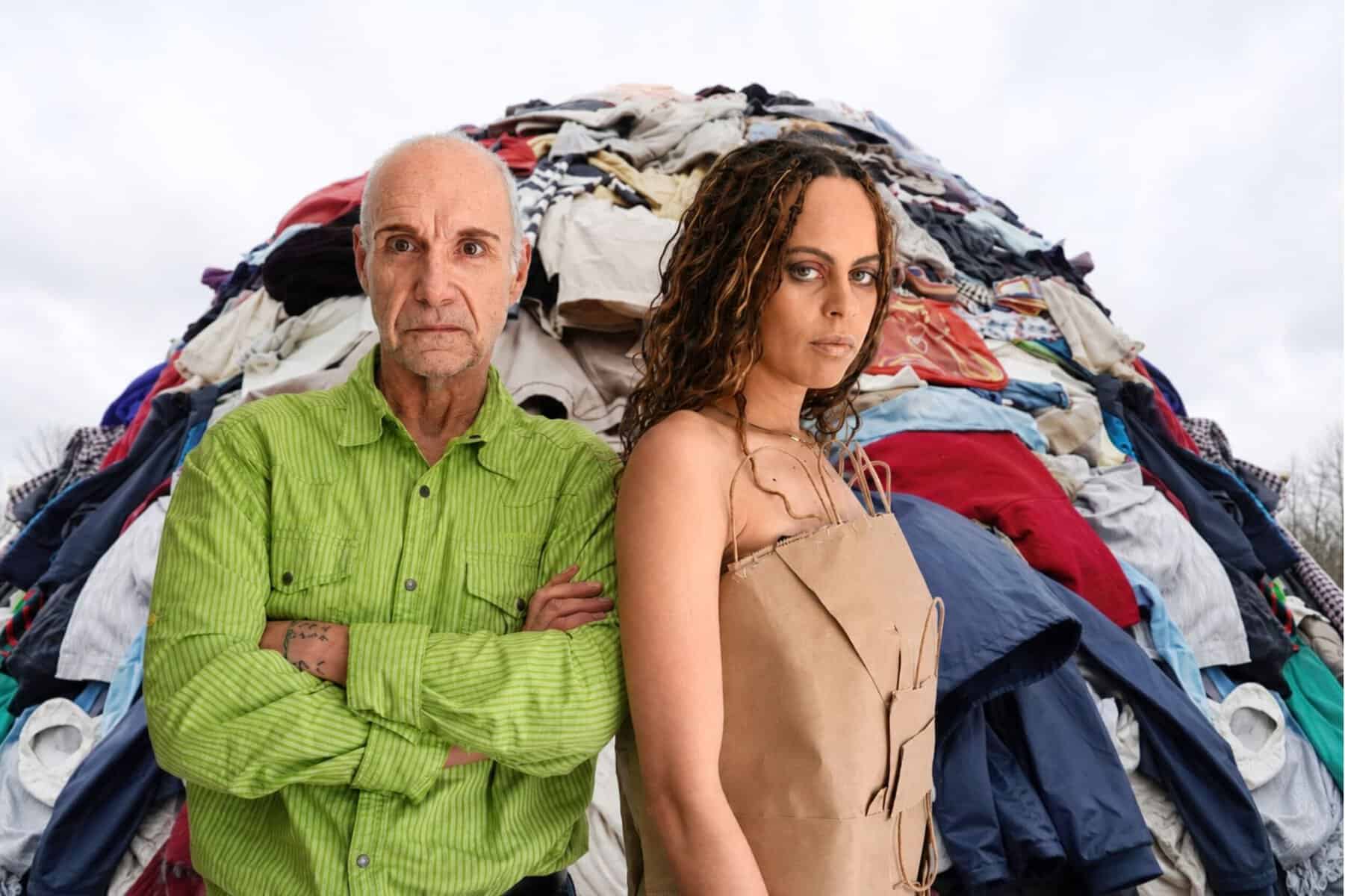
But it’s not just fashion. We have become a single-use society, said Botha.
He added that lessons could be learnt from ancient cultures, like that of Cleopatra’s time. Thus the dress’s loose inspiration.
“While they were not actively recycling for environmental reasons,” he said, “long-ago cultures had to recycle and upcycle because of scarcity, utility and efficiency.”
Technology and progress have changed all that, he said. It’s made humanity regress because it was too easy and cheap to make new, tossing old.
‘You can do something about everyone’s future, positively’
Traderbag co-founder Daniel Cherry, who provided Botha with the material, said consumers tended to regard shopping bags, like fast fashion and take-out containers, as disposable products with little value once they had made it home.
“People see plastic as a single-use product. You go home, use it as a little dustbin liner and then throw it away. It’s seen as a dirt-cheap product that can just be tossed after use,” Cherry said.
He said paper could be recycled around seven or eight times before reaching the end of its usable recycling life and would biodegrade if it eventually entered the environment.
Plastic had fewer recycling cycles and could ultimately fragment into micro- and nanoplastics.
“You start to see all the stats behind what plastic is doing to sea life, and what it’s doing to us humans is actually crazy,” Cherry said. “And you can do something about everyone’s future, positively.”
Time for a rethink
Botha said clothing deserves the same rethink. The irony of fast fashion, he said, was that consumers were throwing away clothes only to find similar styles fashionable again years later.
Keeping, altering and repurposing garments could mean yesterday’s unfashionable purchase becomes tomorrow’s vintage find.
“Ergo the popularity of thrifting these days,” he said. “But you have to ask the question, whether it’s enough to actually make a difference in the bigger picture.”
He added that he hoped the EU regulations would eventually filter through to other markets, including South Africa.
“I hope this dress makes a statement, sends a message to everyone. Single use is abuse, and the sooner we start realising this, the better.”